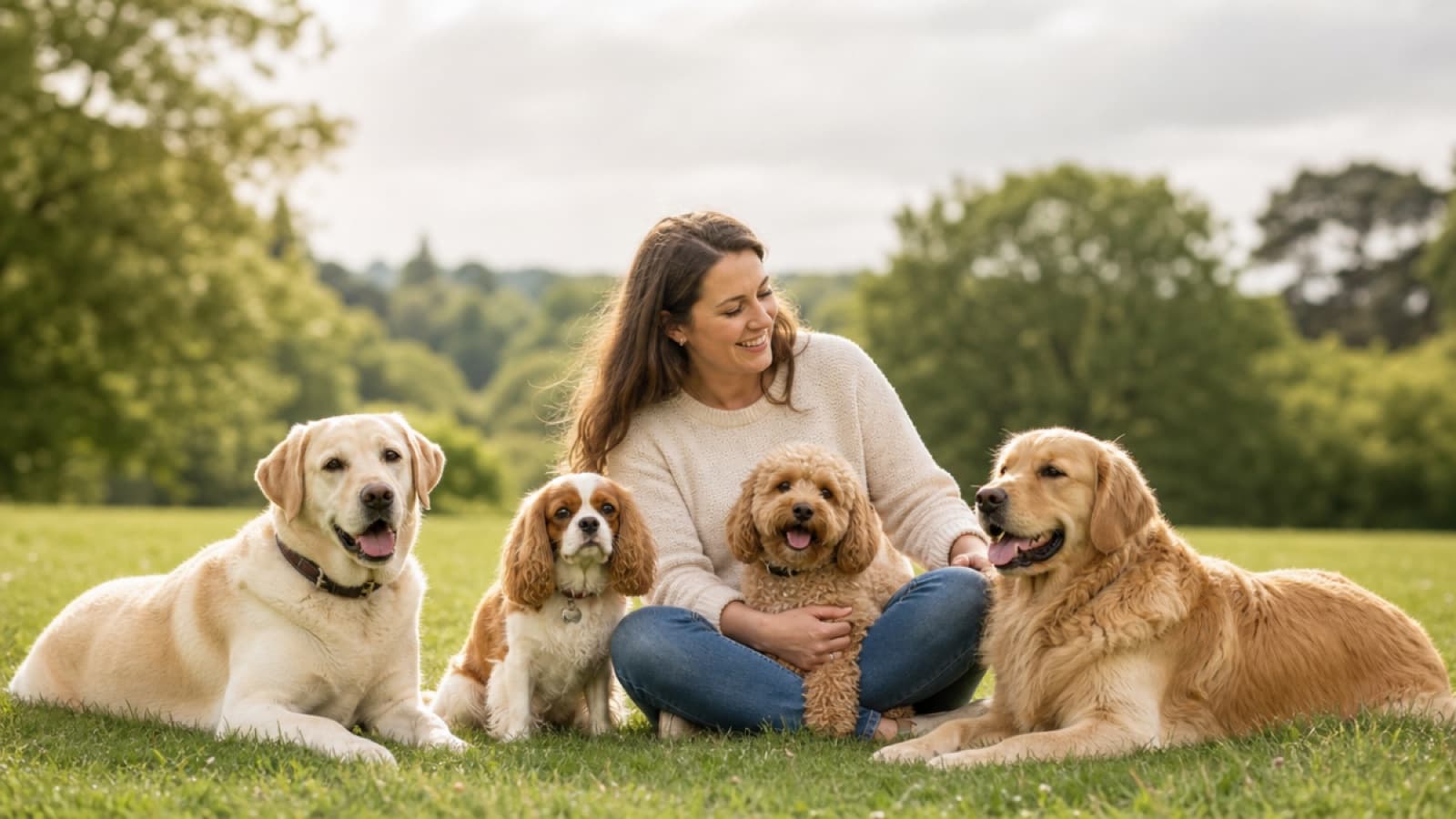
A poodle cross is a poodle bred with another breed, so a cockapoo comes from a cocker spaniel and a labradoodle from a labrador. None of them are recognised breeds, so size, coat and temperament follow the parents, with no standard behind them. Choose on the size and energy you can genuinely live with, and meet both parents before you decide.
What is a poodle cross, actually?
A poodle cross is what the name says. One parent is a poodle and the other parent is something else. Put a poodle with a cocker spaniel and the puppies are cockapoos. Put one with a labrador and you get labradoodles. A cavalier gives you a cavapoo. Swap in a golden retriever and the result is a goldendoodle. A maltese gives you a maltipoo.
The list keeps growing and shows no sign of stopping. There is a poochon at the small end of the scale and a sheepadoodle at the other. There are second generation crosses too, where a doodle is bred back to a poodle or to another doodle, and there are three way crosses such as the cavapoochon. None of these are recognised breeds. They are crosses with popular names, and that matters more than it sounds.
The poodle side is doing most of the work in the reputation. Poodles are clever, and they carry a coat that sheds very little. The other parent brings its own history to the table. That is why a cockapoo built on a working cocker feels quite different in the house from a standard poodle crossed with a retriever.
Cockapoo or labradoodle: which one fits your life?
Start with size, because size decides most of the daily detail. A cockapoo or a cavapoo usually sits in the small to medium range, liftable into a car boot and workable in a flat with a proper walking routine. A labradoodle or a goldendoodle can be a genuinely large dog with a genuinely large tail, and a big dog in a small room is something you feel every evening.
Then think about drive. The spaniel crosses tend to be busy and nose led, happiest when they have something to hunt for. The retriever crosses often carry that soft, people focused streak and want to carry things about the house. The cavalier crosses are frequently the calmest of the group indoors, although they still want their walk and their game.
None of that is a ranking. It is a fit question. The honest version has nothing to do with which cross is best. It is about which cross suits the hours you actually have.
Why are no two litters the same?
This is the single most important thing to understand about poodle crosses. Because there is no Kennel Club standard behind them, there is no template the breeder is working towards. A pedigree breed has a written description of size, coat and temperament that generations of breeding aim at. A cross has two parents and a roll of the dice.
So puppies in one litter can differ from each other. One comes out with a tight poodle curl, another with a loose wave, another with something much closer to the coat of the other parent. Size varies with the poodle parent, and a miniature poodle over a labrador does not reliably produce a tidy middle sized dog.
The practical answer is simple. Meet both parents if you possibly can. Look at the mother with her puppies and at the coat she carries. Then ask what the father's coat does when it grows out. What you see in the parents is the best forecast you are going to get.
Are poodle crosses hypoallergenic?
No dog is hypoallergenic, and nobody selling you a puppy should tell you otherwise. Low shedding is a real thing and it is not the same thing as allergy safe. Reactions are usually to dander and saliva, and hair itself is rarely the trigger. A dog that drops less hair around the house is still a dog producing both.
Some households with a mild sensitivity do get on beautifully with a curly coated cross. Others do not. If somebody at home reacts to dogs, spend real time around adult dogs of the cross you are considering before you commit to a puppy, and talk it through with your GP. Go in with your eyes open.
What does that coat actually ask of you?
Here is the trade. A coat that does not shed onto your sofa is a coat that holds on to everything it sheds, and hair that stays in the coat turns into matting. It starts behind the ears and under the collar, where you are least likely to look. Those same ears are worth a check after swimming, since damp ears flare up easily in a hairy crossbreed.
So brushing is maintenance, not a treat. And it only counts if it reaches the skin rather than skimming the top. A quick tidy over the surface can leave a solid mat underneath while the dog still looks lovely from a distance. Most curly coated crosses want brushing most days once the adult coat is in. Brushing little and often beats a long weekly session, as our matting routine for doodle coats explains.
Adolescence is the moment that catches people out. The soft puppy coat changes somewhere in the first year, and a dog who needed ten minutes a week suddenly needs ten minutes a day. Add a standing appointment with a groomer every few weeks and start it early, so your puppy learns the table and the dryer while the whole thing is still a game. Our grooming kit section covers the brushes and combs that actually get through a curl.
One knock on effect is worth knowing. A dog clipped short in winter has lost the insulation it was carrying, so a shorn doodle in January often wants a hand. We wrote about who genuinely needs one in does my dog need a coat.
What do you do with all that brain?
The poodle is one of the sharpest breeds we have, and crossing it does not dilute that away. A bright dog with nothing to do will invent its own job, and the job it picks is rarely the one you would have chosen for it.
The good news is that the same brain makes training genuinely enjoyable. These dogs pick things up quickly and they like working alongside you. Ten minutes of hiding treats around the kitchen for a puppy to find will tire it more thoroughly than a long lead walk, and scentwork suits the spaniel crosses especially well.
Build that into the day, and do not save it for the weekend. A short training session before breakfast takes almost no time and changes the whole evening.
What should go in the bowl?
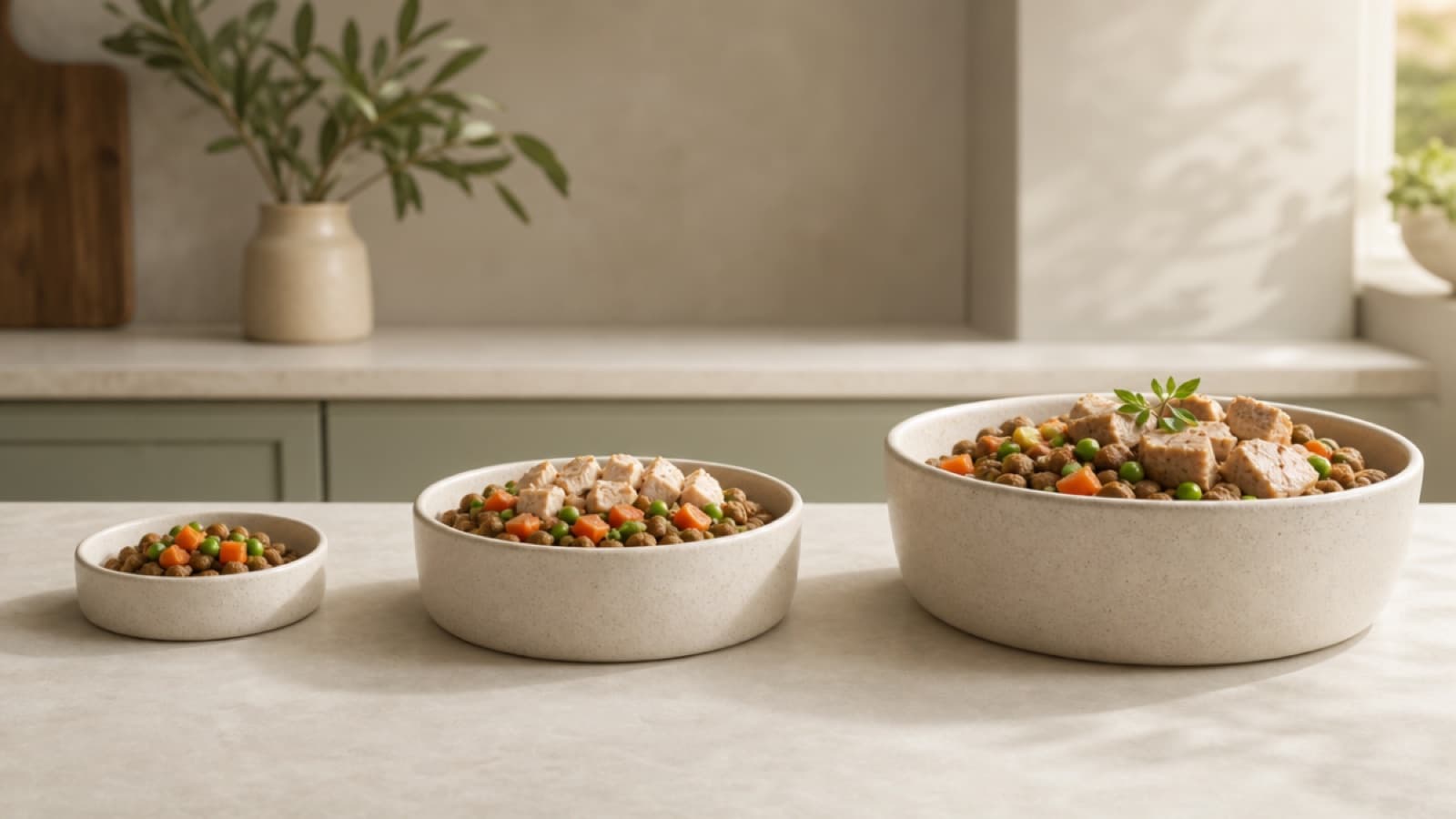
Feed the dog in front of you rather than the label on the litter. What matters is size, age, activity and waistline. A small cross and a large one are two different feeding jobs, and two dogs of the same cross can need quite different amounts depending on what they do all week.
Puppies need a food built for growth, and the larger crosses stay puppies for longer than the small ones do. Adults are best portioned by body condition, not by the number on the scoop. That means running your hands over the ribs every week or two and adjusting slowly when something has drifted. Our guide for each of these crosses ends with the foods our scoring matched to that dog, and the labradoodle food section is a good example of what that looks like.
If something clinical is going on, your vet comes first. A food change is a sensible thing to discuss with them, and a poor thing to guess at.
What to ask before you bring one home
Ask to see the mother with her litter, in the place the puppies have actually been raised. Ask what the father is and whether you can meet him, or at the very least see a photograph of his adult coat. Ask what health screening both parent breeds have had, and expect a clear answer, not a shrug.
Then ask yourself the harder question. Are you happy to keep a coat like this for the next decade, and to give a clever dog something to think about most days? If the answer is yes, a poodle cross is a wonderful dog to live with. The variety in them is part of the charm, and no fault in the design.
Frequently asked questions
Is a cockapoo or a labradoodle better for a first dog?
Neither is better, they are just different sizes of the same idea. A cockapoo is easier to manage physically and fits a smaller home, while a labradoodle asks for more room, more walking and more thought about where a big waggy dog fits. Both are clever and both need real grooming. Pick on the size and the daily routine you can honestly keep up for the next decade.
Do poodle crosses shed?
Most shed very little, but very little is not none, and it varies within a single litter. The tighter and curlier the coat, the less you tend to find on the sofa. What you gain in tidiness you pay back in brushing, because loose hair stays trapped in the coat and turns into mats. A looser wavy coat usually drops more hair and asks slightly less of you.
Are cockapoos and labradoodles recognised by the Kennel Club?
No. They are crosses and not registered breeds, so there is no written standard for size, coat or temperament and no breed register behind them. That is exactly why the puppies vary so much and why meeting both parents matters more here than with a pedigree. A good breeder will be open about what each parent is and happy to show you both.
How often does a doodle coat need grooming at home?
Plan on brushing most days once the adult coat comes in, working right down to the skin and never just over the top. Combine that with a standing appointment with a professional groomer every few weeks. Start both while the puppy is small, so being handled, clipped and dried is normal by the time the coat changes in the first year and the mats want to appear.