There is no single best breed, only a good fit. The honest test is your real week, and never your ideal one: the exercise you will still do in February, the grooming you will keep up and the hours your house sits empty. Answer those first, then meet grown dogs of any breed you are drawn to before you decide.
How much exercise will you really do?
Start here, because everything else bends around it. Most people answer this question as the version of themselves they meet in June, out early in good boots with the whole park to themselves. The useful answer is the February one. What happens on the wet Tuesday when you are late and already tired? A dog whose needs sit above your worst week will be restless, and so will you.
Some dogs want a job more than they want a walk. A Border Collie will do the distance happily and still come home looking for the next task. The real question is whether you enjoy training and problem solving enough to build it into your week. Other dogs are almost the reverse of their reputation. A Greyhound is a sprinter with a very long off switch, glad of a couple of good outings and then flat out on something soft for most of the day.
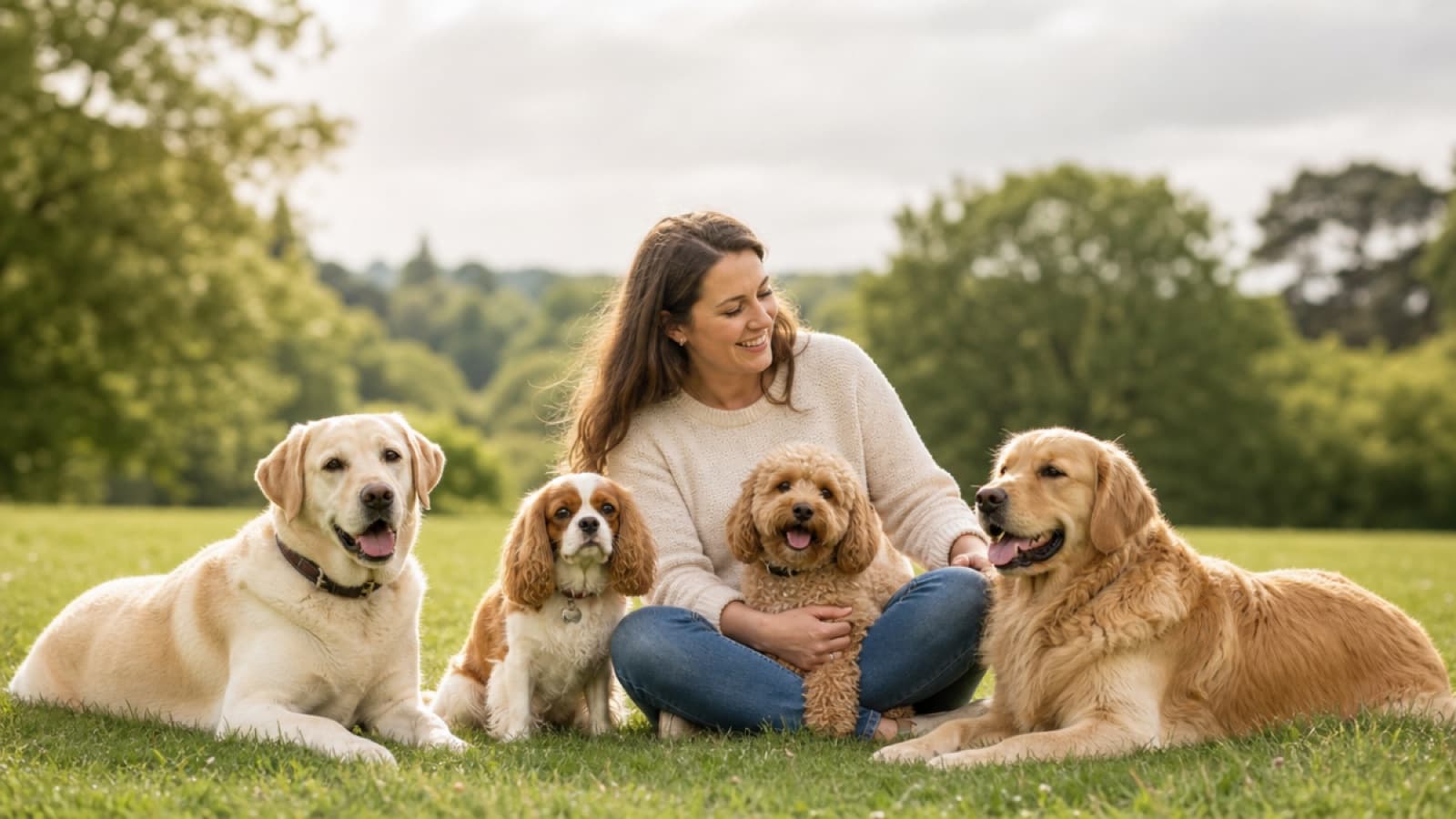
In between sit the dogs that need proper daily activity and will let you know when they have not had it. A Cocker Spaniel wants its nose busy and will find its own entertainment otherwise. A Labrador Retriever wants to be included in whatever is happening and tends to carry things about the house until it is. None of that makes one dog better than another. It only tells you which one lands well where you live.
How much grooming time can you honestly keep up?
Coat is the commitment people forget, because at eight weeks old every puppy is quick to brush. The coat you are choosing is the adult one, and it arrives whether the diary is clear or not.
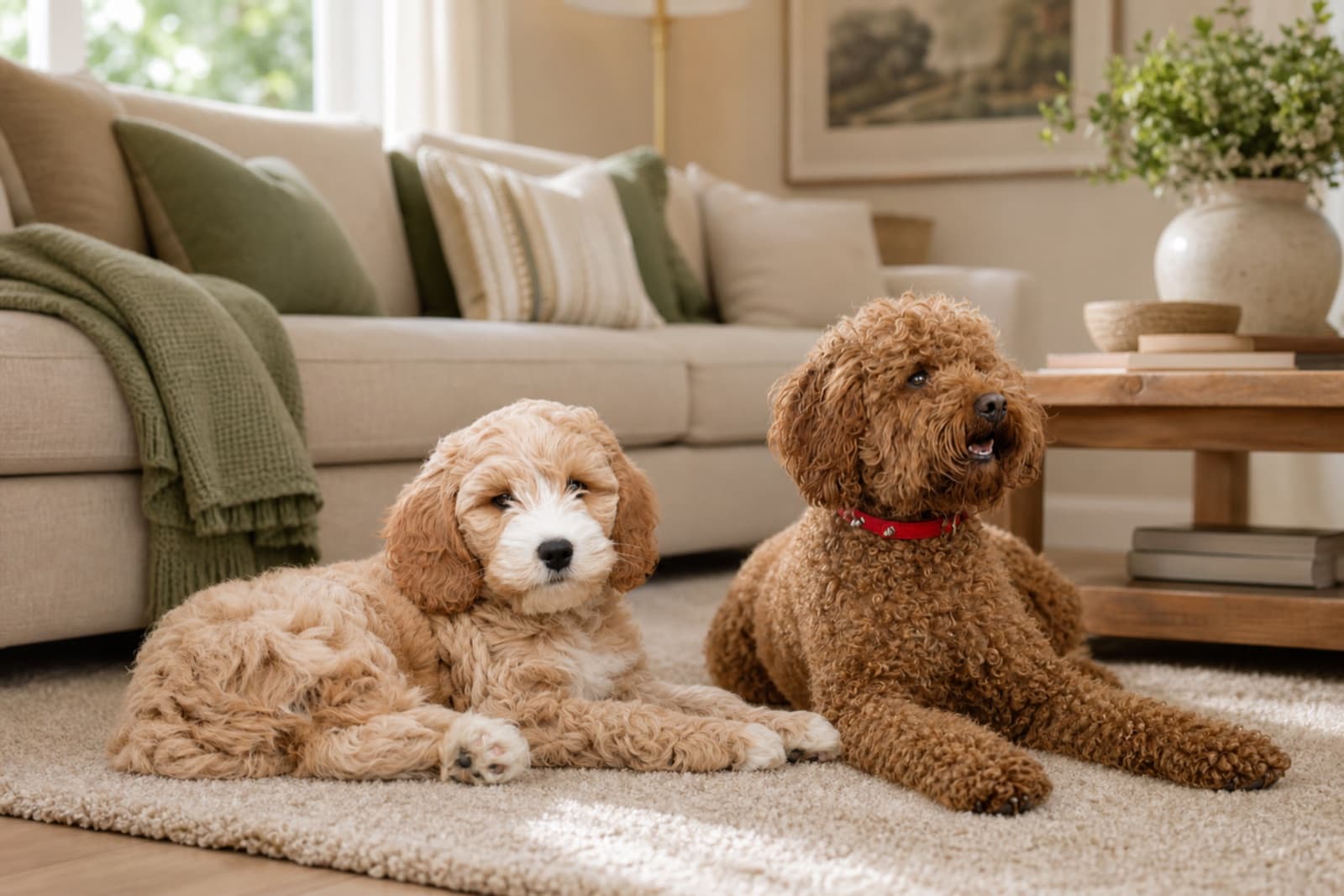
A curly or wavy coat, of the sort you often see on a Cockapoo, wants brushing right down to the skin several times a week and a standing appointment with a groomer for life. Miss a fortnight and the coat starts to mat close to the skin, which turns a pleasant ten minutes into an uncomfortable job for the dog. It is not hard work. It is simply work that never stops arriving.
A short smooth coat asks far less. A Staffordshire Bull Terrier needs little more than a rubber mitt and a towel by the back door, though short coats still shed and the hair still finds its way onto your clothes. Double coats sit somewhere in the middle. They drop heavily twice a year, which means a fortnight of hoovering and not a daily job. If that sounds like your future dog, brushing a double coat at home is more straightforward than it looks. Pick the version of that you will actually keep on top of.
Does your home suit the dog, or just the idea of one?
Space matters less than people assume. Plenty of large, calm dogs live contentedly in flats. A small, busy one can turn a big house upside down. What matters more is the shape of the day inside your home.
Stairs are worth a thought. A Dachshund gets on better with a ramp up to the sofa and a hand at the top of the stairs. That is a habit you build in the first week, not one you retrofit later. Warm weather is worth a thought too. A French Bulldog does best on early starts and shady benches through the summer, so a walk routine built around the cooler ends of the day suits it well. Staying lean does as much for a long back as any ramp, which we cover in feeding a dachshund or corgi.
If you rent, or you share a wall, think about how a dog that announces every noise in the hallway will land with the people around you. That is trainable, and it goes much better when you have planned for it than when you are apologising for it.
How many hours will the dog be alone?
Be exact rather than hopeful here. Count the longest normal day, ignore the average one, and include the evenings you are out. A dog left for a full working day with no plan in place learns to find that stretch worrying, and undoing that takes far longer than setting it up well in the first place.
The good news is that this is the most fixable item on the list. A midday walker solves it. So does a day care place a couple of times a week, a neighbour who likes dogs, or a working pattern that puts you at the kitchen table two days out of five. Sort out which of those is realistic before the dog arrives, not in the second week.
Settling alone is taught more than it is inherited. Some dogs take to it more readily than others, but almost all of them do far better when the first few months build it up slowly.
Children, other pets and a busy household
A house with small children is not a reason to wait, but it does change what you need. Toddlers are unpredictable at exactly dog height, so the non negotiable is a place the dog can go where nobody follows. A crate in a quiet corner or a bed behind a gate does more for family life than any amount of hopeful supervision.
Older children can be part of the routine, which is lovely for everyone, as long as the adults stay in charge of the training so the dog gets one consistent set of rules. Existing pets deserve the same patience. Introductions to a resident cat or dog go best slowly and on lead, spread over days, with everyone free to walk away.
Size and strength are worth being practical about too. A dog you can hold comfortably on a wet pavement while a child holds your other hand is a dog you will enjoy walking.
What does the first year actually involve?
A puppy is broken nights, toilet training in the dark and a stretch of chewing that will find something you love. It is also the window where socialisation does its best work, which means unhurried trips out to meet ordinary life while the world is still new. Then adolescence turns up just as you think you have cracked it, and the recall you were proud of goes quiet for a while. It comes back. It just needs you to keep showing up.
Do not overlook a grown dog from rescue. Choosing an adult means the coat, the energy level and the temperament are in front of you, and nobody has to promise them. Plenty of them walk in already house trained. It is a genuinely good route to the right dog, not a consolation prize.
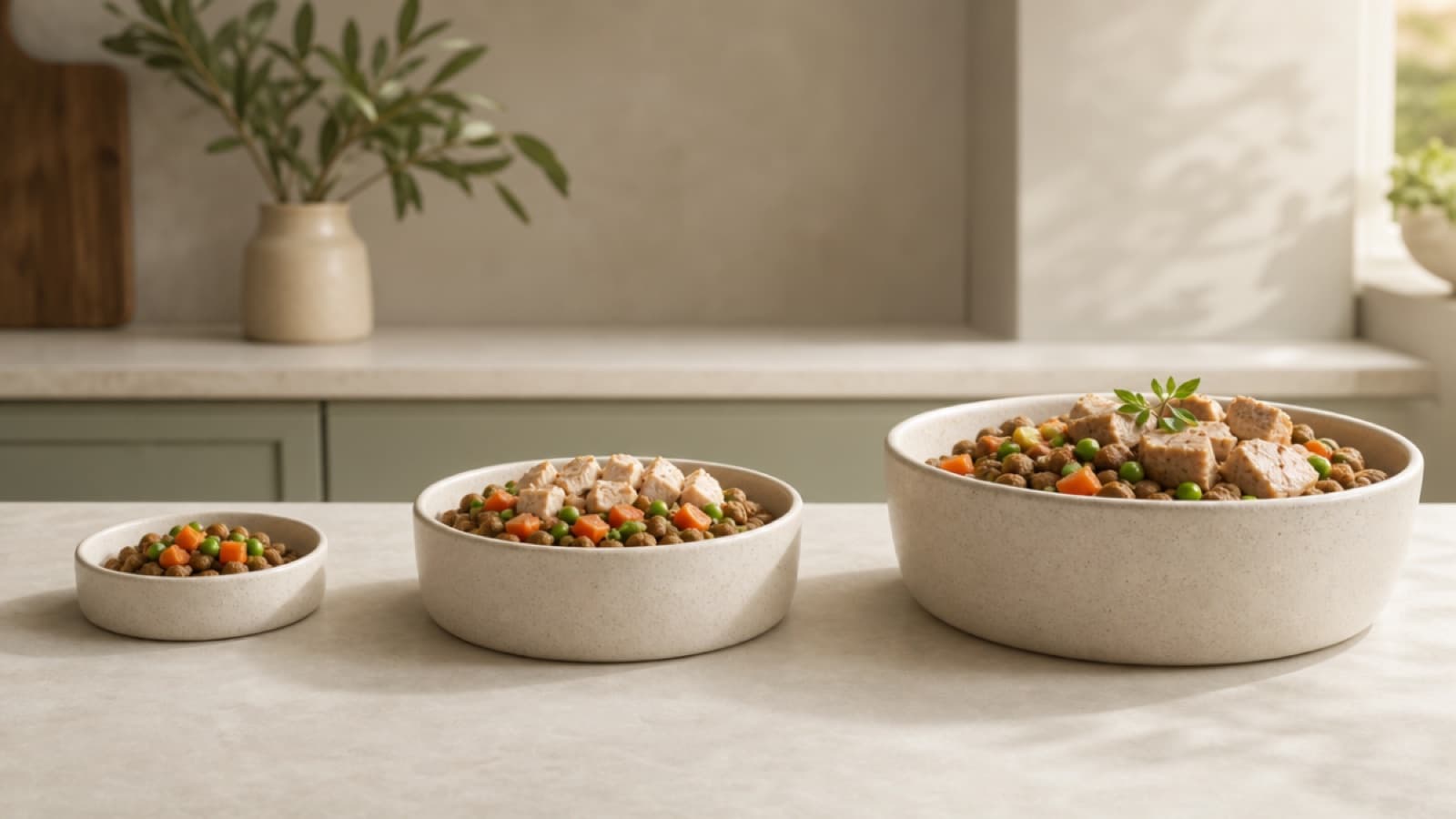
Feeding through that first year follows your dog's size and age, not its pedigree, which is less of a dinner table question than most people expect. Activity and body shape do the rest. Anything that looks clinical along the way is a conversation with your vet rather than a search engine.
Where do crossbreeds fit?
Very comfortably. A first cross can take after either parent or land somewhere between the two, so the honest approach is to read up on both sides and be happy with either outcome. If a poodle cross appeals because of the coat, plan for the grooming routine of the curliest possible version and treat anything lighter as a bonus.
With any crossbreed, judge the dog in front of you. Meet the mother, see where the puppies are being raised and watch how they respond to a stranger crouching down. That tells you plenty about the next twelve years, in a way no label can.
Meet real dogs before you decide
Reading is a start, and it will save you from the obvious mismatches. What it cannot do is show you the reality of an adult of the breed doing something ordinary in a kitchen while the kettle boils. That is the test worth taking.
Ask a breeder if you can visit without any obligation. Ask a rescue whether you can walk one of their dogs. Turn up early at a local training class and watch. Stop the person in the park who has the breed you keep thinking about and ask what the mornings are like, because dog people will tell you the truth and enjoy doing it.
Do that two or three times and the decision usually makes itself. You stop asking which breed is best and start noticing which dog you keep picturing asleep under your desk. That one is the answer.
Frequently asked questions
What is the best dog breed for a first-time owner?
There isn't one, and any list that says otherwise is guessing about your week. What first-time owners tend to do well with is a dog whose needs are predictable and openly signposted, so you can plan for them. Work out your exercise, grooming and alone-time limits first, then look for breeds that sit well inside them, clear of the edge.
Is a crossbreed a safer bet than a pedigree?
Not automatically, and it does not need to be. A first cross can favour either parent, so read up on both sides and be content with either result. What actually improves your odds is the same in both cases: a breeder who raises puppies in the house, lets you meet the mother and asks you as many questions as you ask them.
Should I get a puppy or an adult dog?
Choose the one that suits the year you are about to have. A puppy means broken sleep and a proper socialisation effort, toilet training included. In return you shape everything from the start. An adult from rescue shows you the finished coat, energy and temperament on day one, often already house trained. Both routes end with the same thing, which is your dog on your sofa.
How do I know if I have enough time for a dog?
Map a normal week on paper before you commit. Mark the longest day the house is empty, the walks you would genuinely do in bad weather and the grooming slot the coat will need. If there are gaps, fill them with a plan such as a midday walker or day care. Hoping will not do it. A dog needs a schedule that survives your busiest fortnight.