Keep a dachshund lean and keep the impacts out of her day. Weigh every meal, count the treats inside that ration and nothing on top, and check monthly that you can feel the ribs and see a waist. Add ramps for the sofa and car, use a harness, and phone your vet the same day if the back legs wobble.
Why does a long back need more looking after?
A dachshund, a corgi and a basset hound all share the same basic engineering. A long spine carried on short legs, with the weight of the body slung between the front end and the back end like a load on a bridge. It suits the work these dogs were originally bred for and it puts a steady demand on the soft discs that sit between the bones of the spine. Those discs are cushions. Everything your dog carries presses down on them, and every big jump off the sofa lands through them.
Intervertebral disc disease, usually shortened to IVDD, is the term vets use when one of those discs bulges or ruptures and presses on the spinal cord. Most owners of a dachshund or a Pembroke corgi will have heard the name before their puppy is a year old. Nothing you do at home can guarantee a back stays trouble free, and you should be wary of anyone who promises otherwise. What you can genuinely do is take pressure off. Keep your dog lean, and take the hardest landings out of the day. Both of those start tonight.
What does lean actually look like on a low dog?
Lean is a shape you can see and feel rather than a number you chase. Run your hands flat along your dog's sides. The ribs should feel the way the back of your knuckles feels when you make a loose fist, covered but easy to find, with no need to press. Look down from above and there should be a waist behind the ribs. From the side, the belly should rise gently towards the back legs, never running straight through.
The check matters more on a long-backed dog than on most. Anything gained sits along the whole length of that spine, and not over four tall legs. It also hides beautifully. A corgi's thick winter coat and the low, level outline of a miniature dachshund both disguise a middle that has quietly spread. Hands beat eyes every time. Do the check on the first of the month, so you notice drift while it is still small. For the fuller version, our guide to portions and body condition sets it out step by step.
How should I feed a long-backed dog day to day?
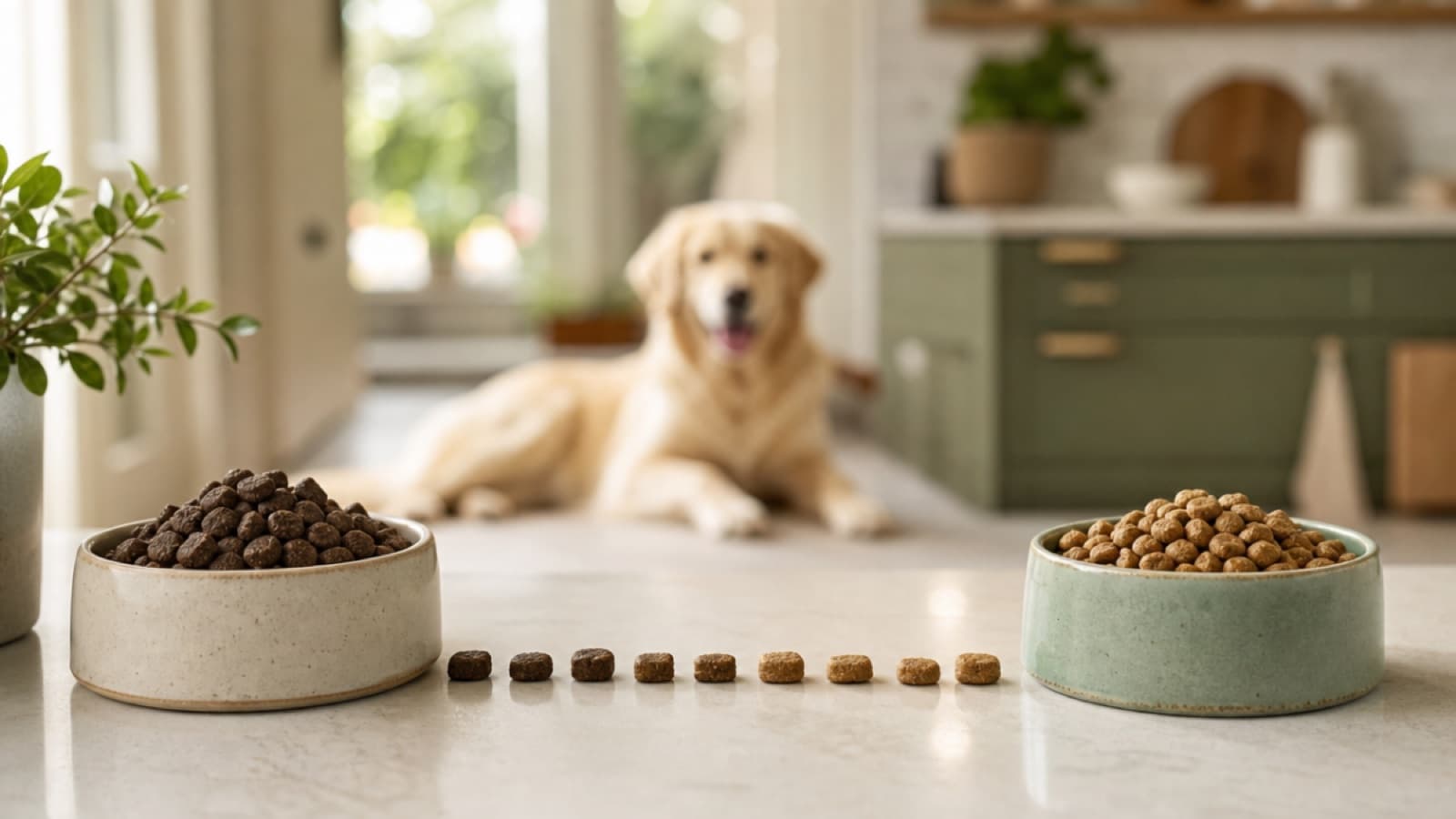
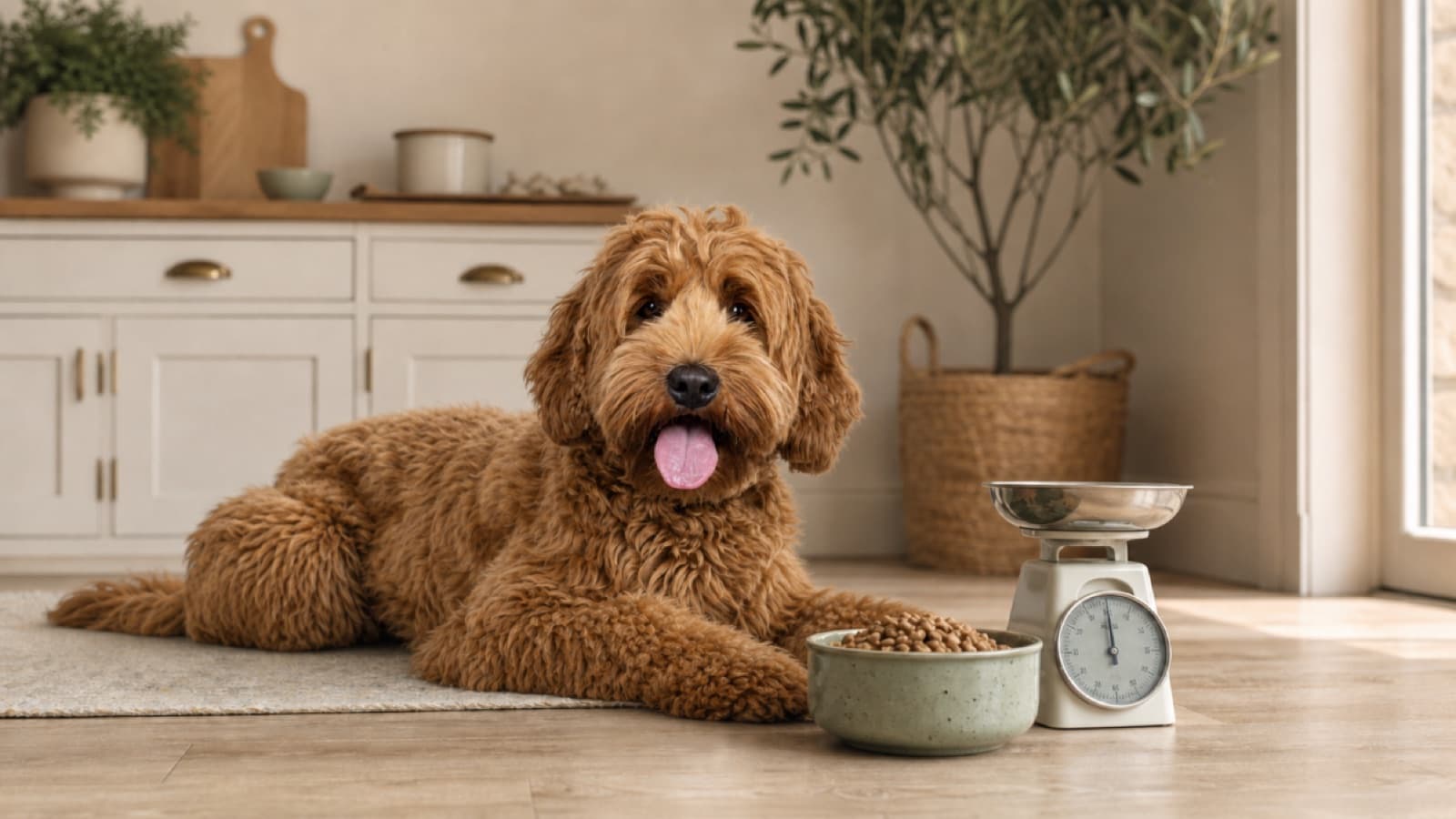
Weigh the food. A scoop or a mug drifts upward over a few weeks without anyone deciding it should. On a small dog that drift is a much larger share of the day than it would be on a labrador. Kitchen scales take ten seconds and they settle the question. The feeding guide on the bag is a starting point for an average dog, never an instruction. Adjust in small steps from what your hands tell you at the monthly check.
Split the ration into two meals so your dog is not waiting all day and then wolfing one big bowl. Then deal with treats honestly. Treats are what undoes most good intentions, and the fix is simple. The day's treats come out of the day's food. They do not sit on top of it. Weigh the meal, lift a little into a pot on the side, and train from that pot. Chews and the corner of your toast go into the same accounting.
This shape of dog often comes with a big appetite in a small frame. The basset hound and the dachshund were both bred to follow a scent for hours, and the enthusiasm for food that came with that job did not disappear when the job did. A corgi will work a kitchen with real professionalism. Holding the line on scraps is kindness rather than meanness, because the alternative is a heavier dog on a spine that was never built to carry it.
There is no recipe that protects a back, and any label hinting at one is selling. What helps is a food your dog does well on, fed at a portion that keeps the shape right. Every food in our reviews is scored on protein and processing, nutritional balance, transparency and value, so you can see how a recipe stands up before you commit to a bag. The Food Finder will narrow things down if you would rather answer a few questions about your dog. If the shape has already slipped, work to a plan and not by feel, and our guide to helping your dog lose weight explains the pace to aim for.
How do I take the jumping out of an ordinary day?
The biggest single impact in most long-backed dogs' lives is the drop off the sofa. A dog who has done it happily for years is still landing a long spine on a hard floor several times an evening. A ramp or a set of steps beside the sofa fixes it, and the same goes for the bed and the boot of the car. Introduce it with a few pieces of kibble from the day's pot and most dogs are using it inside a week. Lifting your dog in and out of the car by hand works just as well, as long as you are the one absorbing the landing.
Lift with two hands. One under the chest and one under the bottom, so the back stays level like a plank with no fold in the middle. Never scoop a long dog up under the front legs alone. This is worth teaching children in the house properly. Show them, do not just warn them, because they are usually the ones who want to carry the dog about.
Stairs deserve a decision, not a habit. Going up is generally easier than coming down, and a gate at the top means the choice stays yours on the days it matters. Slippery laminate is worth a rug runner along the route your dog takes at speed when the doorbell goes. A supportive bed helps as well, something that holds the body and does not bottom out like a thin pad. Our guide to choosing the right dog bed covers what to look for in one. On the walk, use a harness that spreads the pull across the chest, and not a collar that loads the neck. If you are weighing that up, harness, collar or both goes through it.
Which signs mean phoning the vet today?
Some changes in a long-backed dog are worth a same day call, with no waiting to see. Phone your vet if your dog suddenly will not jump onto something he has used all his life. Phone if he yelps or tenses when you pick him up, if he stands with his head low and his back arched, or if he simply does not want to move. Phone if the back legs look wobbly or cross over each other, if he drags a foot or knuckles over onto the top of it, or if he cannot get up at all. Loss of bladder or bowel control belongs on the same list.
Your vet comes first for any of that, and out of hours counts as the same day. While you are arranging it, keep your dog quiet and confined. Do not encourage him to walk it off. This is one of the reasons owners of these breeds tend to sort cover out early. Our explainer on how dog insurance works covers what to understand before you ever need it.
Lean for life, not for a fortnight
None of this is dramatic work. It is a handful of small habits that you stop noticing after a month, and the payoff is a spine asked to carry as little as possible for as long as possible.
Keep the monthly hands-on check going even when your dog looks fine, and mention the shape at every routine appointment so you and your vet are reading it the same way. A long back is not a fragile thing to be tiptoed around. It is a design that does best with a lean dog on it and a ramp where the jump used to be.
Frequently asked questions
Can any food prevent IVDD in a dachshund?
No. No recipe or supplement prevents a disc problem, and a label that suggests one is marketing, not medicine. What food genuinely does is control your dog's weight, and a lean dog asks less of every disc in that long spine. Choose a recipe your dog does well on, weigh the portion, and speak to your vet about anything spine or joint related.
Are ramps really necessary if I stop him jumping?
Ramps are the more reliable option. Telling a dog not to jump works until the doorbell goes, until you are in another room, or until a visitor lifts him onto the sofa without thinking. A ramp or a set of steps makes the safe route the easy one, so nobody has to remember. Start with the sofa and the car boot, since those account for most landings in an ordinary week.
How many treats can a long-backed dog have?
As many as fit inside the day's food, and none on top of it. Weigh the meal, take a portion out into a pot on the side, and use that pot for training and chews. A busy training day then cannot quietly become a bigger day. If you need more pieces to work with, break them smaller. Add nothing extra, because dogs count events far more than they count grams.
Should a dachshund or corgi be allowed on the stairs?
Make it a decision and never a default. Plenty of long-backed dogs use stairs for years without trouble, but coming down is the harder direction and it usually happens at speed. A gate at the top gives you control on the days it matters, and carrying your dog down with one hand under the chest and one under the bottom removes the impact entirely. Ask your vet if your dog has any back history.