Change food gradually over seven to ten days. Start at about a quarter new food to three quarters old, hold for two days, then go half and half, then three quarters new, then all new. Go slower if your dog has a delicate stomach or you are changing format too. Loose stools for a day are common, and steady worsening means pause.
Why does a sudden swap upset a dog's stomach?
A dog's gut is a settled little ecosystem. The bacteria living in it have spent months getting good at one particular recipe, and the gut lining has adjusted to match. Change the bowl overnight and you are asking that whole system to retool in a single sitting. Plenty of dogs cope fine. Others give you two days of soft stools, extra wind or a meal left in the bowl while everything rebalances.
The bigger the change, the more there is to adjust to. Moving between two dry recipes built along similar lines is a small ask. Moving from dry food to wet changes the moisture and the texture at once. A shift over to raw asks more again. Take none of that as a reason to avoid the change. It is a reason to give it more days.
The seven to ten day swap, stage by stage
There is nothing clever about the method. You put both foods in the same bowl and shift the ratio a little at a time, so the gut always has something familiar to work with.
Days one and two: roughly a quarter new food to three quarters old.
Days three and four: half and half.
Days five and six: three quarters new to a quarter old.
Day seven onwards: the new food on its own.
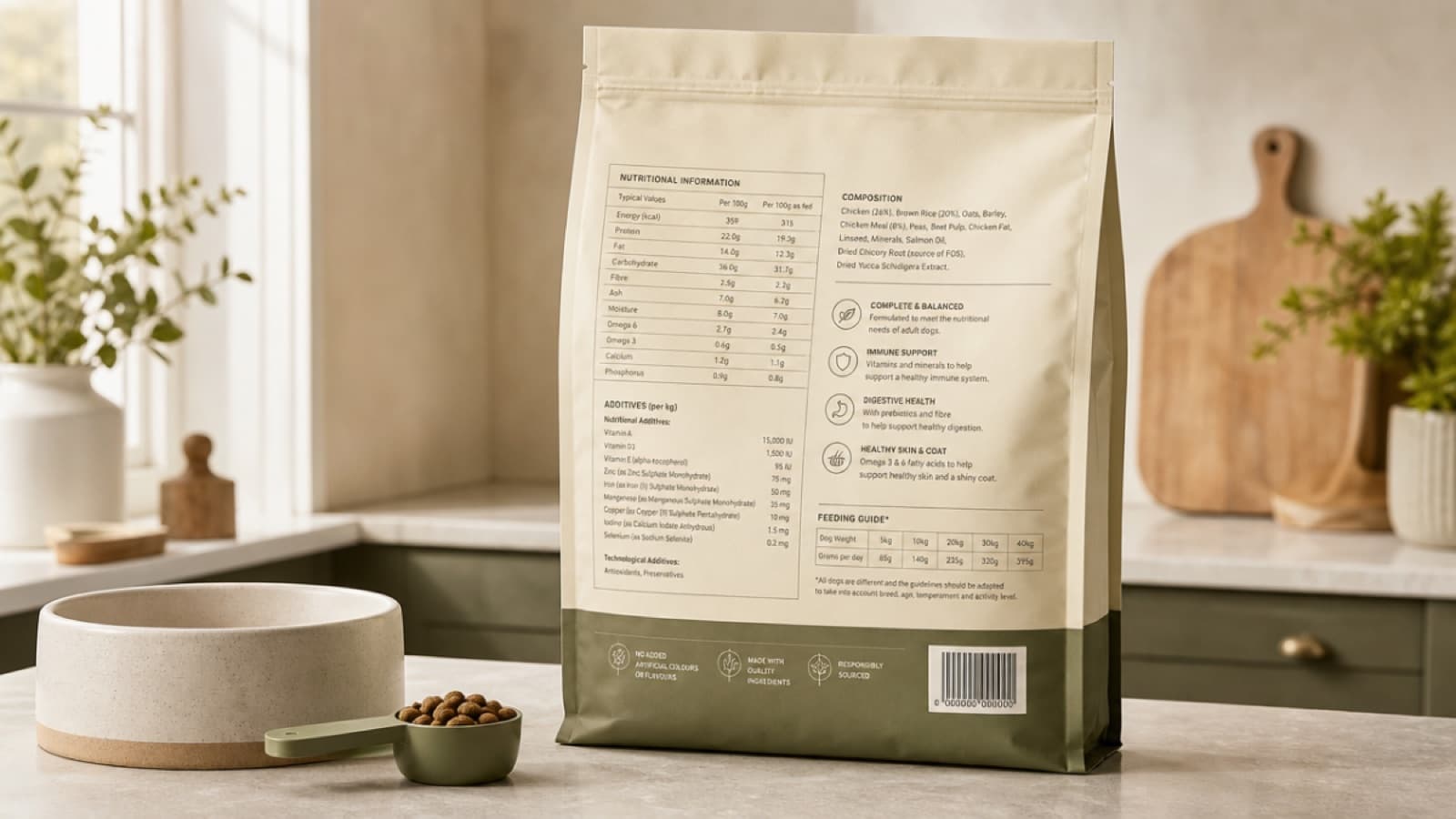
Two things separate a smooth swap from a messy one. The first is keeping the total portion the same. It is easy to tip a full scoop of the new food on top of the usual amount and end up feeding a meal and a half, which will unsettle a gut all by itself. Work out the full daily amount for each food, then take the fraction from each. Our guide to portions and body condition covers how to land on the right daily amount in the first place.
The second is mixing the two properly, with no separate halves of the bowl. A dog who can pick will pick, and you will find yourself on day five with a licked clean patch of old food and an untouched pile of new. Split the day into two meals as usual and stir each one through.
When should you take longer than ten days?
Ten days suits most dogs. Some want more. If any of this sounds familiar, stretch the plan across two or three weeks and hold each stage for three or four days.
Your dog has form for a delicate stomach, whether that means chronically loose stools or a gut that reacts to anything new. The foods we have reviewed for sensitive stomachs are a sensible place to look, and they still need the same slow introduction.
You are changing format as well as recipe, which covers kibble to wet food or either of those over to raw. Two changes at once deserve twice the patience.
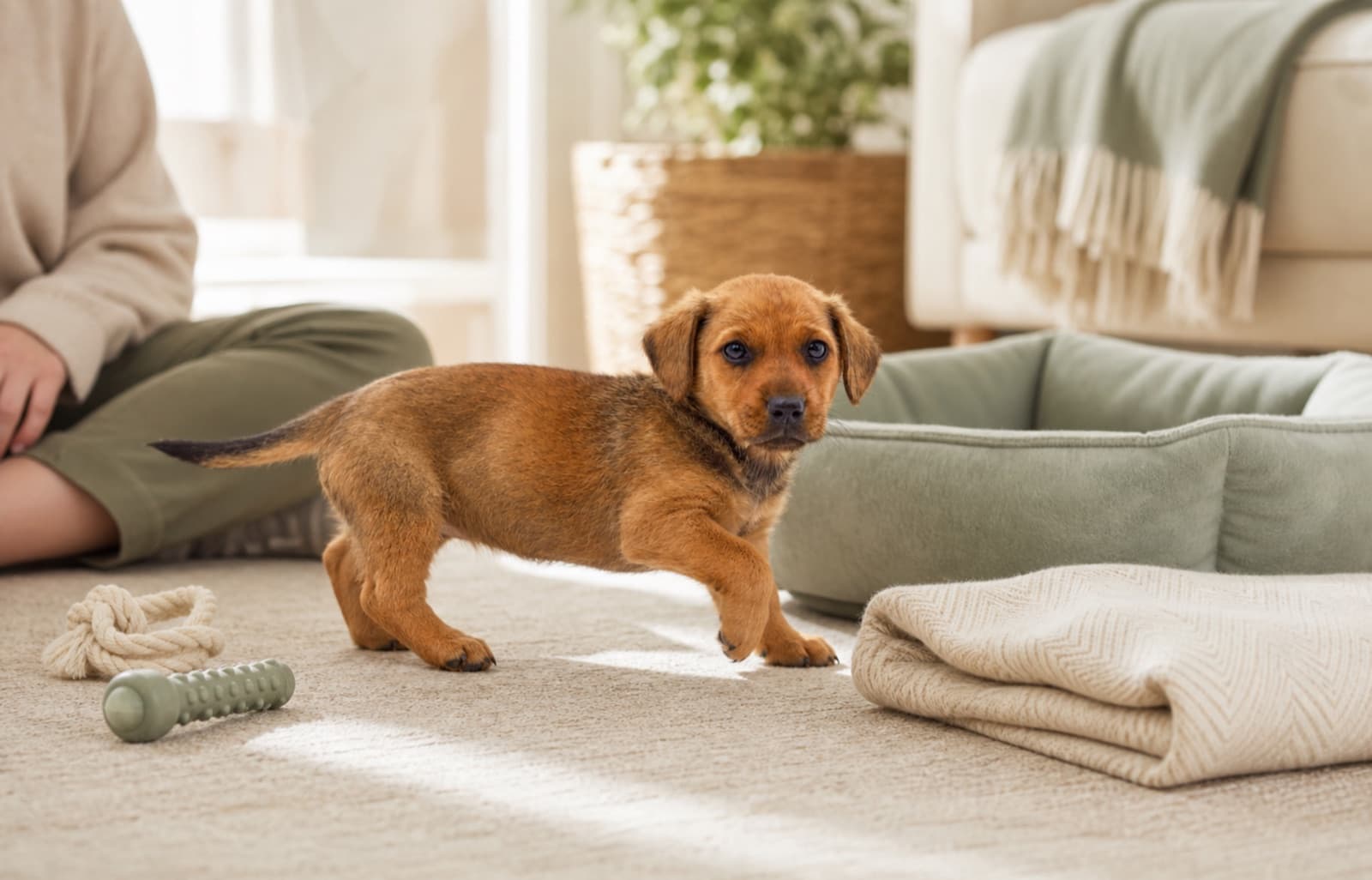
Your dog is very young or getting on in years. The same goes for one just out of an illness or a course of treatment. A gut that has been through something recently has less slack in it.
There is no prize for finishing in a week. Going slowly asks nothing of you but patience, and it makes the difference between a quiet fortnight and a run of ruined mornings.
What does a normal blip look like, and when do you pause?
A normal blip is small and it improves. Slightly softer stools for a day or two, more wind than usual, one meal eaten with less enthusiasm than the last. The fix is to hold at the ratio you are on and not push forward. Give it two or three days and it usually settles on its own.
Pausing means stepping back one stage, not giving up on the food. Return to the mix your dog was comfortable with, stay there until stools have been firm for two full days, then move forward again in smaller steps. Plenty of successful swaps have a wobble in the middle of them.
Some things are not a transition blip. Watery diarrhoea that carries on past about 48 hours, repeated vomiting, blood in either end, a dog who is flat and off their water, or a puppy showing any of it. That is a phone call, not a waiting game. Your vet comes first for anything clinical. If loose stools have become a running theme, there is more on the day to day management in calming a sensitive stomach.
Does the new protein matter?
Owners often read a bad week as proof the new food was wrong. Sometimes it only proves the swap was rushed. Sometimes, though, the protein genuinely does not suit. It is worth knowing how often you are meeting the same one twice.
We analysed 4,983 UK dog food recipes. Chicken turns up in 45% of the 4,935 recipes with a published ingredient list. That is how so many owners end up switching brands and feeling like they have made a proper change. The dog lands on the very protein it was eating before. If chicken has caused trouble in the past, read the composition, not the picture on the front. Where itching is the reason for the change, a proper elimination trial is the only way to be sure.
The encouraging half of that figure is how much room there is elsewhere. Those recipes draw on 32 distinct main proteins between them, so a genuine change of protein is easy to make once you know to look for one. If you would rather have the field narrowed for you, the takes a few details about your dog and shortlists what fits. Every food in our reviews is scored on protein and processing, nutritional balance, transparency and value.
How do you set the new food up to succeed?
Keep the rest of the week boring. Same feeding times, same two meals, same quiet spot. This is not the week for a new chew, a new training treat or a big day out with strange things eaten off the ground. If something does go sideways, you want to know what caused it.
Keep a note as you go. Three words a day on your phone about the stool, the appetite and the energy is plenty. It turns a vague sense that something is off into something you can act on, and it is exactly what your vet will ask about if you do end up calling.
Picking at the new bowl is a different problem with a different fix, and it is not a reaction to the food. Our notes on picky eaters cover it. A splash of warm water through dry food lifts the smell, and appetite is a fair tool of its own. A healthy dog who leaves one meal is rarely in any bother by the next.
Frequently asked questions
How long should it take to change my dog's food?
Seven to ten days for most dogs. Move in two day stages, going from a quarter new food, to half and half, to three quarters, then all of it. Stretch that to two or three weeks if your dog has a delicate stomach, or is very young or getting on. Changing format as well as recipe earns the same patience. Finishing fast is not the goal. Finishing without a wobble is.
Can I switch straight over if I have run out of the old food?
You can, and many dogs sail through it, but expect a couple of unsettled days. Soften the landing by splitting the day into smaller, more frequent meals for two or three days. Keep the rest of the routine identical, and hold off on treats and chews until stools are firm again. If your dog has a history of a sensitive gut, even two days of overlap is worth arranging.
Is diarrhoea normal when changing dog food?
Mildly loose stools for a day or two are common, and they usually settle if you simply hold at your current ratio without pushing on. Watery diarrhoea lasting beyond about 48 hours is not part of a normal transition, and nor is repeated vomiting, blood, or a dog who is flat and off their water. Ring your vet for any of those. Your vet comes first for anything clinical.
Can I keep mixing two foods in the bowl long term?
Yes, and plenty of owners do it happily. The thing to watch is portions, because two foods in one bowl makes it easy to feed more than you meant to. Work out the daily amount for each food and take only the share you are feeding of each. Keep the pairing consistent too, since chopping and changing week to week gives the gut the same jolt as a rushed swap.