


Most important facts
- Group
- Hound
- Size
- Small
- Weight
- 4–15 kg
- Lifespan
- 12–16 years
- Coat
- Smooth, long or wire
- Energy
- Moderate
- Height
- 13–23 cm
- Colours
- Red, black and tan, and more
- Shedding
- Moderate
- Est. feeding cost
- ~£0.58 a day
- Gear to consider
- Pet ramp, supportive bed, back-friendly harness
Typical dry food, adult
About the Dachshund
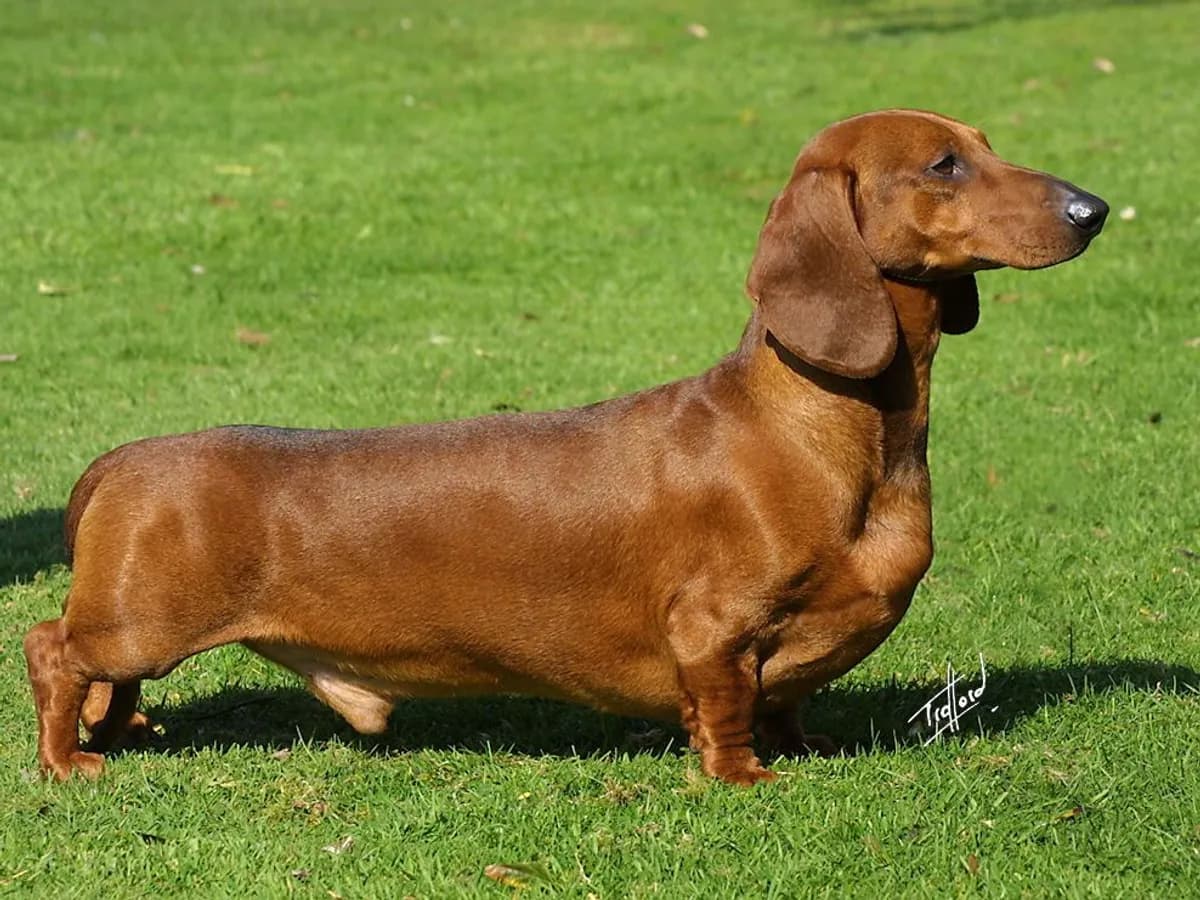
The Dachshund was bred in Germany to follow badgers underground, which explains the long, low body, the loud bark and the independent mind. The name literally means badger dog. Britain took to the breed as a companion, in two sizes and three coat types, and the sausage-dog silhouette has been a favourite here on and off for over a century.
Dachshunds are bold, alert and full of character, often carrying more confidence than their size strictly justifies. They were bred to think for themselves underground, and that independent streak is still there at training time, so patience and good treats go further than volume. They come in two sizes and three coat types, and the back rules apply to every one of them.
They have more energy than people expect and need proper daily exercise on their own short-legged terms. What they should not do is launch on and off furniture, because jumping down is exactly the move the long back is worst built for. Ramps and lifted cuddles are kinder.
Common health conditions
Things Dachshund owners commonly watch for. Guidance, not veterinary advice.
IVDD (back disease)
The breed's biggest risk by a distance, affecting around one in four at some point. Discourage jumping, use ramps and keep weight off the spine.
Weight gain
Extra weight loads the long back directly, so weigh the food, count the treats and hold the line at the table.
Progressive retinal atrophy
Gradual inherited sight loss, screened in breeding dogs, so ask to see the parents' certificates.
Heart disease
Some miniature lines develop heart disease, and routine vet checks give the best chance of catching it early.
Feeding a Dachshund
Keep your Dachshund lean above everything else. Even a little extra weight loads the long back and raises the risk of disc trouble. On a dog that might weigh anywhere from 4 to 15 kg, a few biscuits a day is a meaningful share of the total.
A complete food weighed out and portioned to their waistline does the job, split into two meals to keep a keen eater satisfied. The Food Finder works the portion out from your dog's weight and how active they are, not from a generic guide. Older, quieter dogs often need less food than the routine amount suggests.
Every dog is different — weight, age and activity all shift what a Dachshund needs. The turns these breed tendencies into a shortlist matched to your dog’s age, size, budget and needs.
Typical adult weight
4–15 kg
Est. daily calories
240–850 kcal
A broad guide for an average-activity adult in good body condition — not veterinary advice. Real needs vary with age, neutering, activity, health and body condition, so no two Dachshunds eat exactly the same. Get a personalised estimate or estimate feeding costs.

- Per day
- ~£0.58
- Per month
- ~£18
- Per year
- ~£210
A broad typical monthly budget guide, not a live price quote. Food format, calorie density, pack size and retailer pricing all change the real cost.
Find the right food for your Dachshund
Foods ranked to your dog
Answer a few quick questions and the Food Finder ranks foods to your Dachshund by score, price, life stage and fit.
Breed at a glance
- Exercise needs5/10
- Appetite6/10
- Trainability5/10
- Good with children6/10
- Shedding4/10
- Tolerates being alone4/10
The good & the worth-knowing
The good
- A big personality in a small package
- At home in flats and houses alike
- Needs less exercise than many breeds
Worth knowing
- A high risk of back problems
- Weight gain is especially risky
- Can be stubborn to train
Best matched accessories
All accessoriesThe collections that suit the breed, judged by the same independent standard.
Common owner questions
How much should I feed a Dachshund?
Keeping your Dachshund lean is the single best thing you can do for their back, so feed a complete food weighed to their waistline rather than scooped by eye. A miniature needs noticeably less than a standard, so there is no one breed amount, and the Food Finder sizes the portion to your dog's weight and activity level.
What is the best food for a Dachshund?
Portioned carefully to keep the weight down, a complete recipe built on a named protein suits the breed best. Smaller kibble sizes suit the miniatures, and a slow feeder helps a greedy eater feel fed. See the matched foods below or run the Food Finder for a ranked shortlist sized to your dog. Split the day's food into two meals.
How do I stop my Dachshund gaining weight?
Measure out the portions and weigh your dog regularly, because on a small frame a creeping hundred grams really does matter. Extra weight loads the long back directly, so portion discipline protects the spine as much as the waistline. Swap shop treats for a share of the daily food and keep table scraps off the menu.