

Start with the simplest food you can find: one named protein, a short ingredient list and nothing your dog has reacted to before. Rule out scavenging and extra treats first, then move over slowly across a week or more and give the new food two to three weeks. If there is blood or weight loss, see your vet first.
What does a sensitive stomach actually mean?
Loose stools most mornings. A gurgling gut at four in the afternoon. Wind that empties the living room. Being sick once a fortnight for no reason you can point to. None of that is a diagnosis, and that matters more than it sounds. The plan for a dog who eats too fast looks nothing like the plan for a dog whose gut is genuinely reacting to an ingredient.
True food allergies are less common than the internet suggests. Far more often the culprit is something ordinary. Usually it is too much food, or a few too many extras. Sometimes it is a run of food changes where no recipe was ever given time to settle. So before you go shopping, spend a week being a detective.
Rule out the easy causes before you change the food
Scavenging is the big one. Dogs who hoover on walks are eating a second, unregulated diet that you never see and cannot account for. Two weeks of a shorter lead through the park, or a basket muzzle if your dog is a committed forager, will tell you a great deal for very little effort.
Then count the extras. Write down every treat, chew, dental stick and corner of cheese that goes in over seven days. Owners are almost always surprised by the tally. If the extras have quietly stacked up, the bowl is not really the thing that needs fixing.
Portion size and pace matter too. A dog eating more than they need will produce soft and urgent stools on the best recipe in the country. So will a dog who inhales a full bowl in seconds. Splitting the day into two meals and using a slow feeder asks nothing of you but a little patience. Our guide to portions and body condition will help you check you are feeding the right amount in the first place.
Simplify to one protein you can name
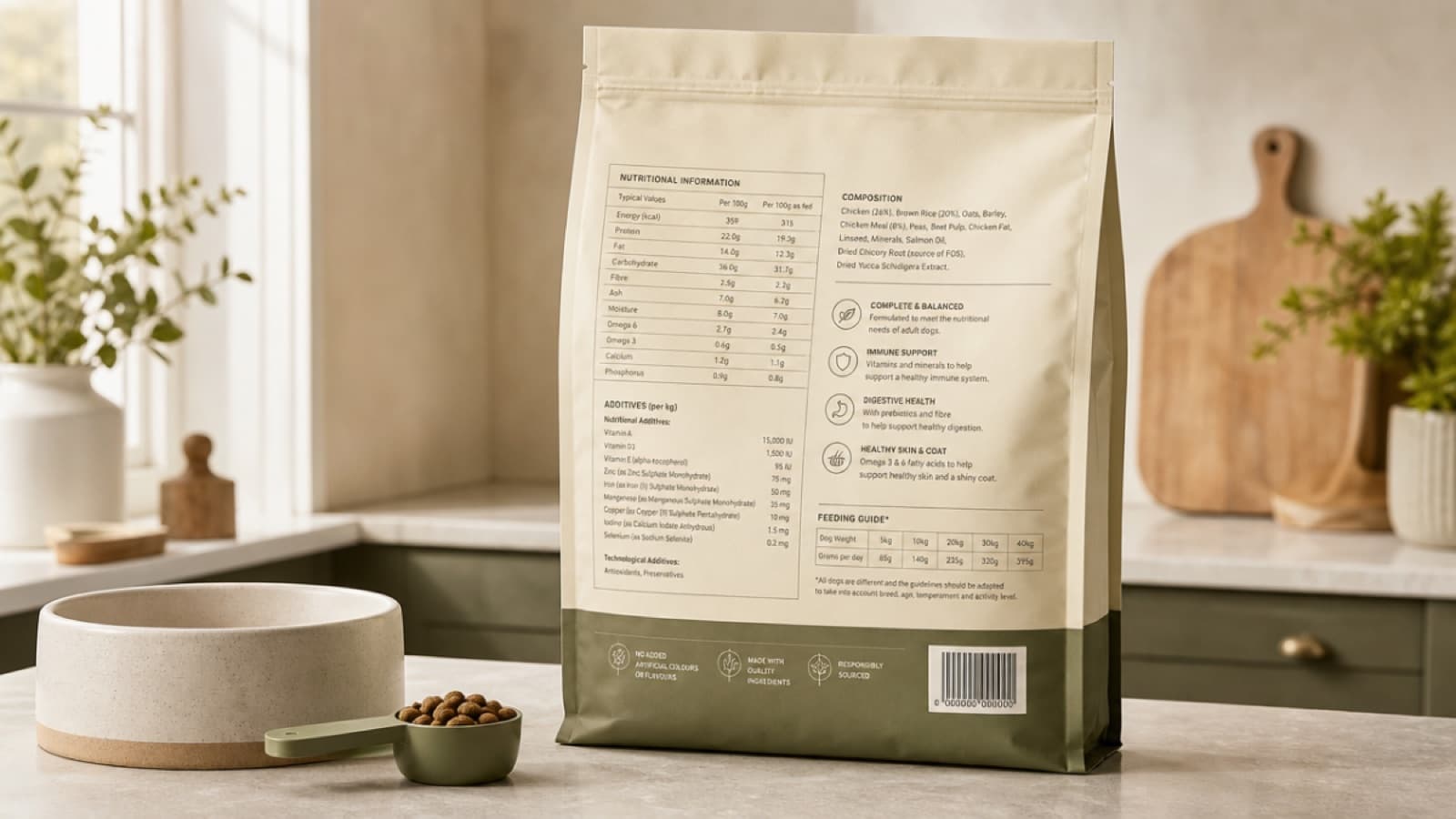
Once the obvious is ruled out, the aim is simplicity. You want a recipe where you can read the composition and say out loud what the animal was. A single named meat with a short list behind it. No vague catch-all wording standing in for the interesting bit. If you are not confident reading the back of a bag, our walk through how to read a dog food label takes it line by line.
Chicken is the default of the British pet food aisle. We analysed 4,983 UK dog food recipes, and 45% of them contain chicken somewhere in the list. That is not an accusation against chicken, which suits most dogs perfectly well for a lifetime. It does mean that if your dog has been quietly reacting to it, chicken has probably been in every food you have tried, including the ones you switched to in order to fix the problem. Where itching comes alongside the gut trouble, a proper elimination food trial is the way to pin the protein down.
The hopeful part is how much else is out there. Across the same set we counted 32 distinct main proteins, from lamb and salmon through to venison and insect. If chicken is out, you are nowhere near stuck. Answer a few questions in the and it will narrow the shelf down to recipes built around a protein your dog has not met yet.
Does grain-free settle a sensitive stomach?
Sometimes, and less often than the shelf implies. Of the 4,935 recipes that publish an ingredient list, 2,925 name no grain at all, which is 59% of them. Grain-free stopped being a specialist choice for delicate dogs years ago. It is simply the mainstream now.
Something always has to do the job the grain was doing. In 70% of those grain-free recipes, that job goes to potato, pea or lentil. If your dog's gut objects to one of those, grain-free is not a step towards simplicity. It is just a different set of ingredients to react to, and plenty of sensitive dogs do beautifully on rice or oats. We work through the whole question in does my dog need grain-free food, and you can look through the grain-free recipes we have reviewed if you decide to try one.
Wet, dry or a mix of both?
No format is automatically kinder to a gut. What matters far more is consistency. Dry food is easy to measure precisely, which helps enormously when you are trying to hold everything else steady. Wet food carries a lot of moisture, which suits some dogs with sluggish digestion. Its ingredient list is often shorter and easier to actually parse.
If you mix, keep to the same two products every day rather than rotating whatever happens to be open. Variety is lovely for a robust dog. For a sensitive one, boring is the goal. Every food in our reviews is scored on protein and processing, nutritional balance, transparency and value, so you can see what a recipe is genuinely built from before you commit to it.
Change it slowly, then leave it alone
The most common mistake by a mile is speed. A gut that is already unhappy will not thank you for a new recipe dropped in overnight. Move across over at least a week, adding a little more of the new food each day. If the stools tell you to slow down further, do that. Our guide to switching food without upset sets out the day by day version.
Then hold your nerve. Give the new food two to three weeks before you judge it. The first few days often look worse than they really are, simply because the change itself is a disturbance. Keep a short note of what you find each morning, because memory is generous and a written record is not.
One food at a time, one change at a time. If you swap the recipe, cut the treats and add a supplement in the same week, you will have learned nothing about which of them actually helped.
When does your vet come first?
Some signs are not a food puzzle to solve at home. Blood in the stool, repeated vomiting, weight dropping off, a dog who has gone flat and quiet, or a puppy with diarrhoea lasting more than a day. Ring the vet, and do it before you start experimenting with recipes.
It is worth saying that a vet who suggests a particular diet is not dismissing your research. They can see things you cannot. Take your food diary to the appointment. A fortnight of honest notes about what went in and what came out is genuinely useful to them. It saves you both a lot of guessing.
Frequently asked questions
Is chicken bad for dogs with sensitive stomachs?
No, chicken suits most dogs perfectly well. The issue is how common it is. Of the 4,983 UK recipes we analysed, 45% contain chicken, so a dog who reacts to it has most likely met it in every food you have already tried. If you suspect chicken, choose a recipe built on one different named protein and give it a fair two to three weeks before deciding.
How long should I give a new food before I know it is working?
Two to three weeks. The first three or four days often look worse rather than better, because the change itself unsettles things. After that you want a steady picture, not one good morning. Keep a daily note of what the stools look like, so you are judging a record and not a mood. If nothing has improved by week three, change one thing again, not everything.
Is wet food easier to digest than dry?
Not automatically. Neither format is inherently gentler on a gut. Wet food brings more moisture and often a shorter ingredient list, which some sensitive dogs do well on. Dry food is easier to measure accurately, and precise portions matter a lot when you are trying to settle things down. Pick the one you can feed consistently every single day, and keep the recipe the same.
Do I need a prescription or vet diet?
Possibly, and that is your vet's call, not something to decide from a shelf. If your dog shows red flags such as blood, weight loss or lethargy, book the appointment first. If the problem is mild and grumbly, rule out scavenging first. Look hard at the extra treats and the portion size. Then try one simple recipe properly for two to three weeks and take your notes along.