
Most dogs do not need grain-free food. Grains are not a common allergen, and a diagnosed grain intolerance is genuinely rare. Grain-free is a format choice, not a health upgrade. If your dog is itchy, fleas and pollen are far likelier causes. The meat protein itself is another. Speak to your vet before rewriting the bowl.
What does grain-free actually mean on a label?
Grain-free means one thing and one thing only. The recipe contains no wheat, no rice, and nothing else from the cereal family either. That is the entire claim. It describes what has been left out of the bowl, not what has been put in. Those two ideas get muddled constantly on the front of a bag.
It helps to know how the phrase is applied in practice. When we look at whether a food is grain-free, we go by the ingredient list itself. If it names no wheat, maize, rice, barley, oats, rye, spelt, sorghum, millet or generic cereals, it counts. No marketing badge required.
Everything that decides whether a food suits your dog sits further down that same list, which is why our guide to reading a dog food label works through it in the order that matters.
How common is grain-free dog food now?
We analysed 4,983 UK dog food recipes. Of the 4,935 that publish an ingredient list, 2,925 name no grain at all. That is 59%, so grain-free is not a specialist corner of the market any more. It is most of the shelf.
This is worth sitting with for a moment. When a feature is shared by the majority of foods on sale, it stops working as a mark of quality. Two grain-free recipes can be built to completely different standards, and the badge on the front will look identical on both. The claim narrows your options a little. It does not rank them.
If there is no grain, what is in there instead?
Grain does a job in a recipe. It brings starch and bulk. In a dry food it is also part of what holds the kibble together. Take it out and something has to step in.
Of the grain-free recipes in our analysis, 70% replace the grain with potato or peas. Those ingredients behave much like the cereal they replaced, which means a grain-free food is not automatically lower in carbohydrate. Owners are often surprised by that, particularly with dry food, where a binder of some kind is simply part of how the product is made.
None of that is a criticism. Potato and pea are ordinary ingredients that most dogs handle perfectly well. The point is narrower. Swapping rice for potato changes an ingredient, not a category. If you moved your dog onto grain-free expecting a fundamentally different sort of food, the analytical constituents on the back will tell you far more than the wording on the front.
My dog is itchy. Is grain the reason?
Usually not, and this is the most useful thing to know before you start rewriting the menu. Food allergies are genuinely uncommon in dogs, and grain sits low on the list of triggers when they do occur.
The likelier explanations are much more boring. Fleas are the classic one, and a flea does not need to be visible on your dog to set off a reaction. Pollen and grass come next, and the giveaway is timing. Itching that arrives every spring and settles in autumn is telling you something no bag of food can fix. Then there is everything else, from ear infections to something they have been lying on.
Your vet comes first here, always. The only dependable way to pin an itch on a specific ingredient is an elimination diet run properly under their guidance, and that takes weeks of patience rather than a hopeful trip round the aisle. If you get that far, how a food trial actually works sets out what the weeks ask of you. If diet does turn out to be part of the picture, foods built with skin and coat support in mind are a sensible place to start that conversation.
Why protein is the more likely sensitivity
Protein is the more common culprit when a dog does react to something in the bowl. The numbers show why. Chicken appears in 45% of the recipes we analysed. It is the default protein of the British pet food aisle, in dry food, in wet food and in most of the treats sitting alongside them.
That is not a mark against chicken. It simply means a dog who has eaten the same style of food for years has had an enormous amount of one protein and very little of anything else. If a sensitivity is going to surface anywhere, it tends to surface in the ingredient they have eaten most of.
The encouraging part is how much room there is to move. We counted 32 distinct main proteins across the recipes in our analysis, from lamb and duck through to salmon and venison. If you and your vet decide to try a different protein, you are not down to two options. Foods aimed at a sensitive stomach often run a single named protein for exactly this reason, and our piece on calming a sensitive stomach covers what else to look at before you change anything.
So when is grain-free the right call?
There are three honest reasons to feed grain-free, and all three are perfectly good ones.
The first is a grain intolerance your vet has actually identified. Uncommon, but real. If that is your dog, grain-free is not a preference. It is the plan.
The second is that your dog simply does better on it. Firmer stools, more enthusiasm at dinner time, a coat you are happier with. You do not need a diagnosis to notice your own dog thriving.
The third is the most common of all. You found a recipe you rate and it happens to contain no grain. Start from the food and check what it is made of. Do not start from the badge and hope the rest holds up.
How to choose without guessing
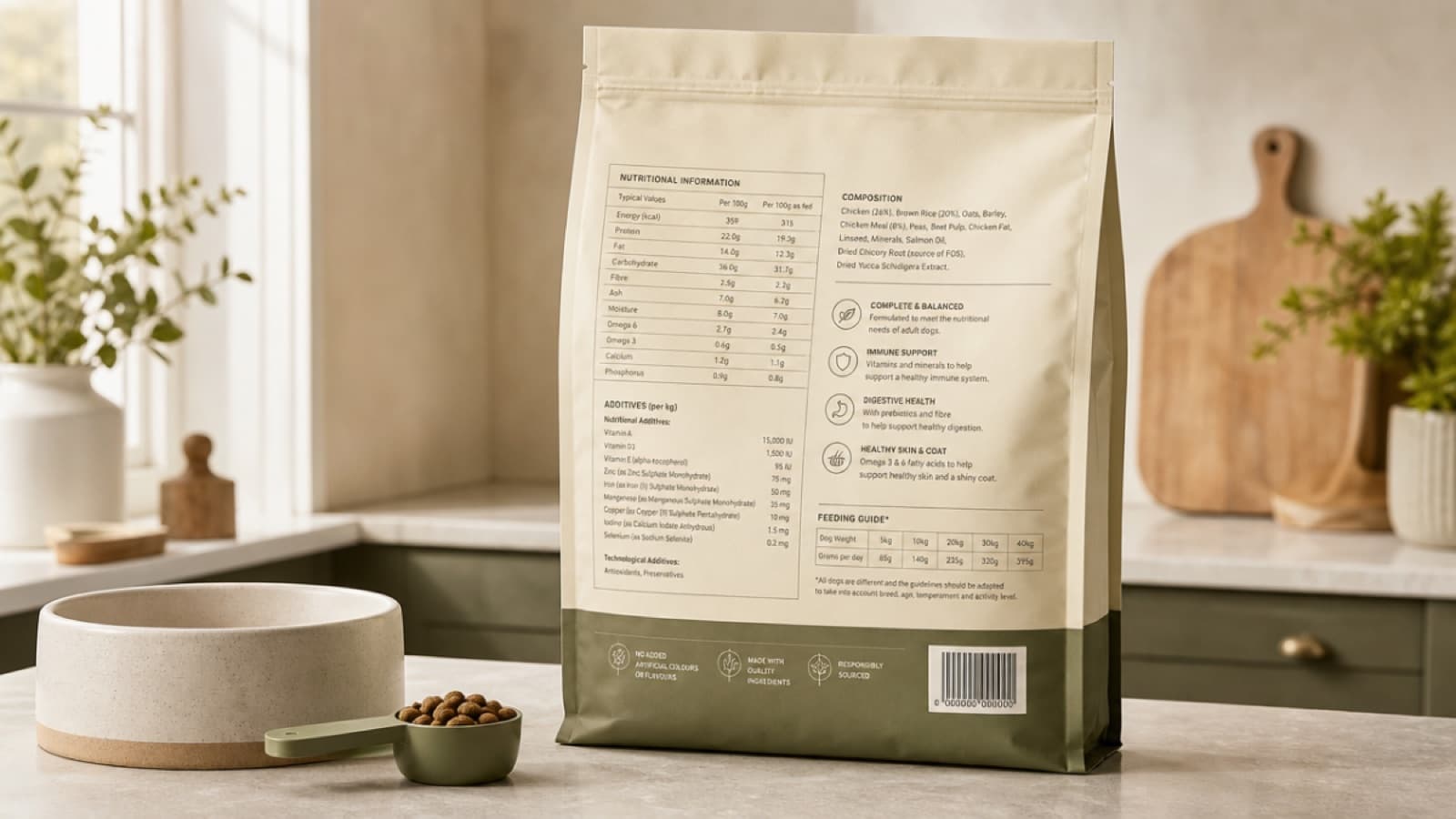
Work from your dog, and not from a category. Their age, their build, how much they really move in a normal week and what their stomach has told you in the past will narrow the field faster than any single claim on a bag. The asks those questions and does the narrowing for you.
Then look at how a food is put together. Every food in our reviews is scored on protein and processing, nutritional balance, transparency and value, and how we score is set out in full so you can see what sits behind it. A recipe that names its meat, tells you how much of it is in there and avoids vague catch-all wording is a better bet than one waving a grain-free flag over a thin ingredient list.
Whatever you land on, change over slowly. A week or so of mixing the new food into the old prevents most upsets, and our guide to switching food without upset has the day by day timings.
Frequently asked questions
Is grain-free food better for my dog?
Not by itself. Grain-free describes what a recipe leaves out. Since 59% of the UK recipes we analysed already leave grain out, the claim no longer separates one food from another. What matters is the quality of whatever fills the gap and how well the recipe as a whole suits your dog. Judge the ingredient list and ignore the badge on the front of the bag.
How do I know if my dog is allergic to grain?
You cannot establish it at home. Only your vet can, usually with an elimination diet run carefully over several weeks. Itching and licked paws have a long list of causes behind them. Fleas or pollen are far more likely culprits than wheat. Book the appointment before you change the food, because switching early muddies the results and makes the answer much harder to reach.
Are grain-free diets linked to heart problems in dogs?
It remains an open question rather than a settled finding. Research has looked at a possible link between some grain-free recipes and a heart condition, and the picture is still not clear. If your dog belongs to a breed with known heart concerns, or you simply want reassurance, raise it at your next check-up so your vet can weigh it against your dog's own history.
Is grain-free the same as low carbohydrate?
No. Of the grain-free recipes we analysed, 70% use potato, pea or lentil in place of the grain. Those bring starch of their own. Some grain-free foods genuinely are lower in carbohydrate, particularly wet and raw styles, but the phrase on the front will not tell you which. Check the analytical constituents and where those ingredients sit in the composition list.