
Most important facts
- Group
- Hound
- Size
- Toy
- Weight
- 4–5 kg
- Lifespan
- 12–16 years
- Coat
- Short and dense in the classic smooth variety
- Energy
- Moderate
- Height
- 13–18 cm
- Colours
- Red, black and tan, chocolate, dapple or brindle
- Shedding
- Moderate
- Est. feeding cost
- ~£0.37 a day
- Gear to consider
- Pet ramps or steps for sofas and beds, a supportive orthopaedic bed, a slow-feeder bowl
Typical dry food, adult
About the Miniature Dachshund
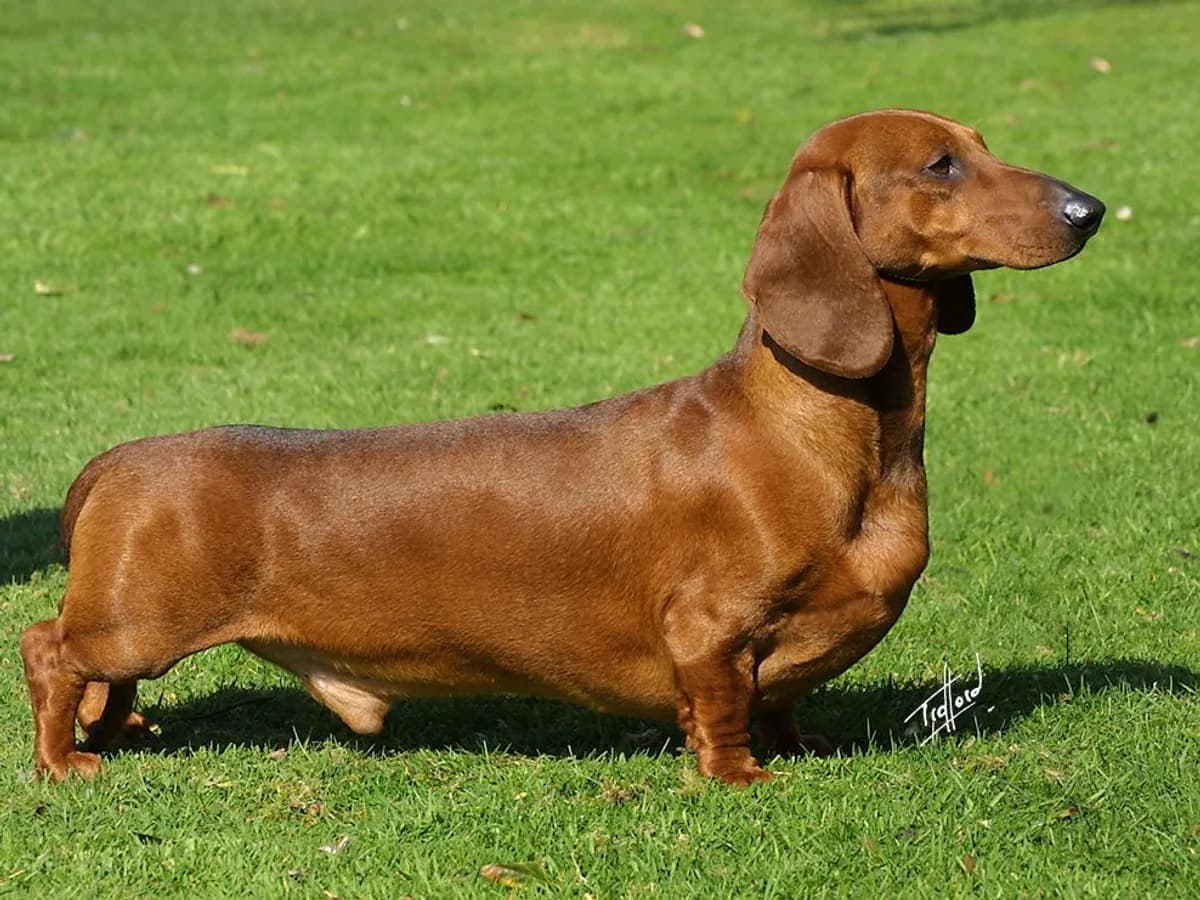
The Miniature Dachshund was bred down from the standard Dachshund in late nineteenth-century Germany, where hunters wanted a smaller hound that could follow rabbits into burrows the badger-sized original couldn't enter. German breeders still classify the sizes by chest circumference rather than weight. In Britain the Miniature has become hugely popular in recent years, comfortably outselling its larger relative.
Miniature Dachshunds are bold, curious and surprisingly determined for their size, a legacy of their original job hunting underground. They tend to be devoted to their families, alert watchdogs, and can be vocal, barking readily at anything unfamiliar.
Their independent, hound-like streak means training benefits from patience and consistency, with repetition alone doing little. Food-motivated reward-based training works well, given the breed's enthusiasm for meals. They can be prone to separation-related behaviour if left alone for long periods without building up tolerance gradually, and early socialisation keeps wariness of strangers in check.
Common health conditions
Things Miniature Dachshund owners commonly watch for. Guidance, not veterinary advice.
Intervertebral disc disease (IVDD)
The breed's long back and short legs put real strain on the spinal discs. Keep weight down and discourage jumping on and off furniture.
Obesity and weight gain
Miniature Dachshunds have hearty appetites for their size, and even small amounts of extra weight press on the spine. Portion accurately and weigh the food.
Patellar luxation
Slipping kneecaps turn up often in small breeds. Maintain a lean body condition to reduce joint strain.
Progressive retinal atrophy (PRA)
An inherited eye condition, reported more often in the long-haired variety. Choose breeders who health-test for it.
Dental disease
Like many small breeds, tartar builds up readily in a compact jaw. Consider dental-friendly feeding and chews alongside brushing.
Feeding a Miniature Dachshund
A Miniature Dachshund's spine is under constant mechanical stress, so keeping this breed lean is a genuine welfare priority and no cosmetic goal. Even a kilogram of extra weight is a substantial increase on a dog this size, translating directly into more load on the spinal discs. Portion by weight rather than free-feeding, and adjust amounts as activity changes.
This is a breed with a hound's appetite in a small body, so owners often underestimate how easily treats and scraps add up. A complete food with appropriately portioned kibble, split across two meals a day, suits the breed better than one large meal, and a slow-feeder bowl helps naturally fast eaters. Dental-friendly kibble textures are also worth considering for a small jaw.
Every dog is different — weight, age and activity all shift what a Miniature Dachshund needs. The turns these breed tendencies into a shortlist matched to your dog’s age, size, budget and needs.
Typical adult weight
4–5 kg
Est. daily calories
240–370 kcal
A broad guide for an average-activity adult in good body condition — not veterinary advice. Real needs vary with age, neutering, activity, health and body condition, so no two Miniature Dachshunds eat exactly the same. Get a personalised estimate or estimate feeding costs.

- Per day
- ~£0.37
- Per month
- ~£11
- Per year
- ~£137
A broad typical monthly budget guide, not a live price quote. Food format, calorie density, pack size and retailer pricing all change the real cost.
Find the right food for your Miniature Dachshund
Foods ranked to your dog
Answer a few quick questions and the Food Finder ranks foods to your Miniature Dachshund by score, price, life stage and fit.
Breed at a glance
- Exercise needs5/10
- Appetite8/10
- Trainability5/10
- Good with children6/10
- Shedding4/10
- Tolerates being alone3/10
The good & the worth-knowing
The good
- Small, adaptable size that suits flats and houses alike
- Affordable to feed relative to larger breeds
- Characterful, loyal companions with a strong bond to their owners
Worth knowing
- Prone to back problems, so jumping, stairs and weight gain all need managing carefully
- Can be stubborn and independent-minded, making some training slower going
- Prone to separation-related barking and digging if left alone regularly without preparation
Best matched accessories
All accessoriesThe collections that suit the breed, judged by the same independent standard.
Common owner questions
How much should I feed my Miniature Dachshund?
Follow the feeding guide on your chosen complete food as a starting point, then adjust to your dog's body condition. You should feel the ribs easily, without pressing hard. Check body condition monthly, and our Food Finder can match a food's calorie density to your dog's activity.
Are Miniature Dachshunds prone to a particular health condition I should feed around?
The main one is intervertebral disc disease, linked to the breed's long back. Diet doesn't prevent it outright, but keeping a Miniature Dachshund at a lean weight measurably reduces strain on the spine, so calorie control matters more here than for most similar-sized breeds.
Do Miniature Dachshunds need much exercise?
They need moderate daily walks and mental stimulation, with intense exercise best avoided. Vets generally advise against repetitive jumping and rough play that stresses the back. Short, regular walks suit the breed better than one long outing.
Are Miniature Dachshunds good with children?
They can be, especially when raised alongside children and handled gently, but their long back means rough handling or being dropped can cause injury, so supervision with young children is sensible.