Most small dogs eat a few hundred grams of food a day, and many toy breeds eat considerably less. Start with the feeding guide on the pack for your dog's bodyweight. Weigh that amount on kitchen scales, and do not scoop it. Split it across two meals and take her treats out of that same total. Then adjust by what you can feel at her ribs.
How much should a small dog eat in a day?
A small dog's entire day of food often fits in the palm of your hand. That single fact is what makes feeding a toy or small breed different from feeding a big dog. It is also why so many small dogs put on weight with nothing in the routine appearing to change. When the whole daily ration is a modest heap on the scales, a generous scoop is not a little bit extra. It is a real share of the day.
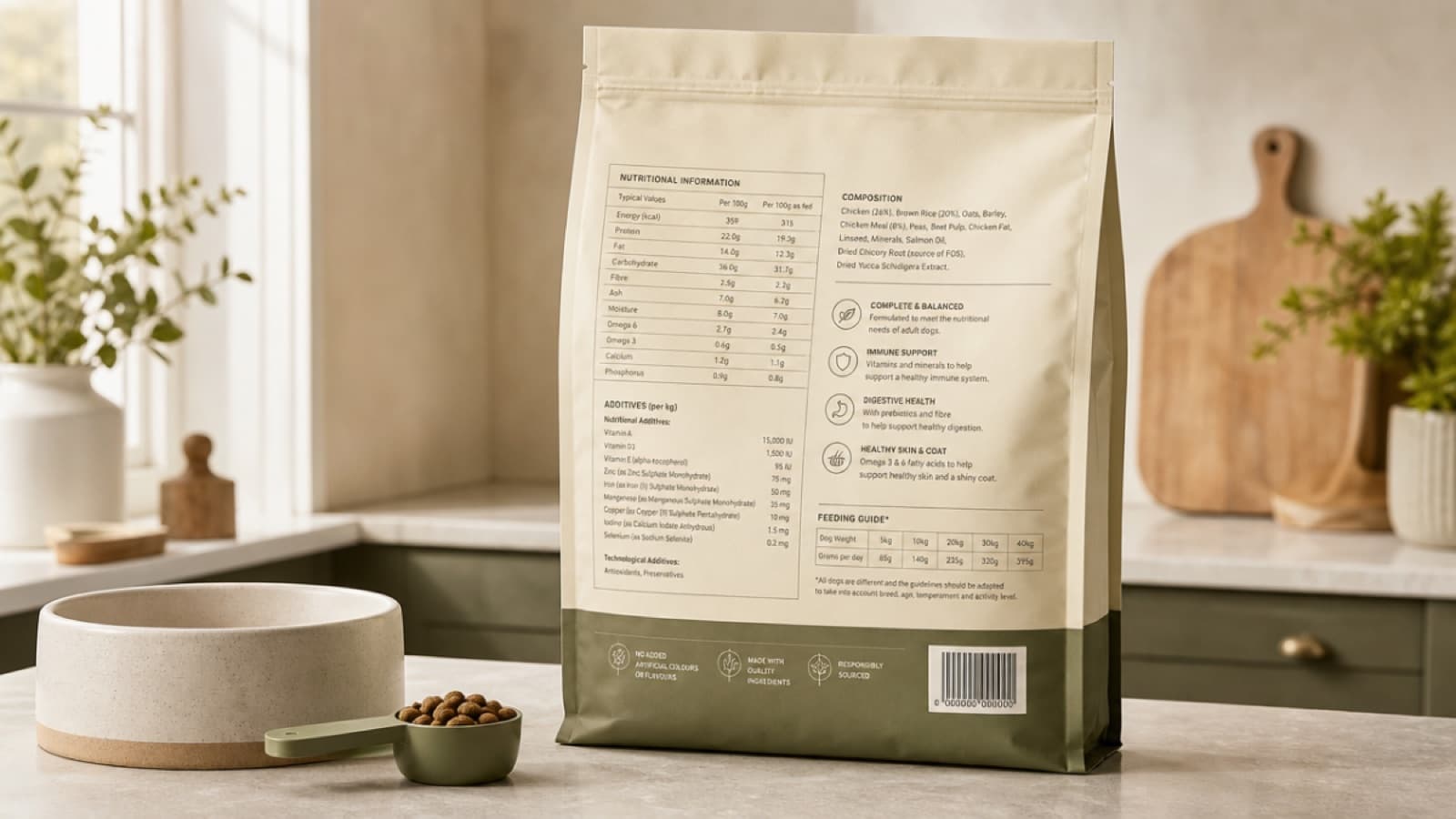
Start with the feeding guide printed on the pack. It gives a daily amount for your dog's bodyweight, and it works best as an opening offer, not a verdict. From there the number moves with what your hands find, which is the part most owners skip. Our guide to portions and body condition walks through the rib check, and the calorie calculator gives you a starting figure to weigh the pack's advice against.
Four things set the portion, and breed DNA is not one of them. Size and age come first. Then how much your dog actually moves in a normal week, which is usually less than we like to think. Then what her waistline is doing over a month. Breed sits underneath all of that as a set of tendencies, never a rule, and we make that argument at more length in does breed change what goes in the bowl. A busy Yorkshire terrier who walks twice a day and a quieter one of the same weight are not on the same ration.
Why weighing beats scooping every time
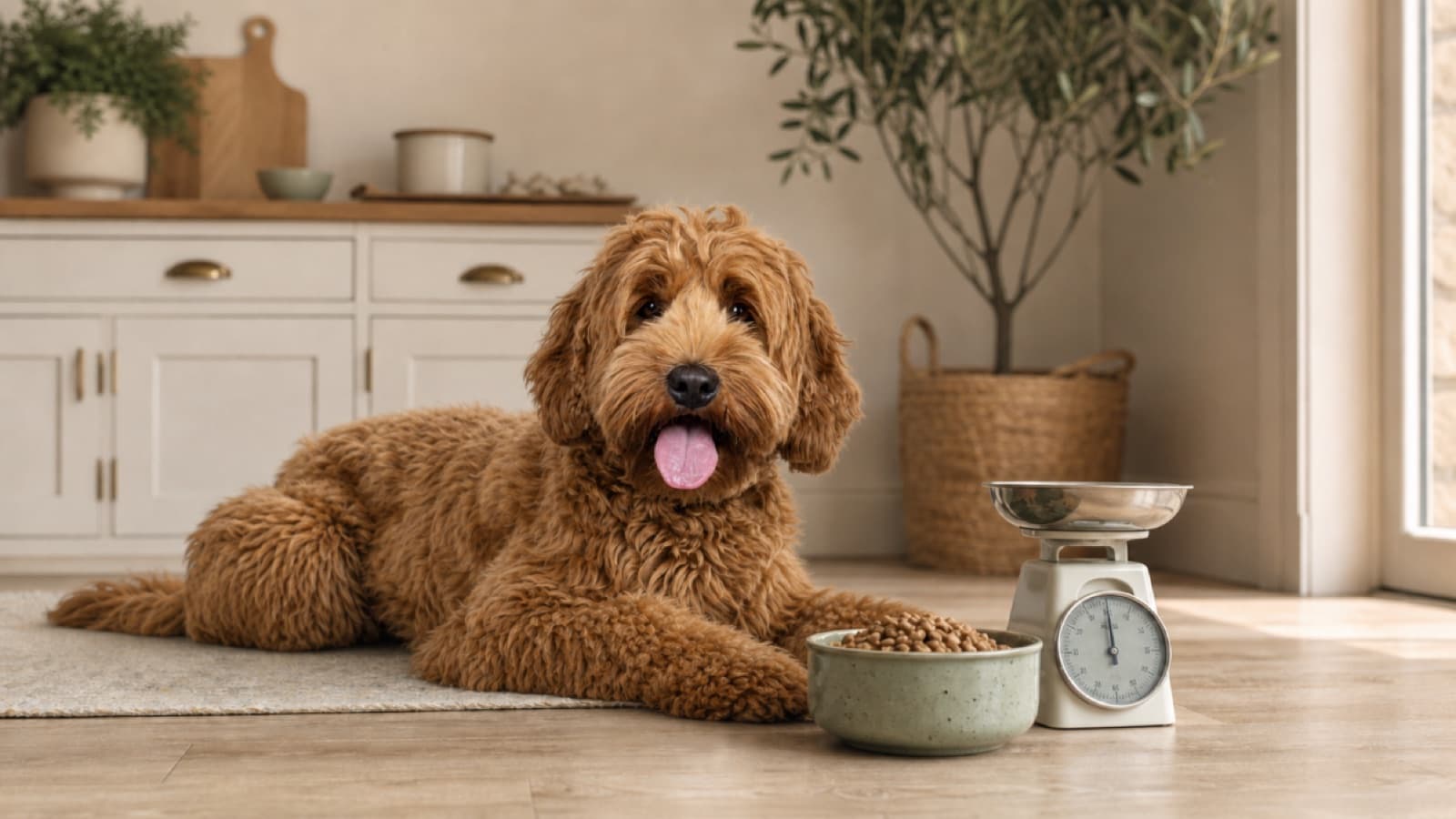
Kitchen scales are the single best change you can make for a small dog. A scoop is honest enough on a big dog, because the error disappears into a large meal. On a small dog, the same wobble in how firmly you press the scoop into the bag is the difference between holding weight and gaining it. That plays out week after week, with nobody in the house doing anything wrong.
Keep the scales next to the bag. Weigh the day's food into a tub in the morning and feed from that tub. Everyone then gives the same amount, including the person who is convinced she looks hungry. It takes about ten seconds and it settles the argument before it starts.
The treat maths nobody actually does
Treats come out of the daily total. They are not a separate category that sits alongside it. This matters more for a small dog than for any other kind. The little one ends up under the table at dinner, and a biscuit sized for a spaniel is a genuine meal for a chihuahua.
The fix is unglamorous. Take a handful of the day's food out of the tub before breakfast and use that as the training and rewards allowance. If something richer goes in during the day, take a little food back out of the evening bowl to balance it. A corner of cheese on a Sunday is not a crisis. A daily habit of it, on a dog whose whole ration is small to begin with, is exactly how the waistline goes.
Two things ride along with this. Sticky, sugary treats do small mouths no favours. Crowded little jaws already ask plenty of an owner, which we cover in small dogs and bad teeth. And if your dog is already carrying more than she should, the answer is a steady adjustment over weeks plus a conversation with your vet, never a sudden cut.
Does kibble size actually matter?
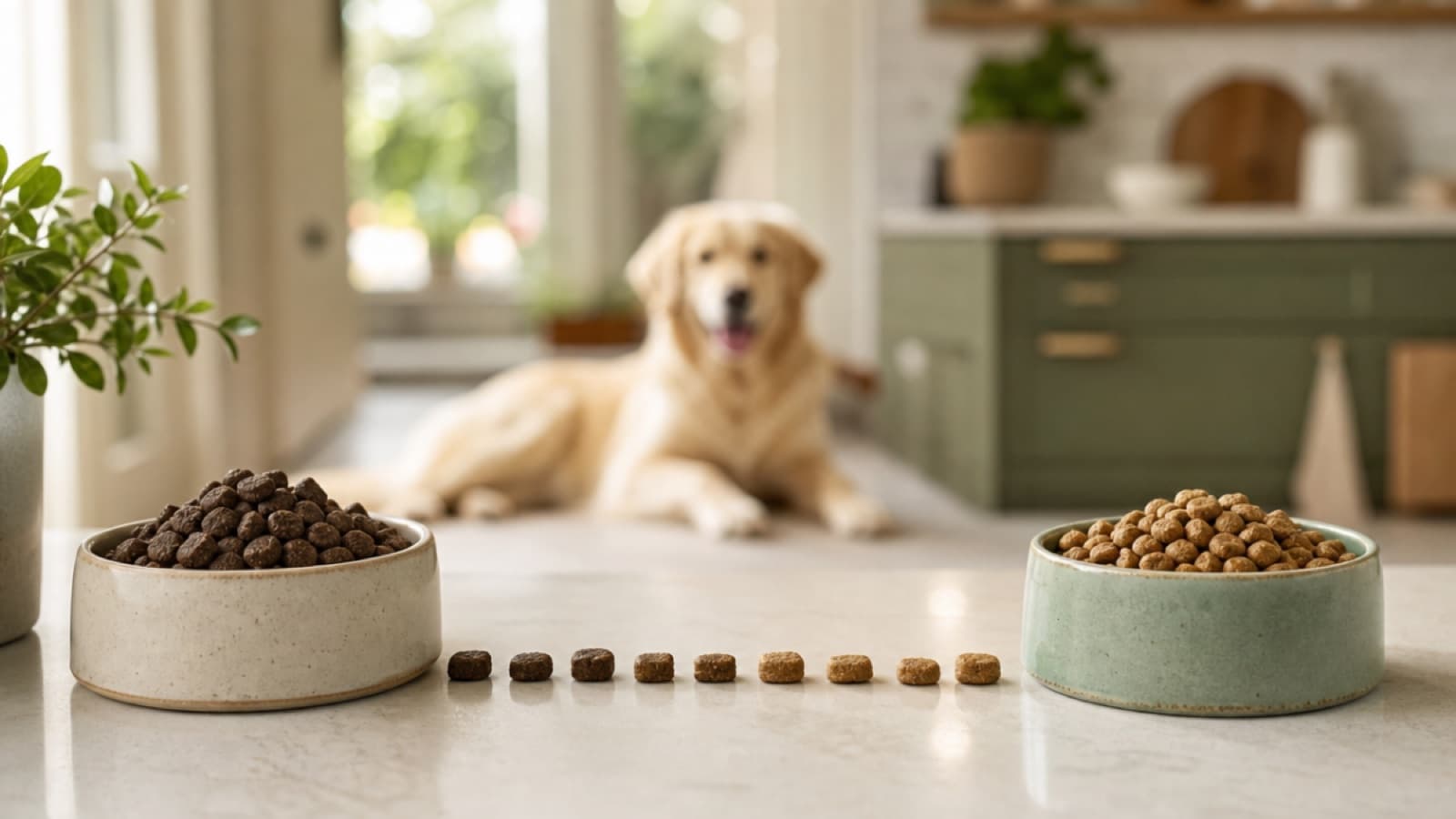
It matters more than the marketing suggests, though not quite in the way people expect. A kibble made for a big dog is often swallowed whole by a small one, or nosed around the bowl and left. A smaller piece is easier to pick up and easier to chew. It also counts out neatly by hand when you are training.
The catch is that a small breed badge is not always a small breed recipe. Among the 4,700 recipes carrying size information in our analysis, 77% list all five sizes, which tells you the size wording on the front often covers everything from a toy to a giant. Only 489 of them are purpose built for small or toy dogs. That is not a reason to panic about the bag in your cupboard. It is a reason to tip a little into your hand and look at it honestly, then check whether the brand does a small breed version of the same recipe.
Texture deserves a thought too. Some small dogs eat better with a little wet food mixed through, others do perfectly well on dry alone, and the honest answer is whichever one your dog shows you over a fortnight. We set out the trade-offs in dry, wet or raw. Every food in our reviews is scored on protein and processing, nutritional balance, transparency and value. That lets you see how a small breed recipe holds up against the rest of the range, without taking the front of the bag at its word.
How many meals a day, and what tiny puppies need
Two meals a day suits most adult small dogs. Splitting the ration keeps the gap between meals sensible for a little stomach. It also gives you two chances a day to notice she has gone off her food, which is often the first sign that something wants looking at.
Very small puppies are a different matter. They need feeding more often, usually three or four times a day, because a tiny body holds very little in reserve between meals. Low blood sugar is a known thing in toy puppies, and your vet will tell you how to feed around it in the early months. If a very small puppy goes wobbly, unusually sleepy or hard to rouse, phone your vet straight away rather than waiting to see how the next hour goes.
Our month by month puppy feeding guide covers how the schedule loosens as she grows, and the chihuahua guide shows the matched foods for one of the smallest breeds we cover.
Small dogs live a long time, so the older dog question arrives late
One of the quiet pleasures of a small dog is how long the good years last. The practical consequence is that the senior conversation arrives later than it does for a big breed, and it arrives gradually. She will not wake up old on a Tuesday.
Watch for the walk getting shorter without you shortening it, for a slower start on cold mornings, and for food she used to hoover being left in the bowl. Those are the moments to revisit the portion, not to assume the number that worked for years still holds. Feeding an older dog sets out what genuinely changes with age and what does not.
Through all of it, the check stays the same. Hands on the ribs once a week, the same scales, the same tub in the morning. A small dog gives you very little margin, and that is precisely why the routine is worth the ten seconds it takes.
Frequently asked questions
How much should I feed my small dog each day?
Begin with the pack's feeding guide for her bodyweight, then adjust from there. Weigh the amount on kitchen scales and skip the scoop, because a scoop's margin of error is a large share of a small dog's day. Split it into two meals and count treats inside that figure. After two or three weeks, feel her ribs. If they are hard to find, take the portion down slightly.
Should I buy food made specifically for small breeds?
Not necessarily, but it is worth checking the piece size. We looked at 4,700 recipes carrying size information, and 77% list all five sizes, so a size mention on the front tells you less than you would hope. Just 489 of the recipes in that set are built specifically for small or toy dogs. If your dog swallows the pieces whole or leaves them, a smaller kibble is usually the easier fix.
Can my small dog have treats without gaining weight?
Yes, as long as the treats come out of the daily total rather than sitting on top of it. Set aside part of the weighed ration each morning and use that for training and rewards. When something richer goes in, take a little food back out of the evening bowl. The problem is rarely one biscuit. It is the same biscuit every day, on a ration that was small to start with.
What is the right number of meals a day for a small dog?
Two meals a day works well for most adult small dogs and keeps the gap between them sensible. Very small puppies need three or four, because a tiny body carries little in reserve. If a very small puppy becomes wobbly, unusually sleepy or difficult to rouse, phone your vet straight away. Your vet will also tell you when it is right to move her down to two meals.