Switch when your dog changes, not when a birthday arrives. The age printed on a senior bag is a brand's decision, and dogs age at very different rates. If your older dog is slowing down, thickening round the middle or stiff after a nap, a leaner recipe helps. If nothing has changed, a good adult food is still a good food.
When should you switch to senior food?
There is no switch that flips. The age a brand starts calling a dog senior is a marketing decision, and different makers draw the line in different places. Size matters more than the number anyway. A big, heavy dog tends to be treated as an older dog well before a small terrier of the same age, which is one of the many ways breed shapes everyday feeding. Small dogs age slowly, and feeding a toy or small breed goes through what their bowls need along the way.
So use the dog, not the calendar. The useful triggers are the ones you can see from the sofa. Walks that end earlier than they used to. A waist that has quietly disappeared. A slow, careful stretch after a long lie-down. Less enthusiasm at dinner, or a bit more mess in the garden than there was last year.
If none of that has happened, you have not missed anything by staying put. Plenty of dogs stay on a good adult recipe into old age and do beautifully on it. A bag with the word senior on the front is not automatically a better bowl of food than the one your dog is already thriving on.
What actually changes in a senior recipe?
Of the 4,983 UK dog food recipes in our analysis, 1,308 are sold for senior dogs. That is very nearly as many as the 1,324 aimed at puppies, so this is not some quiet corner of the shop. It is a proper aisle with real choice in it.
Here is the part that surprises most owners. Across dry food, the median adult recipe and the median senior recipe carry exactly the same protein on a dry matter basis, 27.5% each. Fat is where they part company, and even then only a little. The median adult dry food sits at 14.3% fat and the median senior one at 13.2%.
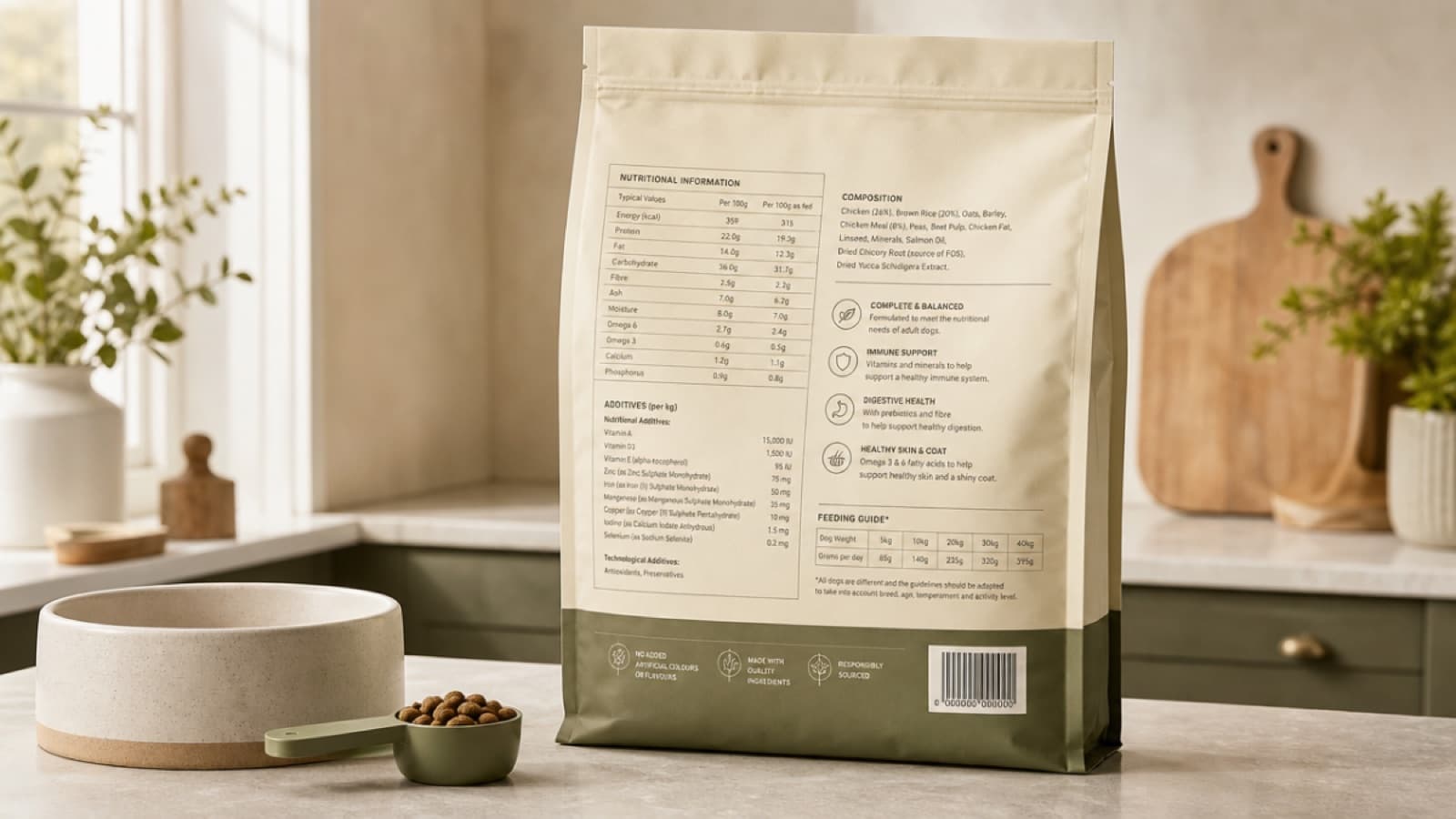
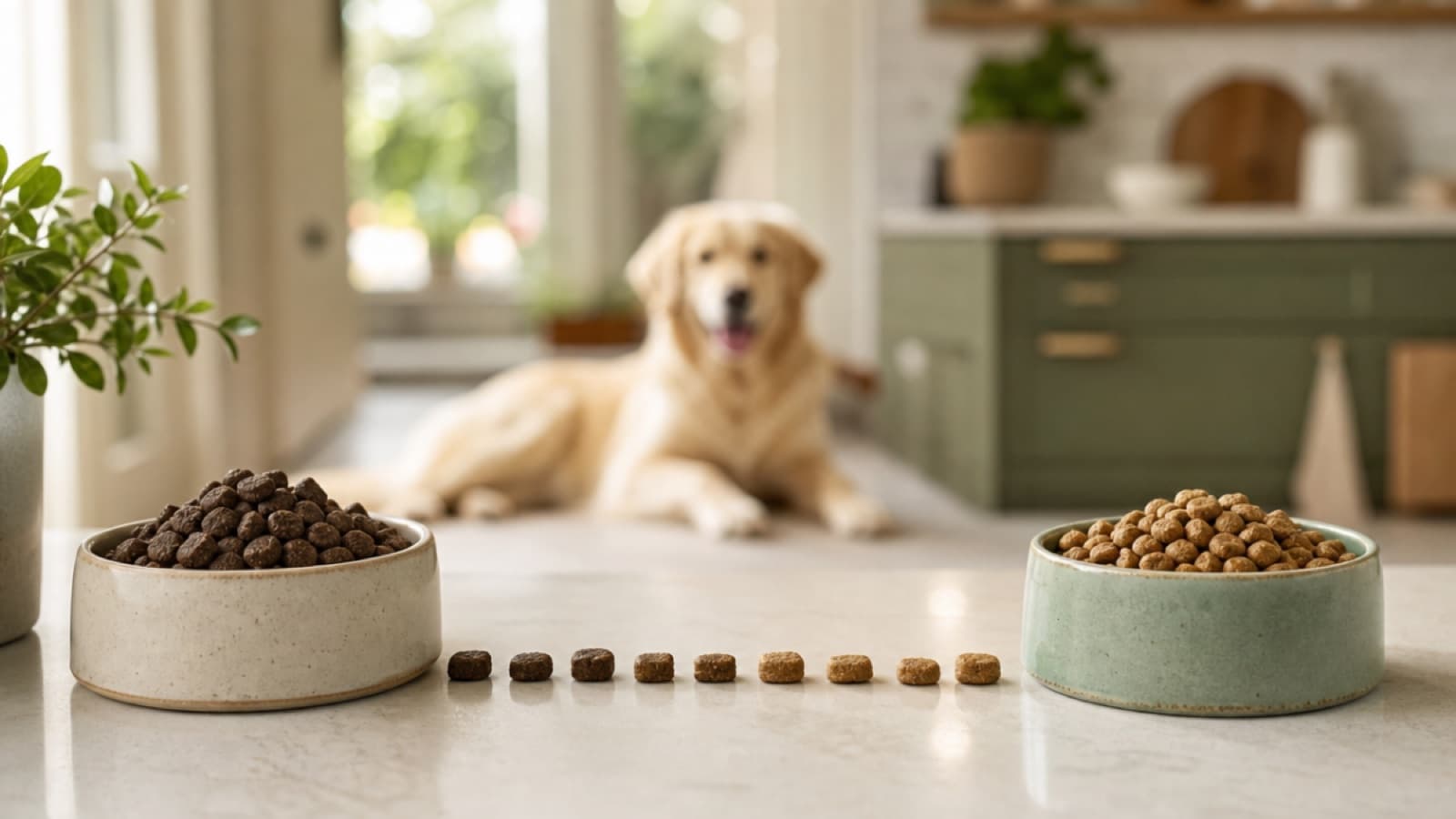
In other words, the typical senior recipe is not a low protein food. It is a slightly leaner one, usually dressed up with joint support ingredients and a kibble shape that is kinder to an older mouth. Those additions live in the small print on the back of the bag, never in the photograph on the front. So it pays to read the label properly before you decide whether a particular senior bag is doing anything your current food is not.
Does an older dog need less protein?
Not as a general rule, no. The old advice to cut protein in later life has aged badly. For a healthy older dog, the everyday worry is the opposite one. In a dog who has stopped charging about, muscle slips away faster with age. Protein is what helps hold it in place. A dog who loses condition on the top line and round the back legs is usually not being overfed protein.
The recipes on the shelf back that up. When the median adult dry food and the median senior dry food land on the same protein figure, the industry is telling you something plain. Age on its own is not a reason to strip protein out of the bowl.
Diagnosed illness is a different conversation entirely. If your dog has a kidney, liver or heart condition, the diet belongs to your vet, not to a bag you picked off a shelf or a blog you read on a Tuesday night. Ask them first and follow what they say.
What to watch instead of the birthday
Four things are worth keeping an eye on as a dog gets older, and none of them are printed on a packet.
Weight is the first, in both directions. A slow gain usually means the food has stayed the same while the walks got shorter. A loss you cannot explain is the one that needs a phone call rather than a new bag.
Movement is the second. Stiffness on cold mornings, a pause at the bottom of the stairs, a reluctance to jump into the boot. Teeth are the third, and they are the most commonly missed. Sore gums make a dog eat oddly, chew on one side or walk away from a bowl they used to love. Little breeds suffer worst here, and what food and chews do for small teeth goes further into it. Thirst is the fourth. A dog who is suddenly emptying the water bowl, or asking to go out in the night, should be seen by a vet before you change anything about the food.
How much should a quieter dog eat?
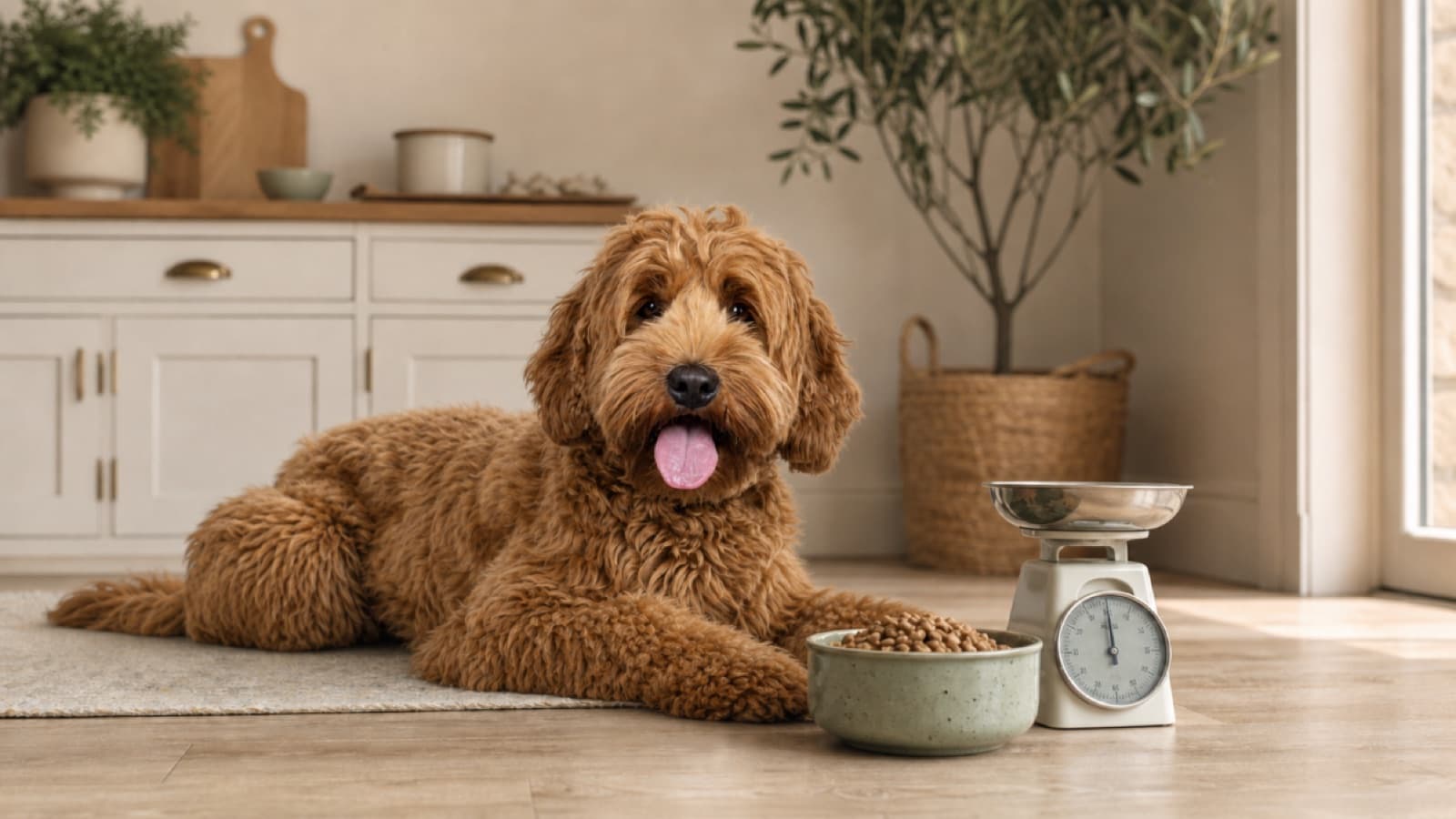
A dog who has dropped from two long walks to one gentle amble simply needs less in the bowl, and the feeding guide on the bag will not know that. The guide is a starting point built for an average dog, and your older dog has stopped being average.
Use your hands rather than the scales. Ribs you can feel under a light covering, a waist you can see from above and a tummy that tucks up from the side. That hands-on check is the whole method, and we walk through it in more detail in our guide to portions and body condition. Adjust in small steps and give each change a couple of weeks before you judge it.
If the middle has already spread, a leaner recipe does more of the work for you than cutting the bowl to a sad little handful. Foods built for weight management tend to carry more fibre, so a smaller portion still lands like a proper meal. Splitting the day into two meals helps too, and it is easier on an older digestion.
When a fading appetite means the vet, not a new bag
Older dogs often get pickier, and there is usually a plain reason. Smell and taste dull with age, so a food that reads as bland in a cold bowl gets ignored. Warming a meal slightly lifts the aroma and often solves it on the spot. Texture helps as well, which is why so many owners of older dogs end up adding or moving to wet food. It is softer on a tired mouth and it carries more moisture into a dog who is not drinking much.
But draw a firm line here. A dog turning his nose up at a fresh bowl for a day or two is a feeding puzzle. A dog losing weight when nothing has changed is a medical question. So is one who eats well and still gets thinner. That belongs to your vet, and the sooner the better. No recipe fixes something that has not been diagnosed yet.
How to make the change gently
Older stomachs handle surprises less well than young ones, so go slowly. Mix a little of the new food into the old and shift the balance over a week or so, keeping everything else about the routine the same. If your dog has a history of loose days, stretch it out further. Our guide to switching food without upset has the day by day version.
Choosing the food itself is the easier half. Every food in our reviews is scored on protein and processing, nutritional balance, transparency and value. For an older dog, the differences that matter are usually a leaner fat figure with the protein staying put, plus a texture your dog will actually eat. If you would rather answer a few questions about your dog and let us narrow the field, the does exactly that, because two dogs of the same age can want completely different dinners.
Frequently asked questions
What age is a dog considered senior?
There is no single number, and the age on a bag is a brand's call, not a medical one. Larger, heavier dogs are generally treated as older sooner than small ones. Two dogs born in the same week can end up in completely different shape. Watch the dog in front of you instead. Shorter walks, a thicker waist and stiff mornings tell you far more than the calendar ever will.
Do older dogs need less protein?
No, not as a rule. For a healthy older dog, the everyday concern is holding on to muscle, which is exactly what protein supports. The recipes agree. In our analysis, the median adult dry food and the median senior dry food both sit at 27.5% protein on a dry matter basis. If your dog has a diagnosed kidney or liver condition, your vet decides the diet, not the packaging.
My older dog seems fine. Is there any reason to change food?
Not automatically. If your dog is holding a steady weight, moving comfortably and eating with enthusiasm, a good adult food is doing its job. The time to look at a senior recipe is when something has actually shifted, usually a quieter dog carrying a bit more around the middle. Change because the dog changed, not because a birthday came round.
Is wet food better for an older dog?
Not better, but often easier. Wet food smells stronger, which matters when a dog's sense of smell has dulled. It is also softer on a mouth with tired teeth. It also carries more moisture, which helps a dog who is not drinking much. Plenty of older dogs stay perfectly happy on dry food, and mixing the two suits many of them best.