


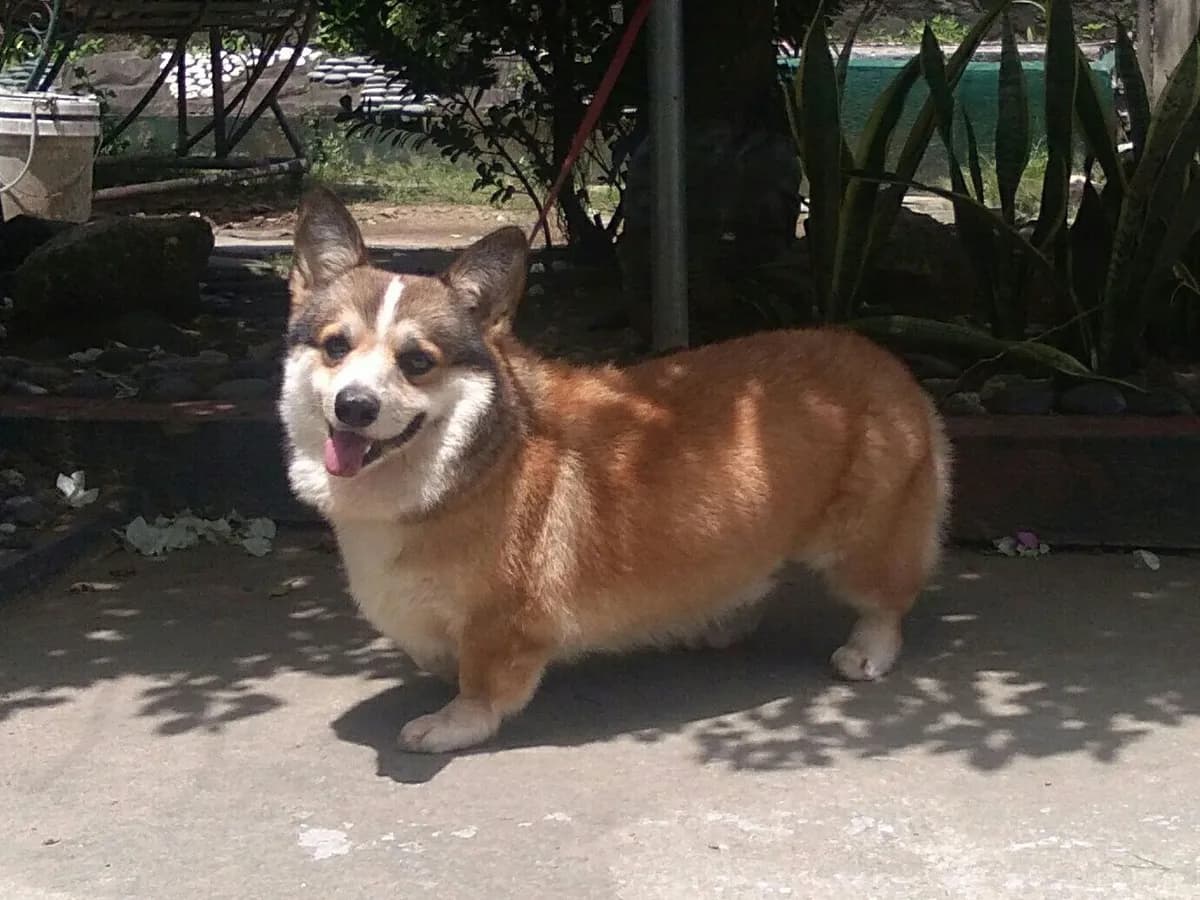

Most important facts
- Group
- Pastoral
- Size
- Small
- Weight
- 9–12 kg
- Lifespan
- 12–13 years
- Coat
- Medium-length
- Energy
- Moderate
- Height
- 25–30 cm
- Colours
- Red, sable, fawn or black and tan with white
- Shedding
- Heavy
- Est. feeding cost
- ~£0.68 a day
- Gear to consider
- Slow-feeder bowl, pet ramp or steps for sofas and cars, de-shedding grooming brush
Typical dry food, adult
About the Welsh Corgi Pembroke
The Pembroke Welsh Corgi drove cattle across Pembrokeshire for centuries, with Welsh folklore insisting the breed was the mount of fairies, the marks of their saddles still visible on its shoulders. Its modern fame owes most to Queen Elizabeth II, who received her first Corgi as a princess in 1933 and kept more than thirty across her reign, making the breed a royal emblem worldwide.
Pembroke Corgis are friendly, outgoing and rarely nervous or aggressive, bred to work confidently alongside cattle and their handlers. They are alert, bold for their size and bond very closely with their family, which can make them prone to following owners from room to room and struggling when left alone for long periods.
Their herding heritage means some Corgis keep a tendency to nip at heels, particularly around fast-moving children, so early socialisation and consistent boundaries are worthwhile. They are quick learners and eager to please, with their intelligence and food motivation best channelled into structured training using part of the daily allowance as rewards.
Common health conditions
Things Welsh Corgi Pembroke owners commonly watch for. Guidance, not veterinary advice.
Hip dysplasia
The hip joint has not formed properly, which can bring on arthritis. Keep a Corgi lean through accurate portioning to ease the load on the joints.
Intervertebral disc disease (IVDD)
The Corgi's long back and short legs put extra strain on the spine, so any excess weight significantly raises the risk of a slipped disc.
Obesity
Corgis love their food and sit low to the ground, so extra weight shows quickly and presses on the back and joints. Weigh meals and limit extras.
Bladder stones
Mineral deposits can form in the urinary tract. Keep fresh water always available and the diet consistent and appropriate.
Eye conditions (cataracts and lens luxation)
Both can affect vision with age. Keep up regular vet check-ups to catch changes early.
Feeding a Welsh Corgi Pembroke
Pembroke Corgis are notoriously enthusiastic eaters, and because their long back sits so close to the ground, even a small amount of extra weight adds real strain to the spine and hips. Measure portions carefully against a complete food's feeding guide rather than judging by eye, and count treats, however hard the eyes plead, within the daily allowance.
Two measured meals a day, rather than free-feeding, keep this food-driven breed at a healthy body condition and make appetite changes easier to spot early. A diet with supportive joint nutrients such as glucosamine and chondroitin, and appropriate protein and fat for a moderately active small dog, suits most adults, adjusted down for neutered or quieter individuals.
Every dog is different — weight, age and activity all shift what a Welsh Corgi Pembroke needs. The turns these breed tendencies into a shortlist matched to your dog’s age, size, budget and needs.
Typical adult weight
9–12 kg
Est. daily calories
440–720 kcal
A broad guide for an average-activity adult in good body condition — not veterinary advice. Real needs vary with age, neutering, activity, health and body condition, so no two Welsh Corgi Pembrokes eat exactly the same. Get a personalised estimate or estimate feeding costs.

- Per day
- ~£0.68
- Per month
- ~£21
- Per year
- ~£247
A broad typical monthly budget guide, not a live price quote. Food format, calorie density, pack size and retailer pricing all change the real cost.
Find the right food for your Welsh Corgi Pembroke
Foods ranked to your dog
Answer a few quick questions and the Food Finder ranks foods to your Welsh Corgi Pembroke by score, price, life stage and fit.
Breed at a glance
- Exercise needs6/10
- Appetite9/10
- Trainability8/10
- Good with children6/10
- Shedding8/10
- Tolerates being alone4/10
The good & the worth-knowing
The good
- Affectionate, outgoing and eager to please its family
- Highly intelligent and generally quick to train
- Adaptable to family life, including well-supervised children

Worth knowing
- Prone to putting on weight quickly, which strains their long back
- Can be vocal, barking to alert or herd
- Sheds heavily, especially during seasonal coat changes
Best matched accessories
All accessoriesThe collections that suit the breed, judged by the same independent standard.



Common owner questions
How much should I feed my Pembroke Corgi to avoid it becoming overweight?
Start from the feeding guide on the food's packaging for the dog's target adult weight, then adjust based on regular body condition checks. Ribs should be easy to feel under your hands even when they are not visible. Because Corgis are so food-motivated, weighing meals and limiting treats matters more than for many breeds.
Does a Corgi's diet really affect its back health?
Yes. Their long spine and short legs mean any extra body weight translates into real pressure on the discs between the vertebrae, raising the risk of intervertebral disc disease. Keeping a Corgi at a lean, healthy weight through controlled feeding is one of the most practical protections an owner has.
How much exercise does a Pembroke Welsh Corgi need?
Most adults are happy with about an hour a day over a couple of walks, plus some mental stimulation. As a herding breed they enjoy having a job to do, but limit jumping from height to protect their back.
Do Pembroke Corgis shed a lot?
Yes. They have a dense double coat and shed year-round with heavier seasonal blowouts. A brush two or three times a week keeps loose hair under control, and a good coat starts with adequate omega fatty acids in the diet.