


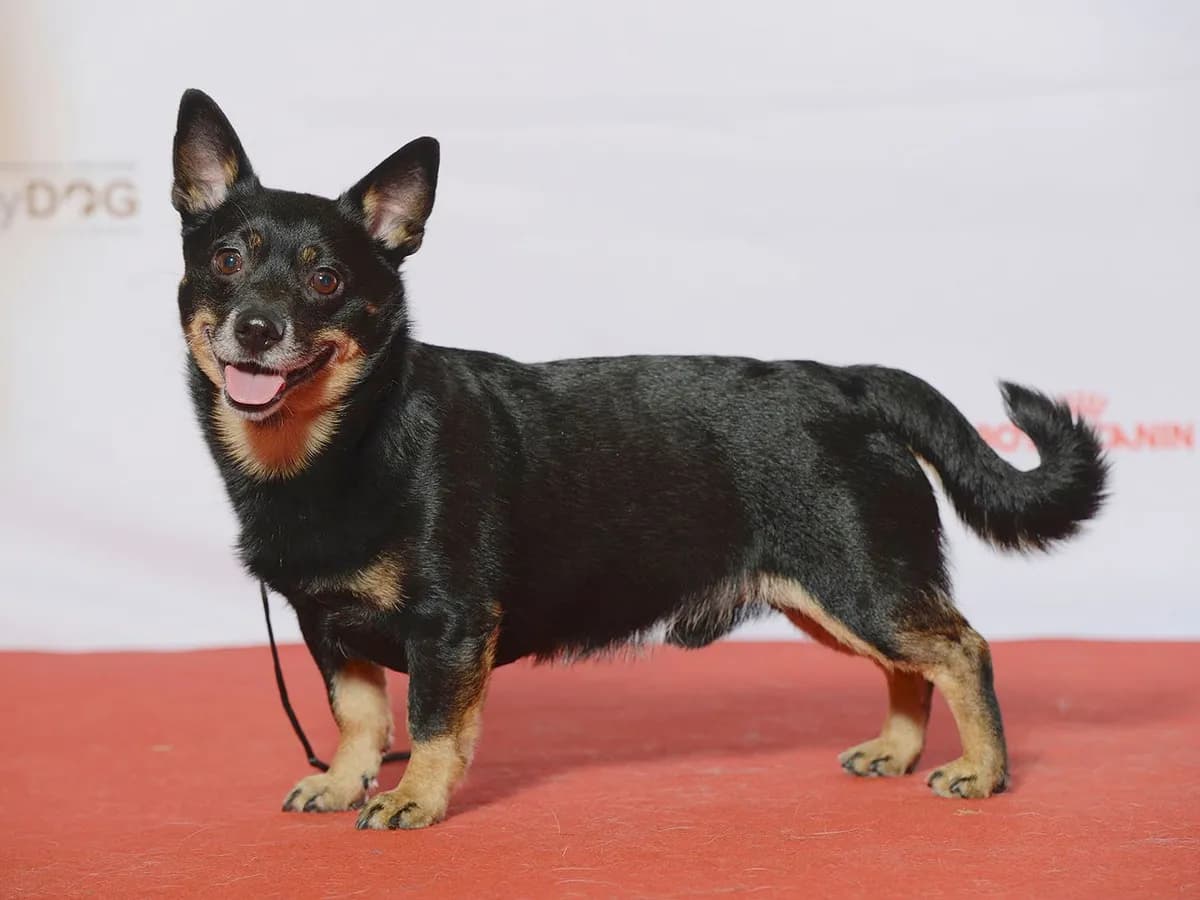

Most important facts
- Group
- Pastoral
- Size
- Small
- Weight
- 5.9–8.2 kg
- Lifespan
- 12–15 years
- Coat
- Short, dense
- Energy
- High
- Height
- 25–30 cm
- Colours
- Black and tan or liver and tan
- Shedding
- Light
- Est. feeding cost
- ~£0.57 a day
- Gear to consider
- Interactive puzzle feeders, lightweight all-weather coat, secure garden fencing
Typical dry food, adult
About the Lancashire Heeler
The Lancashire Heeler earned its keep around Ormskirk in west Lancashire, driving cattle to market with quick nips at the heels and clearing rats from the farmyard in between. It is generally thought to descend from Welsh Corgi and Manchester Terrier types working the droving routes. The Kennel Club granted recognition in 1981, and the breed is now classed as a vulnerable native breed with only modest annual registrations.
Lively, intelligent and often mischievous, the Lancashire Heeler was bred to work independently on a farm, and that self-reliant streak shows at home as a strong-willed, sometimes stubborn character. There is a lot of dog packed into the small frame. Heelers are typically deeply affectionate with their own family and can be reserved with strangers until properly introduced, so early socialisation pays off.
This is a small breed, and it is not suited to a sedentary lifestyle. It thrives on daily physical and mental exercise, and under-stimulated Heelers can revert to their instinctive habit of nipping at heels. Keep behaviour and body condition in check with consistent, reward-based training, plenty of enrichment and measured meals put down at set times.
Common health conditions
Things Lancashire Heeler owners commonly watch for. Guidance, not veterinary advice.
Primary Lens Luxation (PLL)
The lens slips out of position, an inherited fault of the eye. Choose DNA-tested parents and have the eyes checked annually.
Collie Eye Anomaly (CEA)
An inherited condition affecting the back of the eye, screened in breeding stock. A puppy from health-tested parents is the best safeguard.
Patellar luxation
A slipping kneecap that can affect small, agile breeds. Keep this compact dog at a lean weight through accurately measured meals.
Persistent Pupillary Membrane (PPM)
Remnants of foetal eye tissue that can occasionally affect vision. Ask breeders about eye screening alongside the other inherited conditions.
Feeding a Lancashire Heeler
The Lancashire Heeler is a small breed with a big appetite for its size, built for stamina rather than bulk. A complete diet with moderate protein and controlled fat suits most adults, split across two measured meals a day weighed on kitchen scales. Factor treat allowances into the daily total to avoid creeping weight gain on a frame of only six to eight kilograms.
Small kibble suits the compact jaw better than food designed for larger dogs, and a dental-supportive texture is worth considering given how prone small breeds are to tartar. Protein and energy density should reflect actual daily exercise, and not size alone. Score body condition every few weeks, because that beats following a feeding chart blindly.
Every dog is different — weight, age and activity all shift what a Lancashire Heeler needs. The turns these breed tendencies into a shortlist matched to your dog’s age, size, budget and needs.
Typical adult weight
5.9–8.2 kg
Est. daily calories
320–610 kcal
A broad guide for an average-activity adult in good body condition — not veterinary advice. Real needs vary with age, neutering, activity, health and body condition, so no two Lancashire Heelers eat exactly the same. Get a personalised estimate or estimate feeding costs.

- Per day
- ~£0.57
- Per month
- ~£17
- Per year
- ~£210
A broad typical monthly budget guide, not a live price quote. Food format, calorie density, pack size and retailer pricing all change the real cost.
Find the right food for your Lancashire Heeler
Foods ranked to your dog
Answer a few quick questions and the Food Finder ranks foods to your Lancashire Heeler by score, price, life stage and fit.
Breed at a glance
- Exercise needs7/10
- Appetite7/10
- Trainability6/10
- Good with children6/10
- Shedding3/10
- Tolerates being alone4/10
The good & the worth-knowing
The good
- Compact size with low grooming needs thanks to a short, easy-care coat
- Lively, affectionate and deeply bonded to their family once settled
- Long-lived and generally sound when bred from health-tested parents

Worth knowing
- Can develop a heel-nipping habit at the ankles if under-stimulated
- Independent and occasionally stubborn, so early, consistent training matters
- As a vulnerable native breed, puppies from health-tested lines can involve a waiting list
Best matched accessories
All accessoriesThe collections that suit the breed, judged by the same independent standard.


Common owner questions
How much should I feed my Lancashire Heeler?
Follow the feeding guide on your chosen complete food as a starting point, based on your dog's weight and activity, then adjust to body condition rather than sticking rigidly to the pack guide. A Food Finder match for a small, active breed is a sensible starting point.
Is the Lancashire Heeler prone to weight gain?
Yes, it can be, particularly as this is a small, food-motivated breed that some owners under-exercise relative to its energy. Treats: no more than ten percent of daily calories, and feed to a waist you can see and ribs you can feel easily.
Do Lancashire Heelers need a special joint-support diet?
Not routinely, but because patellar luxation is a known risk, keeping this dog lean throughout life reduces strain on the knees more effectively than any supplement. A joint-support food is a sensible extra for older individuals.
Are Lancashire Heelers easy to find as puppies?
Not always. This is a vulnerable native breed with low annual registrations, so expect a wait, and seek breeders who health-test for the known inherited eye conditions and patellar luxation.
Similar breeds
Photo: Svenska Mässan from Sweden, CC BY 2.0, via Wikimedia Commons