


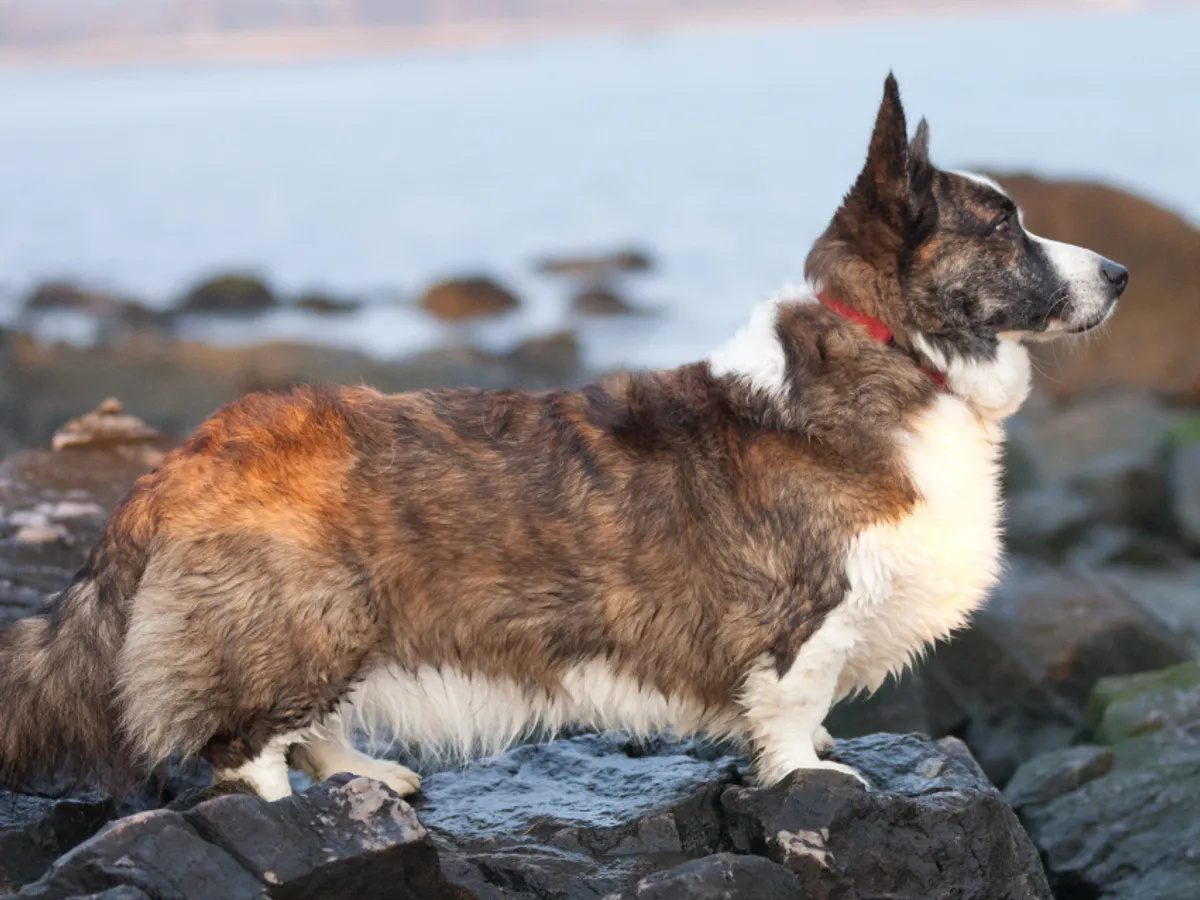

Most important facts
- Group
- Pastoral
- Size
- Medium
- Weight
- 11–17 kg
- Lifespan
- 12–14 years
- Coat
- Double coat: short-to-medium
- Energy
- Moderate
- Height
- 27–32 cm
- Colours
- Red, sable, brindle, tricolour or blue merle with white
- Shedding
- Heavy
- Est. feeding cost
- ~£0.87 a day
- Gear to consider
- Back-supportive harness, pet ramp or steps, slow-feeder bowl
Typical dry food, adult
About the Welsh Corgi Cardigan
The Cardigan Welsh Corgi is one of Britain's oldest breeds, with tradition tracing its ancestors to Celtic settlers in Wales some three thousand years ago. Cardiganshire farmers used the low-slung dogs to drive cattle by nipping heels and ducking kicks. Shown alongside the Pembroke as one breed until 1934, the tailed, big-eared Cardigan has been the rarer cousin ever since.
Cardigans are alert, steady and intelligent, bred to work independently while herding cattle over open ground. That independence gives them a more reserved, thoughtful character than some companion breeds. They're affectionate with their family but can be cautious with strangers, so early, varied socialisation helps.
Their herding heritage means they're watchful and can be vocal, and some keep an instinct to nip at heels, worth managing gently around children from puppyhood. They're food-motivated and eager to please, which makes them responsive to training, but that same enthusiasm is exactly why measured meals matter.
Common health conditions
Things Welsh Corgi Cardigan owners commonly watch for. Guidance, not veterinary advice.
Intervertebral disc disease (IVDD)
A long back and short legs put extra strain on the spine. Keep a Cardigan lean, and use ramps or steps rather than letting them jump on and off furniture.
Hip dysplasia
An inherited joint condition where the hip socket doesn't form snugly. Choose hip-scored parents and keep a puppy at a lean growth rate.
Progressive retinal atrophy (PRA)
An inherited fault causes the retina to deteriorate over time. DNA testing has made it less common, but ask breeders whether parents have been tested.
Degenerative myelopathy (DM)
A slow-onset spinal cord disease of older dogs causing gradual hindquarter weakness. A DNA test exists, and a healthy weight supports mobility for longer.
Weight gain and obesity
Cardigans are food-motivated, and extra weight translates directly into spinal load. Measure meals and resist table scraps more firmly than with most breeds.
Feeding a Welsh Corgi Cardigan
A Cardigan's low-slung, long-backed build means every extra kilogram translates into real strain on the spine and joints, so portion control matters more here than in many breeds of similar weight. A complete adult food fed to a measured daily amount, split across two meals, avoids the steady weight creep this food-motivated breed is prone to.
Moderate exercise needs mean a Cardigan doesn't require the calorie density of a working dog, so a moderate-energy adult recipe usually fits. Because joint and spinal health are live concerns, foods with glucosamine, chondroitin or omega-3s are worth prioritising, with treats counted within the daily allowance.
Every dog is different — weight, age and activity all shift what a Welsh Corgi Cardigan needs. The turns these breed tendencies into a shortlist matched to your dog’s age, size, budget and needs.
Typical adult weight
11–17 kg
Est. daily calories
510–940 kcal
A broad guide for an average-activity adult in good body condition — not veterinary advice. Real needs vary with age, neutering, activity, health and body condition, so no two Welsh Corgi Cardigans eat exactly the same. Get a personalised estimate or estimate feeding costs.
- Per day
- ~£0.87
- Per month
- ~£26
- Per year
- ~£316
A broad typical monthly budget guide, not a live price quote. Food format, calorie density, pack size and retailer pricing all change the real cost.
Find the right food for your Welsh Corgi Cardigan
Foods ranked to your dog
Answer a few quick questions and the Food Finder ranks foods to your Welsh Corgi Cardigan by score, price, life stage and fit.
Breed at a glance
- Exercise needs5/10
- Appetite8/10
- Trainability8/10
- Good with children7/10
- Shedding7/10
- Tolerates being alone4/10
The good & the worth-knowing
The good
- Highly intelligent and trainable, thriving on food-based reward training
- Affectionate, loyal and good with children when raised alongside them
- Adaptable to family life, doing well in houses and flats given daily exercise

Worth knowing
- Long back and short legs mean vigilance around jumping, stairs and weight gain
- Sheds a dense double coat all year with heavier seasonal blowouts
- Strong herding instinct can show up as heel-nipping or persistent barking
Best matched accessories
All accessoriesThe collections that suit the breed, judged by the same independent standard.
Common owner questions
How much should I feed my Cardigan Welsh Corgi?
Follow a complete food's feeding guide for their current weight, then adjust to body condition, feeling for ribs and a visible waist. Keeping them lean is one of the most protective things you can do for their spine, and our Food Finder can help find a suitable recipe.
Are Cardigan Welsh Corgis easy to train?
Yes. They're intelligent, biddable and keen to work with their owner. Reward-based training with small treats works well, with those treats deducted from the daily allowance to avoid piling on weight.
Do Cardigan Welsh Corgis shed a lot?
Yes, they carry a dense double coat and shed year-round with heavier seasonal drops in spring and autumn. Regular brushing a few times a week keeps loose hair under control, and a diet that supports coat condition helps keep shedding manageable.
What health issues should I watch for in this breed?
Their long back predisposes them to intervertebral disc disease, so avoid excess weight, limit jumping and use ramps. Hip dysplasia and inherited eye and spinal cord conditions are also seen, so choose a breeder who health-tests parents.