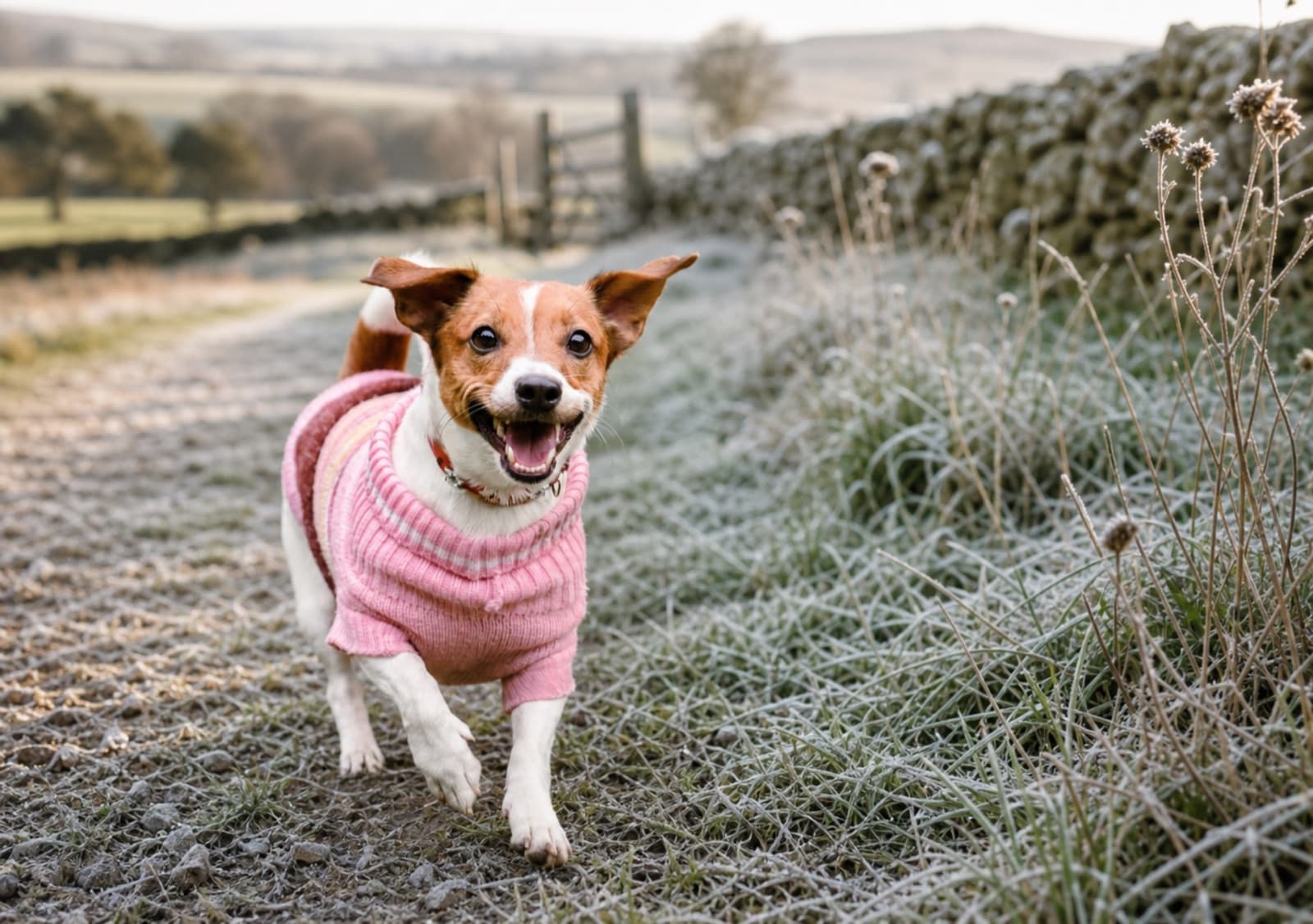
Some dogs genuinely need one and some really do not. Fine-coated dogs and sighthound types benefit most from a layer on cold or wet days. The same goes for older dogs and freshly clipped ones. Thick double-coated breeds usually overheat in one. Fit matters more than fabric, so measure the back and chest before buying. Keep the shoulders free to swing and take the coat off indoors.
Which dogs actually feel the cold?
Whether your dog needs a coat has very little to do with how cold you feel standing in the doorway. It comes down to the coat your dog already grows and how much body sits underneath it.
Double-coated dogs grow a dense woolly underlayer beneath the longer guard hairs. That underlayer needs brushing right down to the skin, which grooming a double coat at home explains properly. That layer traps air, and trapped air is what keeps a dog warm. Fine single coats have none of it, so cold air reaches skin almost straight away.
Sighthound types are the clearest case of all. A whippet has a thin coat stretched over very little body fat, and you can feel the difference in their skin within minutes of stepping outside. Small dogs lose heat faster than big ones. They also walk with their belly a hand's width from a wet pavement, which is its own kind of cold.
Older dogs are the group owners most often overlook. A dog who is stiff on a cold morning usually moves better with a layer on, because warm muscle is looser than cold muscle. If you are already making winter adjustments for an older dog, our guide to feeding an older dog covers the other half of it.
Two more groups belong here. A dog who has just had a short clip, whether at the salon or with your own grooming kit, has lost their insulation and it takes weeks to grow back. Young puppies are still poor at holding their own temperature and tire quickly in the cold. If you are not sure what sort of coat your own dog grows, our breed pages describe coat type breed by breed. Anything involving illness, recovery or a dog who shivers indoors at normal room temperature is a conversation with your vet first.
Which dogs are better off without one?
Plenty of dogs are already wearing the best coat available. A northern breed with a thick double coat has insulation most owners would envy, and putting a padded layer over the top asks them to carry heat they have no easy way to shed. Dogs barely sweat. They lose heat by panting and through their paws, so an overheating dog in a coat has very few options open to them. That same limit is why hot weather needs its own plan.
Watch for heavy panting that does not settle once the pace drops. A dog who flops onto cold ground given half a chance is telling you something, and so is a walk that slows for no other reason. Take the coat off and see whether things pick up.
Pace matters as much as breed. A dog trotting hard for half an hour makes plenty of their own heat, and the same dog standing at the edge of a field while you talk to a neighbour does not. Some owners carry the coat and put it on for the standing-about part of the walk. That is just reading the day, and there is nothing fussy in it.
Neither camp is being silly here. A jumper on a lurcher is not indulgence, and a bare Bernese in the sleet is not neglect. The dog under the decision is what settles it.
How do I measure for a coat that actually fits?
Most coat problems turn out to be fit problems in disguise. Two measurements do nearly all the work. Take the back length from the base of the neck, where a collar sits, along the spine to the base of the tail. Then take the chest girth at the widest point just behind the front legs. Write both down before you shop, because sizing is not consistent between makers and a label saying medium means very little on its own.
Then check the dog rather than the tape. Lift a front leg forward and see whether the fabric bunches or pulls, because shoulders need to swing freely or your dog will walk like a toddler in a snowsuit. Any strap that crosses the armpit should sit clear of that fold of skin. The back edge should stop short enough that toileting is not affected. A well-cut insulated coat (LeLePet fleece-lined coat) gets all of that right without you having to think about it.
After the first few wears, run your hands under the straps and along the chest. Flattened fur or a patch your dog keeps licking means the fit is wrong somewhere. It rarely means your dog hates coats.
Raincoat, jumper or insulated coat?
A raincoat is a shell. It keeps rain off the back and flanks and adds almost no warmth. That is exactly right for a mild wet day when the problem is a soaked dog and not a cold one. It also shortens the job at the front door, though a proper dog towel still does the real work when you get in.
A jumper is warmth without weather. Knitted layers are lovely in the house and the car, and they suit a thin-coated dog who feels the chill even indoors. They soak up rain and hold it against the skin, so they are a poor choice for a long walk in it.
An insulated coat is the one that matters on a genuinely cold day. It is padded and usually water resistant on the outside. It should also cover more of the dog than a shell does. Look for a high neck and coverage that carries down the flanks, with some belly protection if your dog stands low to the ground. A padded waterproof coat (Ancol Muddy Paws Stormguard) handles most British winters on its own.
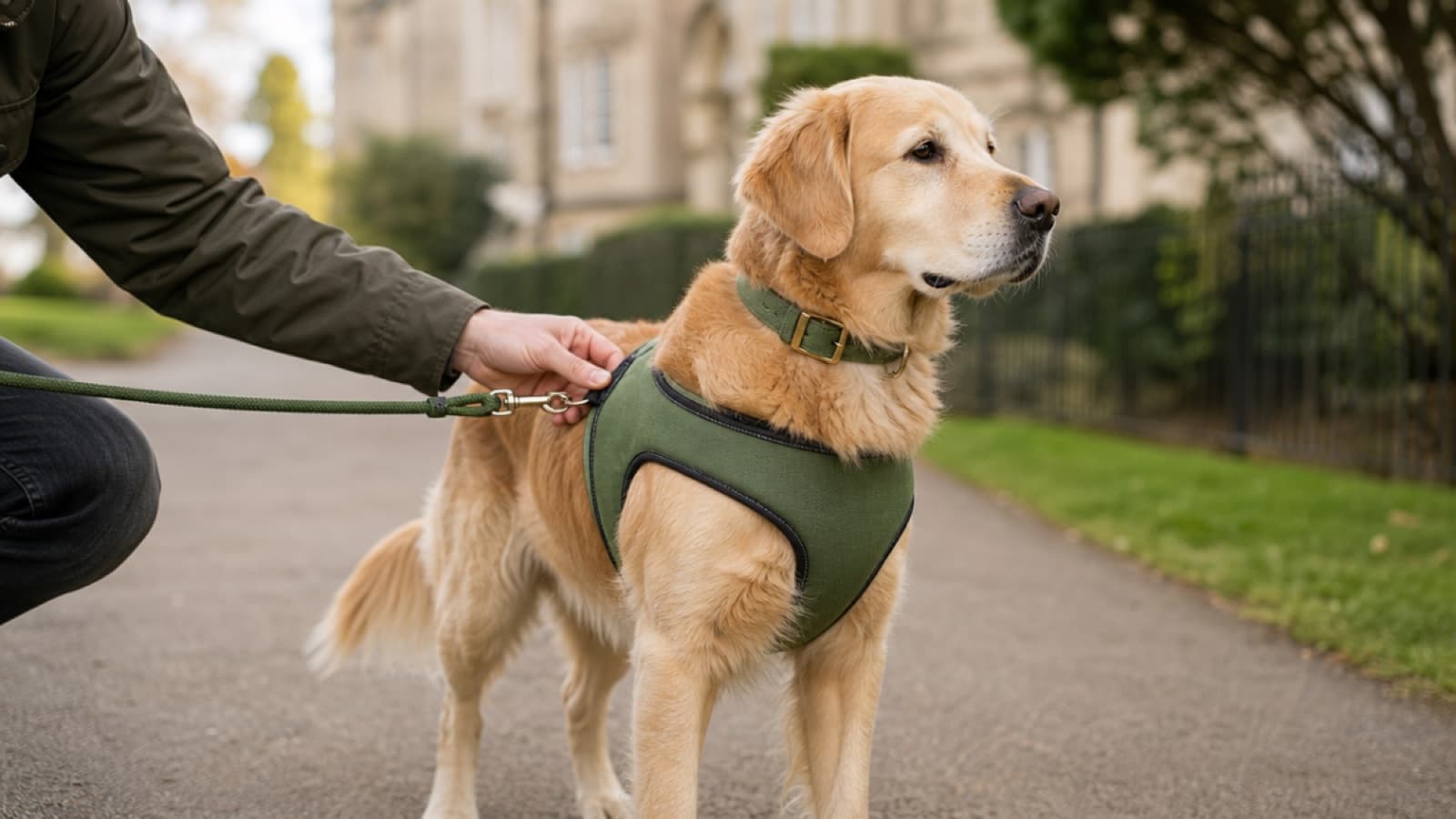
Check how the coat and your walking kit sit together before you commit. Some coats have an opening for a harness clip and others are cut to go over the harness entirely. If you are still settling the walking setup itself, harness, collar or both is worth reading first. For the bigger picture, our note on keeping your dog warm this winter goes beyond clothing.
What if my dog refuses to wear it?
Start indoors and keep it boring. Put the coat on, fasten it loosely, hand over something good and take it off again after a few seconds. Repeat that a handful of times across an evening, never once for a long stretch. Most dogs stop noticing the thing inside a week.
The classic mistake is going straight from a first fitting to a full walk. A dog who has never worn anything will often freeze on the spot. Make that first experience a march down a road and you have taught them the coat means something unpleasant is about to happen.
If your dog is still miserable after a fair run at it, believe them. Check the fit once more, because freezing and refusing very often turns out to be a shoulder that cannot move. If the fit is genuinely fine and the answer is still no, let them opt out. A shorter route on the worst nights and a warm dry bed waiting at home does much the same job.
What to do tonight
If it is dark and wet outside and you are looking at your dog wondering, here is the short version. Put your hand flat on their back and press in. Dense and springy under your palm means they are almost certainly fine. Thin, with the ribs easy to find, means a layer will help them.
Take the two measurements this evening while the dog is standing calmly, so you can buy to a number and not guess at a size. If you are on the fence, a light shell that folds down small (Joules Henson packaway jacket) lets you carry it and decide at the gate rather than at the front door.
Whatever you put on, take it off once you are back inside. A coat left on in a warm house is the most common way a helpful thing turns into an uncomfortable one. Hang it somewhere it can dry properly before the next outing, because a damp coat going back on a dog is worse than no coat at all.
Frequently asked questions
Do puppies need a coat?
Often yes, in cold or wet weather. Young puppies hold their body temperature poorly and their coats have not filled in properly, so a light layer helps on short winter outings. Keep it simple and easy to get on and off, and expect to replace it as they grow. Introduce it indoors first so the coat is old news before it ever goes on outside.
Can my dog sleep in a jumper?
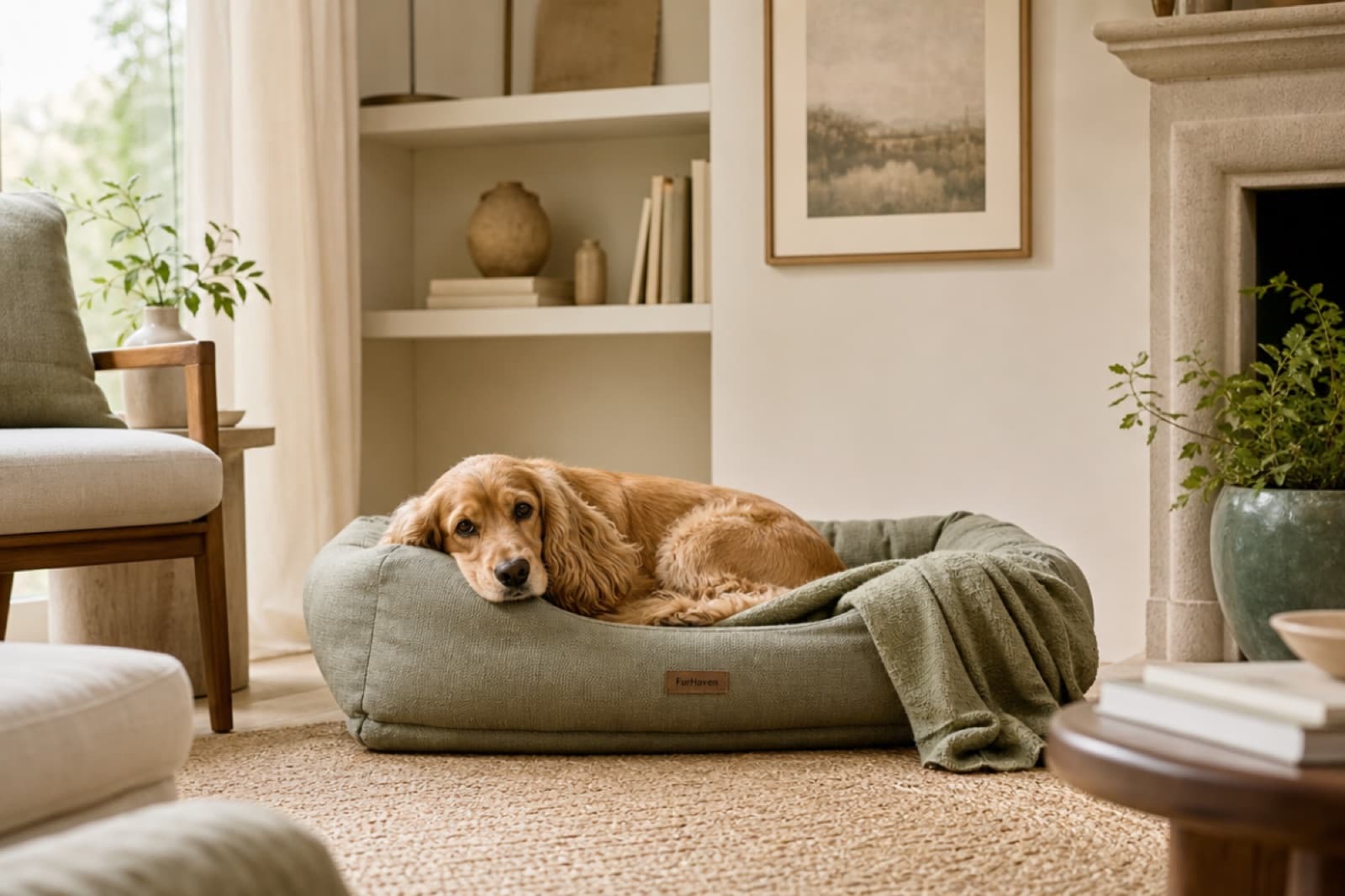
Better not to. Anything left on an unsupervised dog can twist, ride up or catch on something. A dog who gets too warm overnight cannot take it off. If your dog seems cold at night, the answer is usually a warmer, better placed bed, not clothing. Move the bed off a draughty floor and out of the path of the door before you reach for a jumper.
How do I wash a dog coat without ruining it?
Follow the label, and wash it more often than you think. Shake the mud off and let it dry fully first, because dried mud brushes out where wet mud grinds in. Most waterproof shells prefer a cool wash with no fabric conditioner, since conditioner clogs the water-repellent finish. Knitted jumpers usually want a gentle wash and flat drying. Never put a padded coat away damp.
Does my dog need boots as well?
Most dogs do not. Boots suit specific situations such as grit and salt on winter pavements, or a paw your vet has asked you to keep clean and covered. For everyday walks, rinsing and drying the paws when you get home deals with most of it. If you do try boots, expect a comical first attempt and introduce them indoors exactly as you would a coat.