
Most important facts
- Group
- Hound
- Size
- Large
- Weight
- 27–40 kg
- Lifespan
- 12–13 years
- Coat
- Short
- Energy
- Moderate
- Height
- 68–76 cm
- Colours
- Black, white, red, blue, fawn or brindle, plain or with white
- Shedding
- Light
- Est. feeding cost
- ~£1.64 a day
- Gear to consider
- Martingale collar, padded orthopaedic bed, warm winter coat
Typical dry food, adult
About the Greyhound
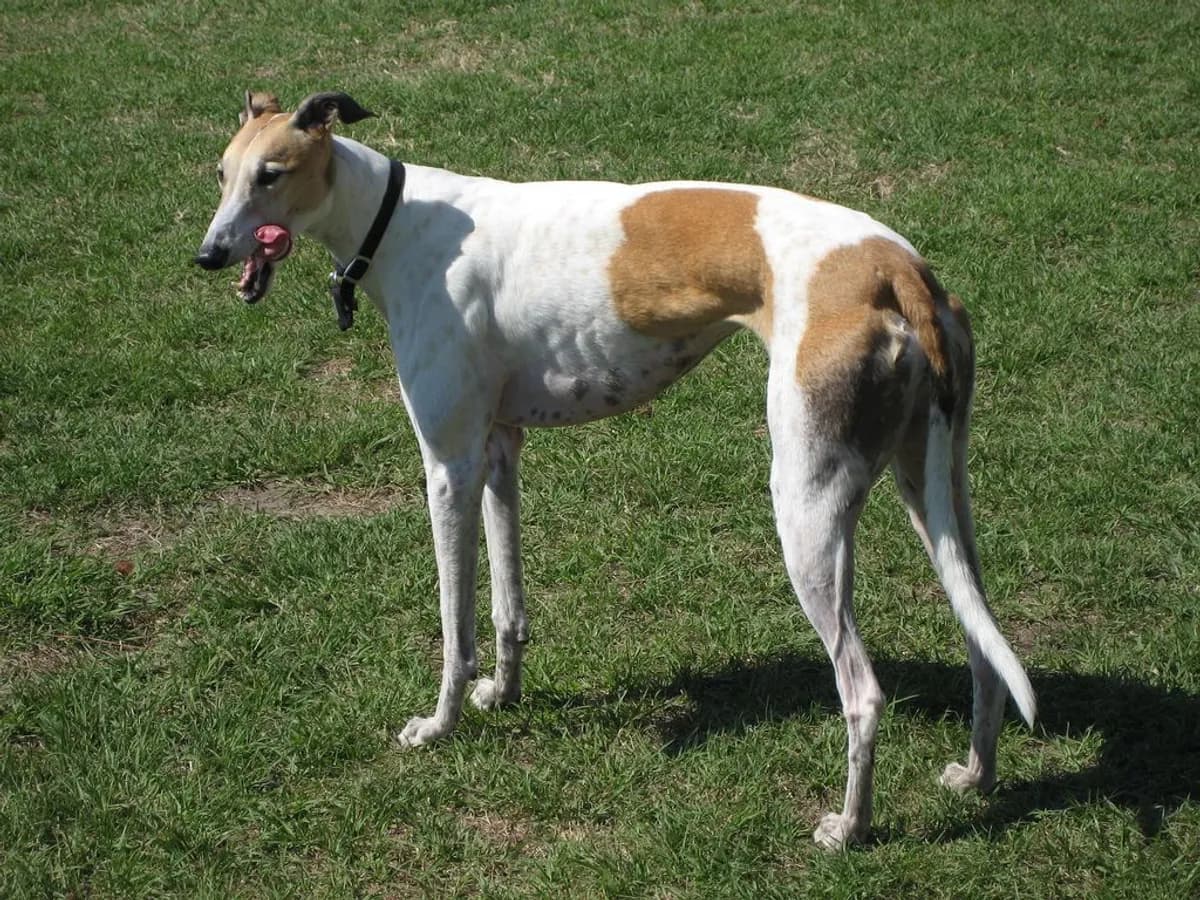
The Greyhound is among the oldest of all sighthound types, prized for coursing by English nobility for centuries and at times protected by law from common ownership. The twentieth century turned it into the world's best-known racing dog, and most Greyhounds in UK homes today are retired racers rehomed through charities. Few breeds have made the journey from working athlete to sofa companion quite so gracefully.
Greyhounds are notably placid, quiet and affectionate once out of racing life, earning them the nickname of the 45mph couch potato. They form close bonds with their families, are typically calm with people they know, and settle happily into a quiet household routine once their short daily bursts of exercise are done.
They can be reserved with strangers and are usually gentle with children, though their size and startle response mean time with very young children is best supervised. Many keep a strong prey drive towards small, fast-moving animals, so recall around wildlife, cats and small dogs needs careful management.
Common health conditions
Things Greyhound owners commonly watch for. Guidance, not veterinary advice.
Dental disease
Greyhounds have one of the highest recorded rates of dental disease of any breed. Brush daily and add dental chews or a plaque-reducing kibble texture.
Osteoarthritis
With little muscle padding over the joints, arthritis is common as Greyhounds age. Keep them lean and consider a joint-support diet to protect long-term mobility.
Bloat (gastric dilatation-volvulus)
Their deep, narrow chest raises the risk of this life-threatening emergency. Feed smaller measured meals from a slow-feeder bowl, and rest your dog after eating.
Corns (paw pad lesions)
A breed-specific paw pad issue linked to their fine skin. Check the paws regularly and keep weight healthy to reduce pressure on the pads.
Feeding a Greyhound
Greyhounds carry very little body fat and have a metabolism built for short, intense sprints, so their diet needs enough energy and good-quality protein to maintain lean muscle without encouraging excess weight. A moderate-fat, calorie-dense complete food fed in two measured meals a day suits adults better than one large meal, particularly given their deep chest and the associated bloat risk.
Because dental disease is so prevalent in the breed, a kibble texture that helps reduce plaque, or dental chews, is worth prioritising alongside regular brushing. Retired racers moving into pet homes often need less than their racing diet provided, so adjust portions until you can feel the ribs without seeing them.
Every dog is different — weight, age and activity all shift what a Greyhound needs. The turns these breed tendencies into a shortlist matched to your dog’s age, size, budget and needs.
Typical adult weight
27–40 kg
Est. daily calories
990–1,780 kcal
A broad guide for an average-activity adult in good body condition — not veterinary advice. Real needs vary with age, neutering, activity, health and body condition, so no two Greyhounds eat exactly the same. Get a personalised estimate or estimate feeding costs.
- Per day
- ~£1.64
- Per month
- ~£50
- Per year
- ~£597
A broad typical monthly budget guide, not a live price quote. Food format, calorie density, pack size and retailer pricing all change the real cost.
Find the right food for your Greyhound
Foods ranked to your dog
Answer a few quick questions and the Food Finder ranks foods to your Greyhound by score, price, life stage and fit.
Breed at a glance
- Exercise needs5/10
- Appetite6/10
- Trainability6/10
- Good with children6/10
- Shedding3/10
- Tolerates being alone4/10
The good & the worth-knowing
The good
- Calm, gentle temperament needing far less exercise than the racing reputation suggests
- Low-shedding, easy-care short coat
- Quiet and undemanding indoors, well suited to a relaxed household
Worth knowing
- Very low body fat means they feel the cold and often need a coat in winter
- Strong prey drive can make recall unreliable off-lead near small animals
- Thin skin is easily nicked, so care is needed around rough ground and boisterous dogs
Best matched accessories
All accessoriesThe collections that suit the breed, judged by the same independent standard.
Common owner questions
Do Greyhounds need a lot of exercise?
Less than most people expect. A couple of decent walks with the chance for a safe, secure sprint is usually enough, and many adults happily rest the remainder of the day. Match portions to their true activity rather than their athletic reputation to avoid weight gain.
What should I feed a Greyhound?
A moderate-fat, calorie-dense complete food fed in two measured meals works well for most adults, balancing lean muscle with weight control. Retired racers often need less than their racing diet provided, so check body condition regularly, and our Food Finder can help match a food to your dog.
Are Greyhounds good with children and other pets?
Many are gentle and tolerant with children they know, though supervision is wise given their size and the startle response some keep from racing life. Introduce cats and small pets gradually and carefully, and never rely fully on recall around small, fast-moving animals.
Why do Greyhounds need coats in cold weather?
Their very low body fat and thin, close coat give them little natural insulation, so many feel the cold quickly and benefit from a fitted coat on winter walks. A healthy weight also helps them regulate temperature comfortably.