


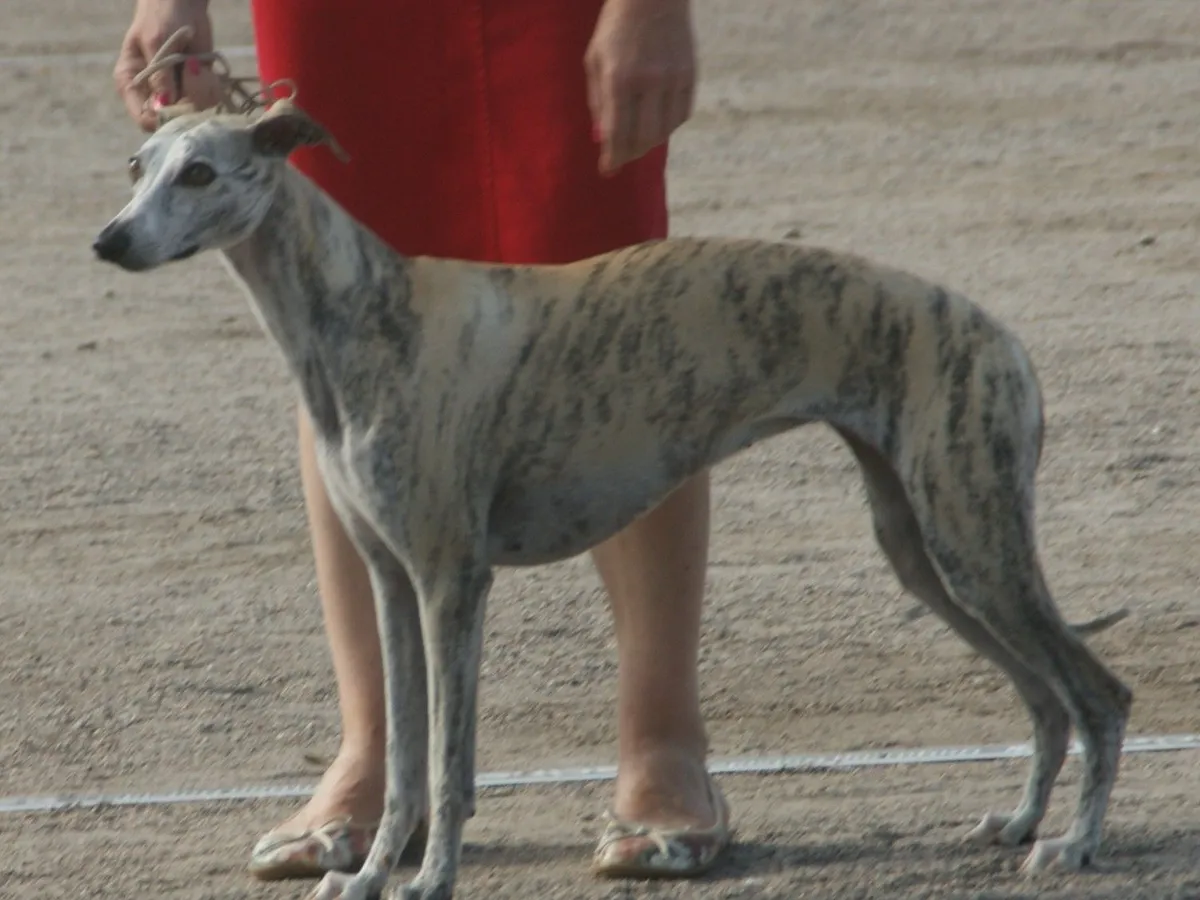
Most important facts
- Group
- Hound
- Size
- Medium
- Weight
- 11–18 kg
- Lifespan
- 12–14 years
- Coat
- Fine, short and close
- Energy
- High
- Height
- 44–51 cm
- Colours
- Any colour or mixture
- Shedding
- Light
- Est. feeding cost
- ~£0.88 a day
- Gear to consider
- Fleece-lined coat for cold or wet walks, secure well-fitted harness, padded bed for joint and skin comfort
Typical dry food, adult
About the Whippet
The Whippet was bred in the mining and mill towns of northern England from small greyhounds and terriers, earning its keep as the poor man's racehorse. Weekend rag races had dogs sprinting to their owners' waving cloths. A good Whippet could supplement a family's wages and slept indoors accordingly. The racing instinct and the love of a warm bed both survive intact.
Gentle and even-tempered, the Whippet is often described as a couch potato with a switch, placid indoors and a blur of speed the moment there is space to run. They bond closely with their families and are typically good with considerate children, though their slight build means rough handling is best avoided.
Whippets are sensitive, and without early, positive socialisation they can be shy with strangers. Some are also prone to separation anxiety if left alone for long. Their strong sighthound instinct to chase means recall around livestock, cats and small animals needs careful, gradual training, and secure fencing matters more than for most breeds.
Common health conditions
Things Whippet owners commonly watch for. Guidance, not veterinary advice.
Progressive retinal atrophy (PRA)
A gradual, inherited loss of vision. Choose breeders who screen parents, and keep the diet nutrient-complete to support general eye and coat health.
Mitral valve disease
A weakening of a heart valve that becomes more likely with age, often first spotted as a murmur. Keep a Whippet at a correct, lean body condition to ease the heart's workload.
Skin cuts and pad injuries
Thin skin, minimal body fat and a love of full-speed sprinting make cuts and torn pads common. Check after runs, and feed adequate protein and omega fatty acids to support skin repair.
Immune-mediated conditions
Whippets can be prone to conditions where the immune system reacts against the body's own tissues. Have unexplained lethargy or lameness checked by a vet.
Feeding a Whippet
Whippets carry very little body fat, so judge body condition by feel rather than appearance alone. Ribs are meant to be easily felt and often visible, which is normal for the breed and no sign of being underweight. Their fine coat also means they burn a little more energy keeping warm, so portions may need small seasonal adjustment.
Whippets are sprinters and not endurance athletes, so most pets do well on a moderate-energy, quality complete diet split into two meals. That suits their narrow, deep chest and reduces bloat risk. Given their tendency towards anxiety, a consistent feeding routine and calm mealtimes help settle a nervous dog, and any sudden appetite change deserves a vet's attention.
Every dog is different — weight, age and activity all shift what a Whippet needs. The turns these breed tendencies into a shortlist matched to your dog’s age, size, budget and needs.
Typical adult weight
11–18 kg
Est. daily calories
510–1,100 kcal
A broad guide for an average-activity adult in good body condition — not veterinary advice. Real needs vary with age, neutering, activity, health and body condition, so no two Whippets eat exactly the same. Get a personalised estimate or estimate feeding costs.


- Per day
- ~£0.88
- Per month
- ~£27
- Per year
- ~£320
A broad typical monthly budget guide, not a live price quote. Food format, calorie density, pack size and retailer pricing all change the real cost.
Find the right food for your Whippet
Foods ranked to your dog
Answer a few quick questions and the Food Finder ranks foods to your Whippet by score, price, life stage and fit.
Breed at a glance
- Exercise needs6/10
- Appetite5/10
- Trainability6/10
- Good with children6/10
- Shedding2/10
- Tolerates being alone3/10
The good & the worth-knowing
The good
- Low-maintenance, minimal-shedding coat needs only a quick weekly brush
- Calm and quiet indoors, content with a good sofa and a settled routine
- Gentle, affectionate temperament that bonds closely with its family

Worth knowing
- Thin skin and low body fat mean they feel the cold and injure easily on rough ground
- Strong prey drive and blistering speed make off-lead recall unreliable around small animals
- Can become anxious or clingy without careful socialisation
Best matched accessories
All accessoriesThe collections that suit the breed, judged by the same independent standard.


Common owner questions
How much should I feed a Whippet?
Most adults do well on a moderate-energy complete food split across two meals, judged against body condition rather than a fixed weight on the bag. Because Whippets are naturally lean, ribs being easily felt is normal, and our Food Finder can help match a food to your dog.
Are Whippets fussy eaters?
Some Whippets are more particular than the average dog, especially if anxious, but most eat well once a consistent routine and a palatable food are established. Mention sudden loss of appetite to a vet.
Do Whippets need a coat in winter?
Yes, in most cases. Their short coat and low body fat offer little insulation, so a fleece or waterproof coat for cold, wet walks is common practice among Whippet owners, not an indulgence.
Are Whippets good with children?
Generally yes, particularly with children who understand gentle handling, as their slender build means rough play can cause injury. Their calm, affectionate nature suits family life well.