

Most important facts
- Group
- Toy
- Size
- Toy
- Weight
- 3–5 kg
- Lifespan
- 12–15 years
- Coat
- Short, fine and smooth
- Energy
- Moderate
- Height
- 32–38 cm
- Colours
- Black, blue, fawn, cream or red
- Shedding
- Light
- Est. feeding cost
- ~£0.36 a day
- Gear to consider
- Warm dog coat, orthopaedic or padded bed, well-fitted step-in harness
Typical dry food, adult
About the Italian Greyhound
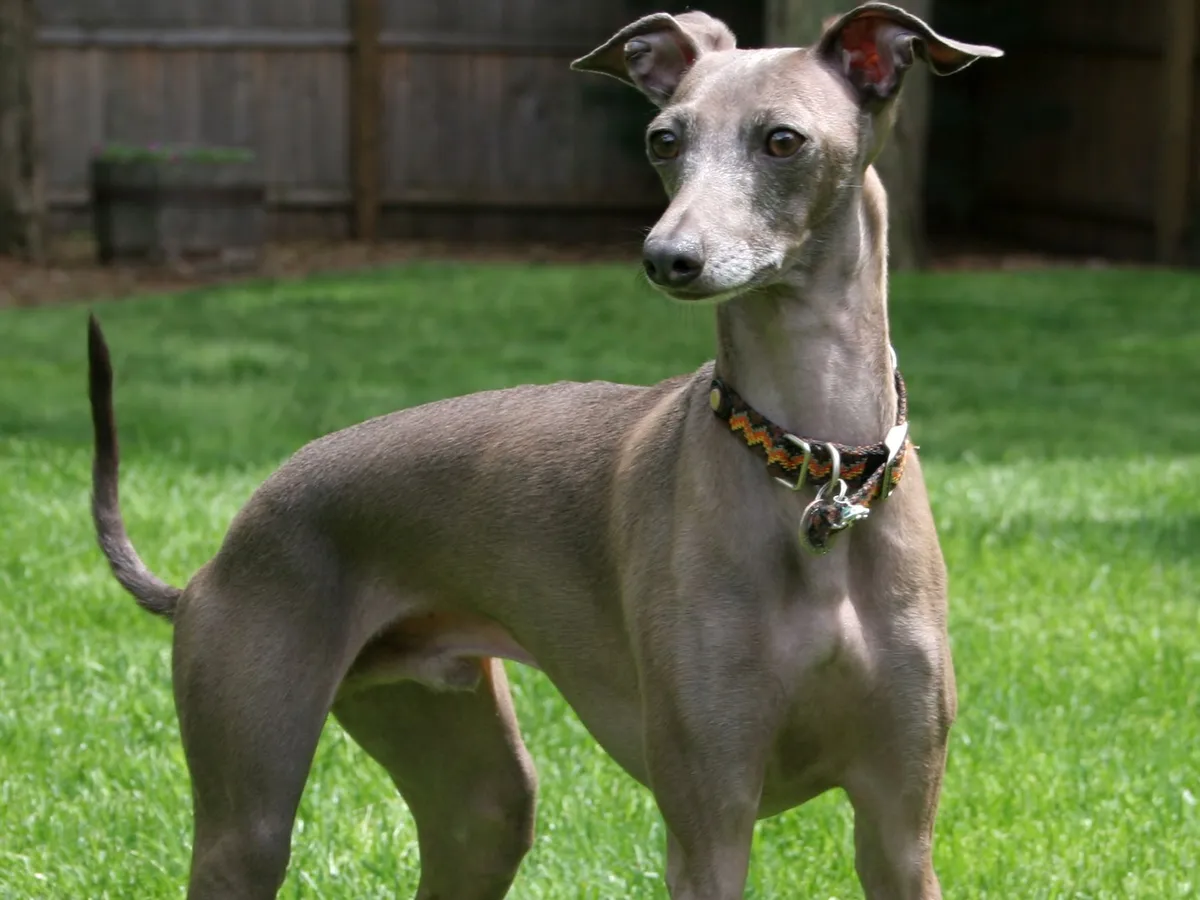
Miniature sighthounds of Italian Greyhound type have been companions around the Mediterranean for some two thousand years, and they appear in the art of Pompeii. They shine most gloriously in the portraits of Renaissance Italy, where the breed earned its name as a court favourite. European royalty from Catherine the Great to Queen Victoria kept them, and the breed has remained a devoted, decorative lapdog ever since.
Italian Greyhounds are gentle and often deeply attached to their owner, sometimes to the point of following them from room to room. They can be reserved with strangers and unfamiliar situations, so early, careful socialisation matters. Once bonded, most owners describe a genuinely loving, sensitive companion attuned to the household's mood.
Underneath the lap-dog manner is a true sighthound, quick off the mark and inclined to chase anything that runs, so a secure garden and reliable lead are essential. Indoors they're typically quiet and undemanding, well suited to calm adult households, flats and owners who want a low-energy, low-shedding companion.
Common health conditions
Things Italian Greyhound owners commonly watch for. Guidance, not veterinary advice.
Periodontal (dental) disease
Small, crowded teeth make this breed especially prone to gum disease. Brush daily and choose a dental-friendly kibble size.
Luxating patella
Kneecaps sometimes slide out of position. Keep a lean body weight and add joint-support nutrients to reduce strain on the joint.
Leg and bone fractures
Fine bones, particularly in puppies and young adults, mean jumping from furniture or rough play is a real fracture risk. Use ramps and manage bold leaps.
Progressive retinal atrophy
A gradual, inherited loss of vision. Choose breeders who health-test parent dogs before breeding.
Epilepsy
Seizure disorders are seen more often in this breed than average. Discuss any suspected seizure with a vet promptly.
Feeding a Italian Greyhound
Italian Greyhounds have a fast metabolism but fairly low overall exercise volume, so calorie needs are moderate, and it's easy to overfeed a dog that looks permanently lean thanks to its thin coat. Feed to body condition: a waist you can see and ribs you can feel easily. Divide the daily amount into two or three smaller meals, especially for puppies, who can be prone to low blood sugar.
Because dental disease is the breed's single biggest health issue, a kibble sized and textured to support chewing, or a food with dental-care additives, is worth prioritising alongside daily brushing. A diet with joint-support nutrients is sensible given the tendency towards luxating patellas, and a palatable, consistent recipe helps avoid fussiness.
Every dog is different — weight, age and activity all shift what a Italian Greyhound needs. The turns these breed tendencies into a shortlist matched to your dog’s age, size, budget and needs.
Typical adult weight
3–5 kg
Est. daily calories
190–370 kcal
A broad guide for an average-activity adult in good body condition — not veterinary advice. Real needs vary with age, neutering, activity, health and body condition, so no two Italian Greyhounds eat exactly the same. Get a personalised estimate or estimate feeding costs.
- Per day
- ~£0.36
- Per month
- ~£11
- Per year
- ~£130
A broad typical monthly budget guide, not a live price quote. Food format, calorie density, pack size and retailer pricing all change the real cost.
Find the right food for your Italian Greyhound
Foods ranked to your dog
Answer a few quick questions and the Food Finder ranks foods to your Italian Greyhound by score, price, life stage and fit.
Breed at a glance
- Exercise needs5/10
- Appetite4/10
- Trainability5/10
- Good with children3/10
- Shedding2/10
- Tolerates being alone3/10
The good & the worth-knowing
The good
- Deeply affectionate and bonds closely with its owner, making a devoted companion
- Short, low-shedding coat that needs minimal grooming beyond a weekly wipe-over
- Compact size suits flats and smaller homes, with modest exercise needs
Worth knowing
- Fine, fragile bones mean puppies and young dogs are prone to leg fractures from jumps or falls
- Not well suited to households with young or boisterous children or sturdy, rough-and-tumble pets
- Feels the cold quickly due to a thin coat and low body fat, so needs a winter coat
Best matched accessories
All accessoriesThe collections that suit the breed, judged by the same independent standard.
Common owner questions
How much should I feed my Italian Greyhound?
There's no single number that suits every dog. Judge portions against body condition, ribs easily felt and a clear waist, since this breed can look lean even when carrying extra weight. Give the daily allowance as two or three smaller meals, and our Food Finder can help narrow down a suitable recipe.
Are Italian Greyhounds fussy eaters?
Some can be selective, particularly if fed an inconsistent diet or too many titbits early on. Stick to a palatable, complete food and avoid constant switching to keep appetite steady.
Do Italian Greyhounds need a coat in winter?
Yes. Their short coat and low body fat mean they chill quickly, so a well-fitted dog coat is essential for cold or wet walks, alongside bedding that keeps them off cold floors.
Are Italian Greyhounds good with children?
They're affectionate but physically delicate, so they suit calmer households with older children who understand not to pick them up or play roughly, rather than homes with toddlers.