
There is no fixed hour figure that fits every dog. A settled adult who has been walked and fed will often rest happily for a few hours. A puppy or a newly rehomed dog needs far less than that. What matters most is that no dog routinely spends a whole working day alone with nothing to do and nobody to break it up.
Some product links in this article are affiliate links. Off the Leash may earn a commission if you buy through one, at no cost to you, and it never changes what we recommend.
How long can you leave a dog alone?
The honest answer is that it depends on the dog in front of you, and on what the day looks like either side of the empty house. A settled adult who has had a proper walk and a full breakfast will often sleep through a few hours without registering much at all. A young puppy will not manage anything close to that. The number people want is a number nobody can give them fairly.
There is one line worth holding on to, though. A dog should not routinely spend the whole working day alone with nothing to do and nobody to see. On a day that runs long, most dogs cope perfectly well. As a permanent arrangement it asks too much of them, and it tends to show up either in the house or in the way your dog greets you at the door.
So the useful question is not how many hours you are allowed. It is whether your dog is genuinely resting while you are out, and what you can change about the hours around it.
Does your dog's age change the answer?
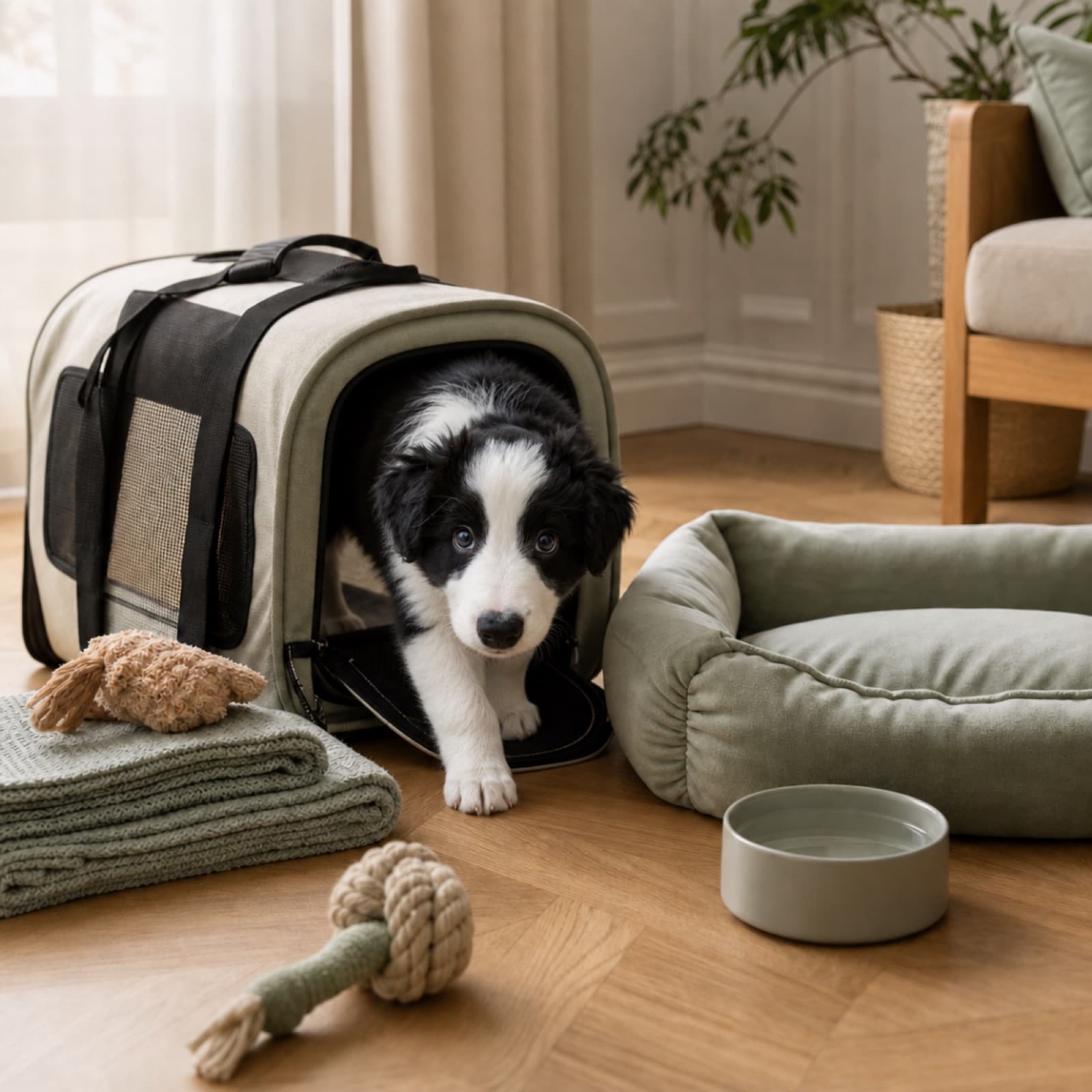
It changes it completely. A puppy needs the toilet often and has not yet learned the lesson that matters most, which is that you always come back. That lesson gets taught in small doses from the first week, and never tested on a full day. Our guide to bringing a new puppy home covers how those first days set the pattern for everything after.
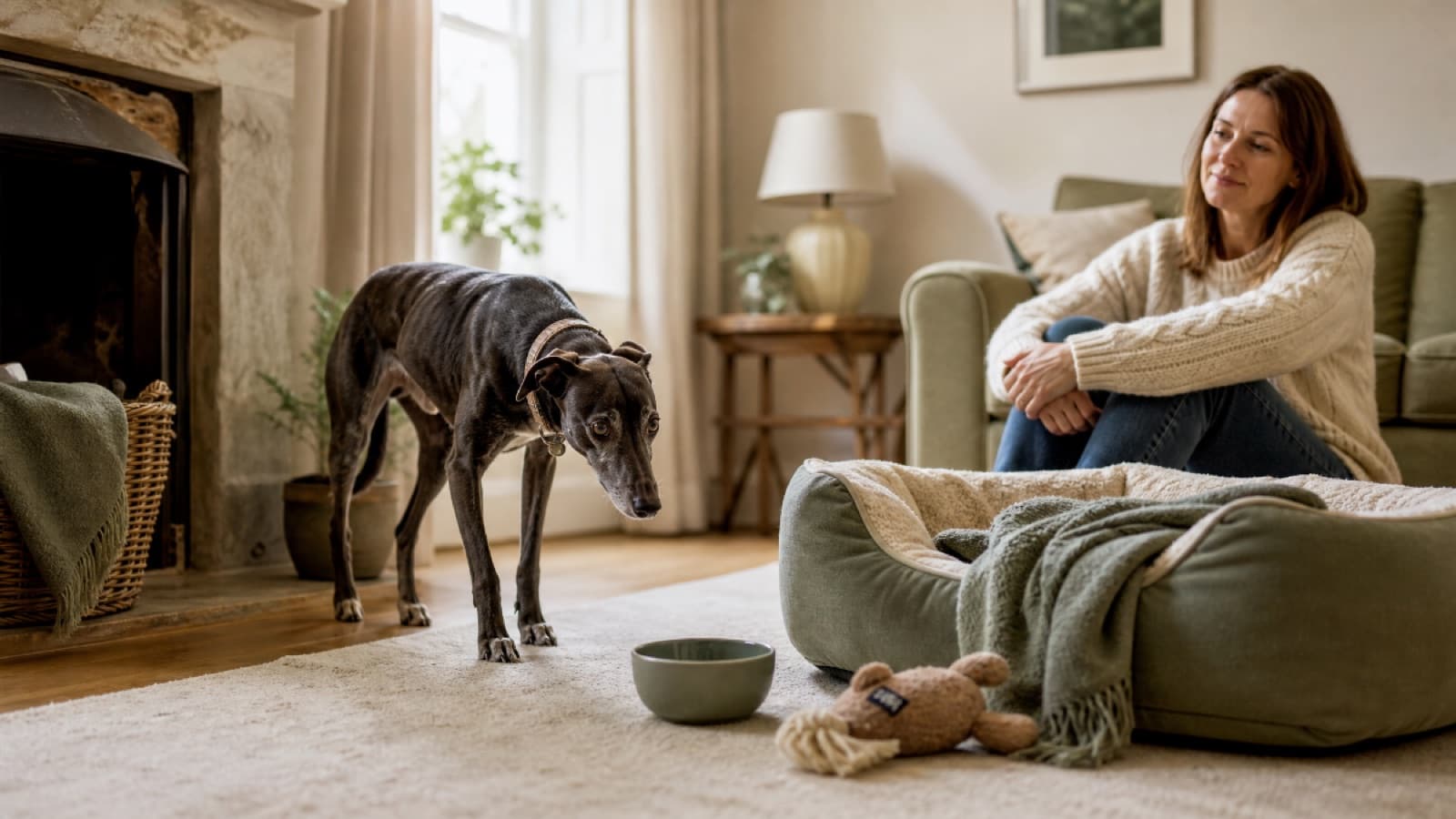
A newly rehomed dog is a different case again. You have no history to work from, and your dog has no reason yet to believe the door will open again. Go slower than feels necessary and treat every calm absence as progress. Settling a rescue dog walks through what the first few weeks usually ask of you.
Older dogs often love a quiet house, but a dog who was fine alone for years can start to find it harder as hearing or eyesight shifts. If that change arrives suddenly, speak to your vet before you treat it as a training problem. When the change looks like it is in the dog and not in the routine, your vet comes first.
How do you build up alone time?
Being alone is a skill, and skills get taught in pieces. Start by walking out of the room and coming back before your dog has had time to decide anything about it. Then a minute. Then five. Then the length of a trip to the shop. You are aiming to be boring and predictable, so that leaving stops being an event.
Keep departures and arrivals dull. A long emotional goodbye and a big reunion both tell your dog that the front door is the most important object in the house. Pick up your keys at random moments when you are not going anywhere, so the sound stops meaning something is about to happen.
It helps enormously if your dog has a spot that is properly theirs. For some dogs that is a crate left open, made comfortable and used as a den rather than a punishment. For others it is a bed in the place they already choose to flop. Dogs who lean into something while they sleep tend to settle faster in a bed with a raised edge, and a deep bolstered shape (Rosewood 40 Winks donut) is our pick for that. If you are also working on staying put on cue, the training kit that helps is the simple sort, and nothing clever.
What should your dog have to do while you are out?
Start with what happens before you go. A dog who has been out and had a proper sniff about is a dog who is ready to sleep. Ten unhurried minutes of nose work on the way back does more for settling than a fast lap of the park, and it takes no extra time at all.
Then leave them something to do for the first stretch, because that is the part most dogs find hardest. A long-lasting chew or a puzzle that takes real work to empty gives your dog a job at the exact moment they would otherwise be lying by the door listening for your car. For determined chewers, a tough rubber stuffable (KONG Extreme) holds up longest. Hard chews can crack a tooth though, and which ones are safe for small mouths is worth a quick look.
Some dogs settle better with a radio murmuring in the background. Others could not care less. Try it and watch what actually happens, which brings us neatly to the next bit.
How do you find out what really happens when you leave?
Guessing is the worst part of this. You picture your dog howling for four hours, and you have no evidence either way. An indoor camera answers the question in a single morning, and most owners are relieved by what they see. If you want one pointed at the sofa, a simple indoor camera (a pan and tilt one like this) does the job without fuss.
What you are looking for is the shape of the first twenty minutes. A dog who mooches, has a drink and then flakes out is telling you the arrangement works. A dog who paces the hallway, whines at intervals or never fully lies down is telling you the opposite, however quiet the rest of the footage looks. Trackers and wearables can fill in the same picture over a week if your dog is out of camera range.
Who can break up the day for you?
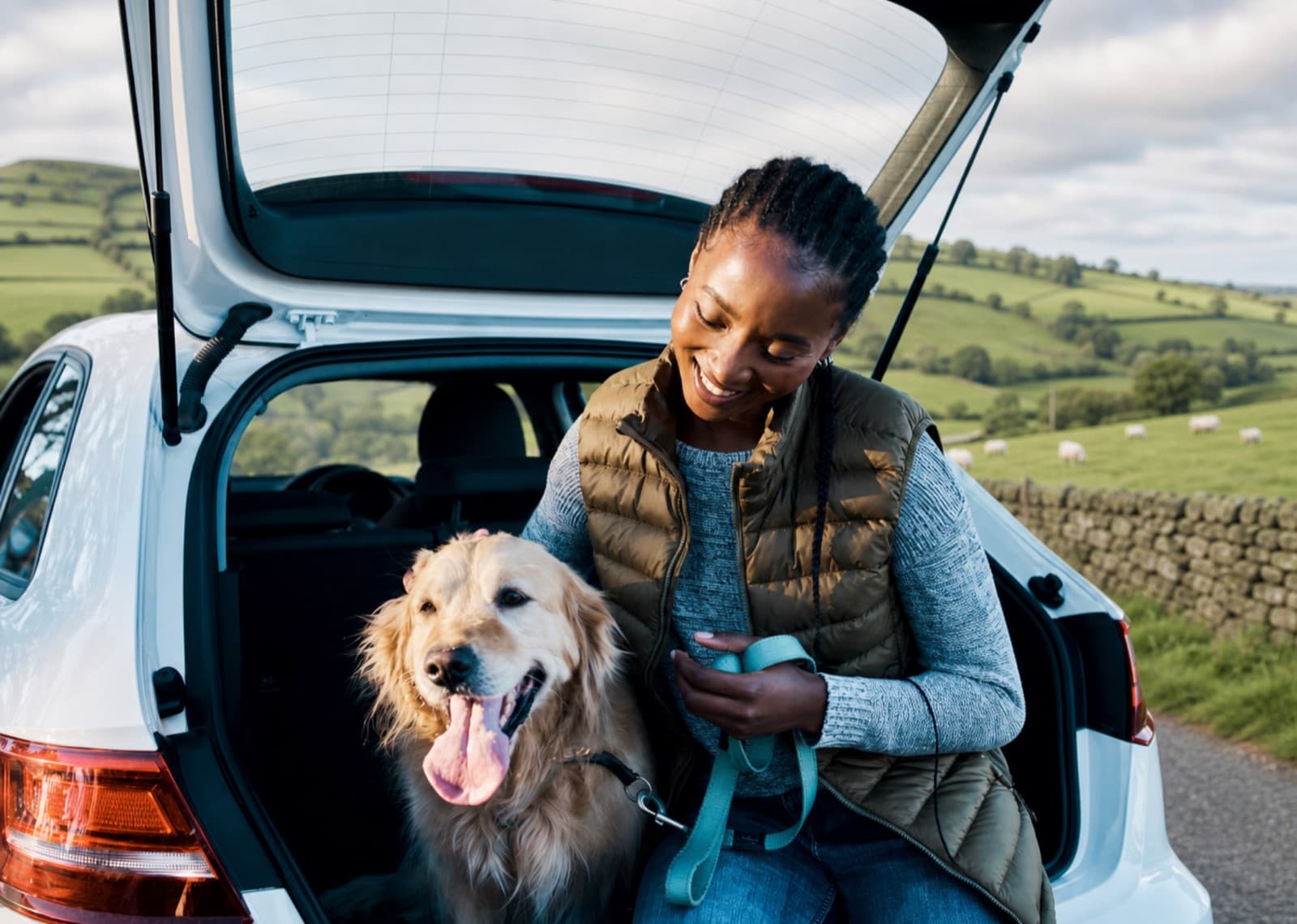
This is where most working owners find their answer. A midday visit turns one long absence into two manageable ones, and it gives your dog a toilet break and something to think about in the middle. A good walker is worth far more than the hour they are booked for, and choosing a dog walker sets out what to ask before you hand over a key.
A neighbour, a family member or a nearby friend can do the same job on the days you are stuck late. Day care suits some dogs beautifully and overwhelms others, so judge it on your own dog and not on how much fun it looks in the photos.
Signs it is not working
Trust the evidence rather than the guilt. The things worth taking seriously are damage around the door or windows, a complaint from a neighbour about noise, and toileting from a dog who is otherwise reliable. Food left untouched all day counts too, and so does a greeting that reads as relief and not joy. Once you have seen both, you can tell the difference immediately.
If any of that is showing up, go back to shorter absences and build again from a length your dog can genuinely do. Ask your vet first if the change was sudden or came with anything physical, because discomfort and distress can look very similar from the outside. Working with a good trainer on a proper plan beats improvising, and it usually takes less time than owners fear.
Nobody is a bad owner for going to work
Dogs sleep for a large part of the day, and a dog left alone in a warm house with a full stomach and something to chew is not a dog being neglected. The guilt most owners carry is far heavier than the situation deserves.
What your dog actually needs is a day with some shape to it. Something good before you go, and something to do while you are out. Someone to break up the middle if the day is long. Then a calm welcome when you get back. Get those four right and the hours stop being the thing that matters.
Frequently asked questions
Can I leave my dog alone all day while I work?
Not as a routine, no. An occasional long day is fine for most settled adults, but a full working day alone every day asks too much of nearly any dog. The usual fix is not a new job. It is a midday break from a walker, a neighbour or day care. Add a proper walk before you leave and something to chew for the first stretch.
Should I shut my dog in a crate when I go out?
Only if the crate is already somewhere your dog chooses to be. A crate works as a den, never as a way to contain a dog who is panicking, because that usually makes the distress worse. Introduce it while you are home, feed meals in there, and leave the door open. If your dog will not settle in it with you present, they will not settle in it alone.
Will getting a second dog stop my dog being lonely?
Usually not, and getting that experiment wrong is hard on the dog. Dogs who struggle when left are generally missing their person, not canine company, so a second dog often ends up watching the first one worry. Get the alone-time training working with the dog you have first. If you then want another dog for its own sake, that is a much better reason.
Is my dog actually distressed, or just bored?
Watch the first twenty minutes on a camera. Boredom looks like a dog who settles, wakes, mooches about and goes back to sleep. Distress looks like pacing, whining at the door, drooling or an inability to lie down properly at all. Boredom is solved with a better walk and a puzzle. Distress needs a slower rebuild and a word with your vet if it appeared suddenly.