The Highway Code expects dogs to be suitably restrained in a car so they cannot distract you while you drive, or be hurt if you stop suddenly. In practice that means a travel harness clipped to the seat belt, a secured crate, or a boot behind a fitted guard. A dog loose on a lap or a back seat does not meet it.
Some product links in this article are affiliate links. Off the Leash may earn a commission if you buy through one, at no cost to you, and it never changes what we recommend.
Does the law say my dog has to be restrained in the car?
The Highway Code expects dogs to be suitably restrained in a vehicle so they cannot distract you while you are driving, or injure you or themselves if you stop quickly. The restraint line is the one people quote. It is written as guidance and is not an offence in its own right, but a loose dog can very quickly turn into a driving offence if it contributes to you losing proper control. Insurers take an interest too, and a claim tends to go more smoothly when the dog was properly secured.
The practical reading is simple. Your dog needs to be held in place by something built for the job, whether that is a harness attached to the seat belt system or a crate wedged so it cannot shift. A dog sitting on a lap or roaming the back seat does not meet that bar, however calm they usually are at home.
Harness, crate or boot guard: which one suits your dog?
A travel harness is the most flexible answer for most family cars. Look for one that has been through a genuine crash test, and do not go by how sturdy it feels in your hands. Kurgo state their Tru-Fit car harness has been crash tested at a certified facility. Use it with a short tether to the seat belt buckle, short enough that your dog cannot be thrown forward but long enough that they can lie down. It is a different piece of kit from the harness you walk in. Our take on harnesses, collars and when each one earns its place is worth reading first.
A crate is the better answer for a dog who already rests in one at home, or for a deep boot where the crate can be braced so nothing slides. A boot guard suits a hatchback and a dog who settles well, though bear in mind it contains the dog without restraining them. Build decides a lot here, and our breed guides are a quick way to sanity-check what a long back or a broad chest needs. Ramps beat leaps for a dachshund or corgi, as looking after a long back explains.
How do you teach a dog to like the car?
Treat the car as something to be trained, not something to be endured. Start with the engine off and the boot open, feed a meal in there, then let your dog hop out again while they are still happy about it. Next comes a trip around the block that ends somewhere brilliant. A five minute drive to a favourite field builds a far better association than a first outing that runs for an hour and finishes at the vet.
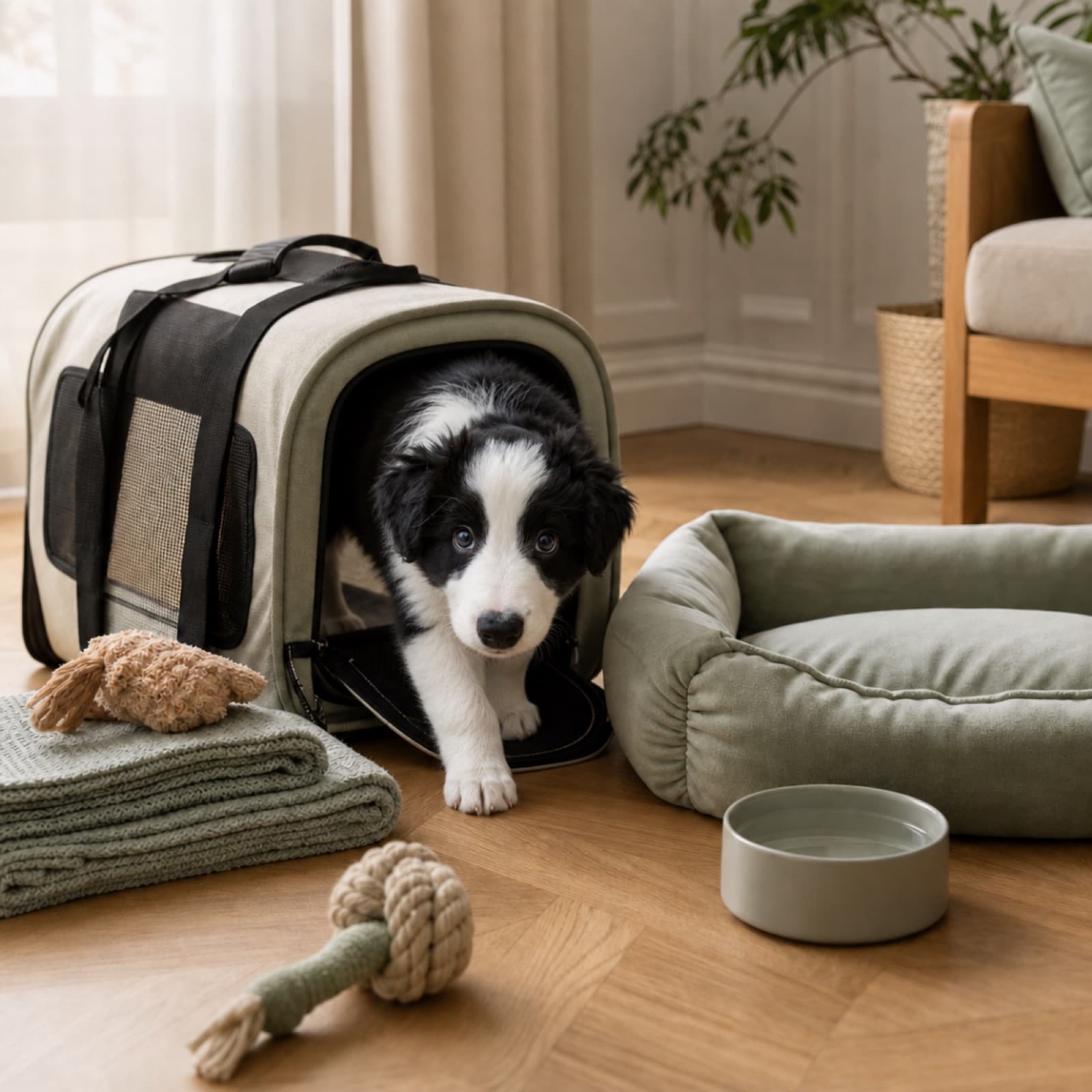
Puppies are often queasy in the car and many settle as they mature. Keep those early journeys short. Travel before a meal, not after one. A view of the road ahead settles a queasy puppy better than the blur of a side window. If your puppy is still struggling once the routine is established, your vet is the next call. There is more on getting early routines right in our guide to bringing a new puppy home.
What should be in the car before you set off?
Water is the thing you never want to be without. A collapsible bowl (one like this) lives in a door pocket and takes up almost no room, and it works alongside a bottle you top up at every stop. Our bowls and feeders page covers the travel friendly shapes if you are starting from scratch.
Beyond water, keep a spare lead within reach and something familiar for your dog to lie on. A blanket that smells of home does more for a nervous traveller than anything designed specifically for cars. If you are driving somewhere cold, our guide to keeping your dog warm this winter is a useful companion read. A car that has sat outside all day is a chilly place to ask a dog to settle.
How often should you stop on a long drive?
Plan a proper break every couple of hours. Get your dog out on a lead each time, even if they show no interest, because a stretch and a sniff resets a body that has been holding still against every bend in the road. Offer water at each stop, without waiting for a dog to look like they want it.
Open the door with the lead already clipped on. Service station car parks are busy places and a dog who has been travelling for a while can pop out faster than you expect. If yours is a bolter, add a second layer of security by keeping the travel harness clipped until the lead is attached, or by opening a boot gate a hand's width first and reaching through.
Air, warmth and the one rule that never bends
Never leave your dog alone in a parked car when the weather is warm. Shade moves as the sun does. A cracked window achieves very little against an interior that heats up far faster than most people imagine. If a stop cannot be made with your dog beside you, the stop waits until someone can stay with them. This is the part of car travel with no flexibility in it whatsoever.
On the road, keep air moving through the back of the car, and do not aim cold air straight at a crate. Climate control set for the front seats rarely reaches a boot at all. If your dog is panting hard or unusually restless, pull over somewhere shaded, offer water and let them cool down properly before you go on. Anything that does not settle is one for your vet.
Sorting the muddy end of the walk
Most car mess arrives on the way home. A waterproof boot liner that climbs the sides as well as covering the floor saves more cleaning than any other single thing you can add to a car (this one). It lifts out for a hose down in the garden.
Dry your dog before they get in, not after they get out. A big absorbent dog towel kept permanently in the boot means legs and belly get dealt with at the tailgate, which keeps wet fur off the seats and stops the car smelling of pond. Shake the liner out and wash the towel on the same day. A car that stays pleasant is a car you keep taking your dog in, and that is really the whole point.
Frequently asked questions
Can my dog travel in the front seat?
Better in the back. A front seat puts your dog within reach of the controls and in front of a passenger airbag, which is genuinely dangerous if it deploys. If the front is your only option in a van or a two seater, switch the passenger airbag off where the vehicle allows it. Use a proper travel harness and slide the seat as far back as it goes. Everywhere else, the rear seats or boot win.
Is it illegal to let my dog hang their head out of the window?
Treat it as a no. It is not a named offence, but a dog leaning out of a window is not suitably restrained under the Highway Code. An officer can treat that as driving without proper control. Grit and insects at road speed are a real hazard to eyes as well. Open the window enough for air to move through the car and keep your dog secured inside it.
My dog is sick on every single journey. What can I do?
Rebuild the journey from the ground up. Go back to very short trips that end somewhere your dog loves. Time them before a meal, never straight after one. A forward view of the road helps more than a side window. Drive smoothly through bends and keep fresh air moving. If sickness continues once that routine is well established, speak to your vet, because it is worth their input.
Do I need a crate, or is a harness enough?
A harness is enough for most dogs in most cars. A crate earns its place with a dog who already rests in one at home, or with a nervous dog who visibly settles better in an enclosed space. It does need a boot deep enough to brace it properly. What matters either way is that your choice is fixed in position and correctly sized, so nothing slides or tips when you brake hard.