

Most rescue dogs need a few quiet days simply to stop being overwhelmed. Learning how your household works takes a few weeks longer. Months on, the dog you live with starts to feel like the whole dog. Settling is not a countdown. Keep the days predictable and ask for very little at first. Confidence arrives at its own pace.
How long does a rescue dog take to settle?
Longer than the first quiet week, and not as long as it feels on the bad evening somewhere in the middle. You will find a tidy formula passed around online that turns settling into arithmetic, and it is a decent shape but a poor promise. A dog who has moved kennels twice arrives with a different history from one whose family handed him over last Tuesday.
What is reliable is the order things happen in. First comes a stretch of days where the dog is simply overwhelmed and shows almost nothing that looks like personality. Then a longer stretch of weeks where your routine starts to make sense and he begins to test what is allowed. Then months in which the real dog unpacks himself, silliness and all. New adopters are often startled when a quiet dog turns bouncy after a month or so. That is not a problem appearing. That is a dog relaxing.
What does decompression actually look like?
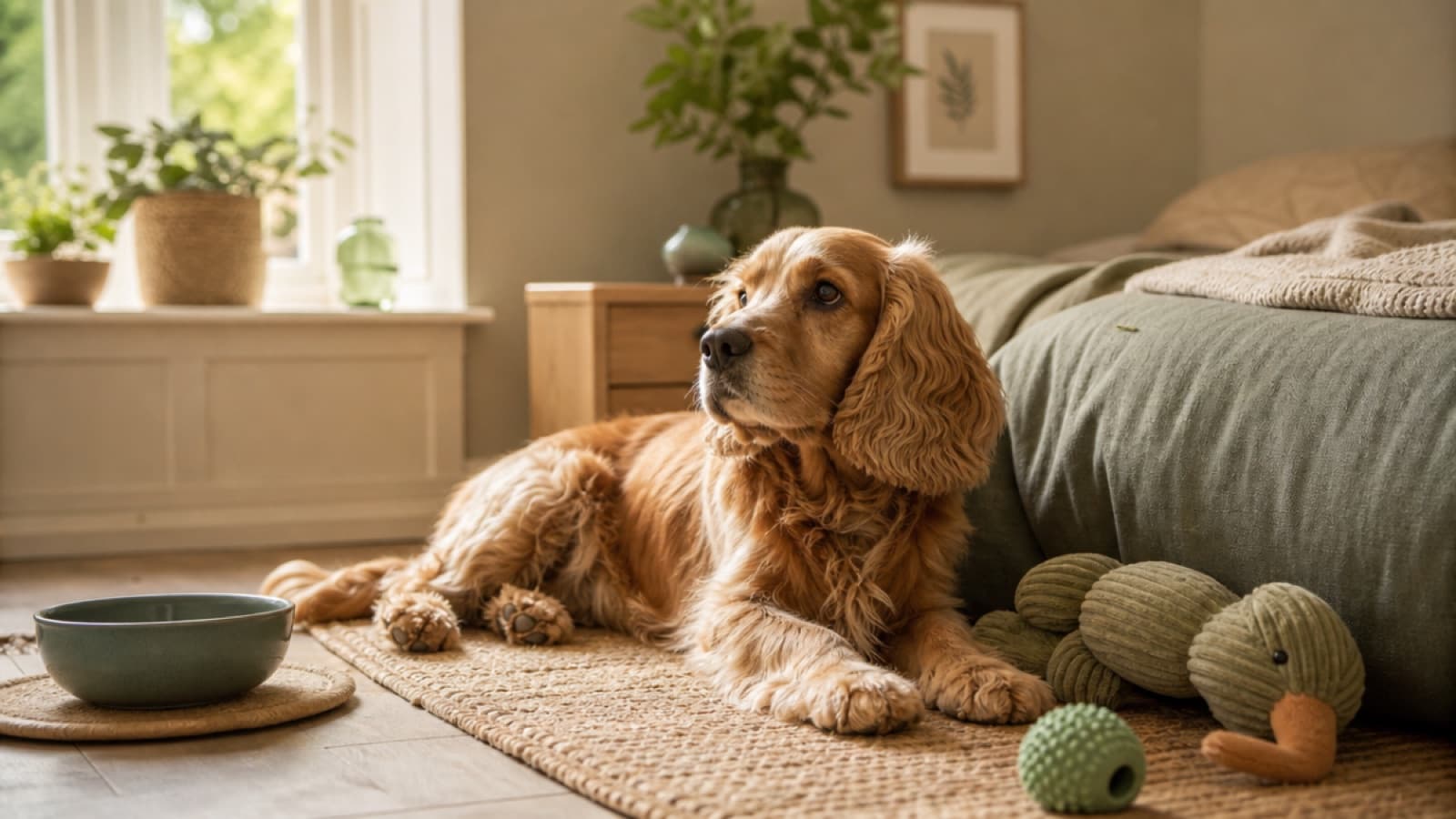
Decompression is the unglamorous first phase and it rarely looks like the homecoming photos. A newly adopted dog may sleep enormously, ignore his dinner, pace at odd hours or shadow you from room to room without ever properly settling. Some dogs go very still and take themselves off behind the sofa. Toys mean nothing yet. None of this is a verdict on your home or on the dog.
The job in this phase is subtraction. Cancel the visitors who want to meet him. Keep walks short and close to home. Ask for almost nothing beyond eating and going out to the toilet. A dog who is allowed to be boring for a fortnight settles sooner than one who gets toured around the neighbourhood.
Do keep an eye on the basics. If he will not drink, refuses food beyond the first day or two, or has sickness or loose stools that do not settle, ring your vet. Do not wait it out. Coughs and upset stomachs travel with rehoming, and your vet comes first on anything clinical.
Where should your rescue dog sleep?
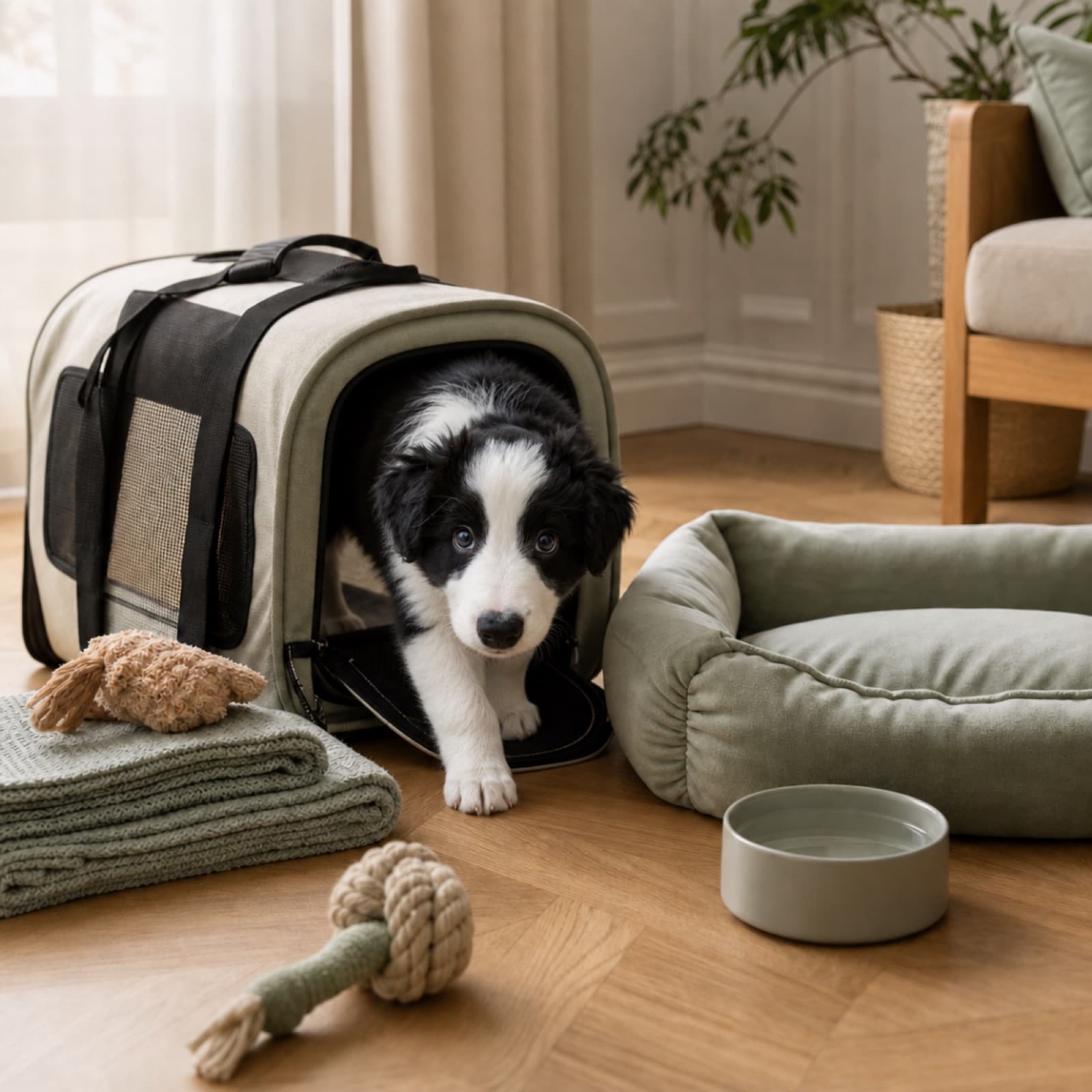
Give him a corner that belongs to him, ideally before he arrives. The best spot is out of the main thoroughfare of the house, with a wall or two at his back and a view of wherever the family tends to be. Behind an armchair in the living room beats the middle of the kitchen floor.
Dogs who want to feel held tend to pick a bed with a raised rim, while sprawlers prefer a flat mat. Put down one of each if you can and let him vote. We have gathered what we rate in the dog beds category. A bed with a washable cover (Bedsure Oxford cover bed) earns its place early on, because accidents happen while a dog is still working out where the back door is.
Plenty of rescues arrive already used to a crate, and with the door left open it makes a den. Drape a blanket over the top and back, then feed him in there. Never shut him in as a punishment. If he hates the thing, take it away. Let the corner simply be a corner.
Should you keep feeding the food he arrived on?
Yes, for now. Ask the rescue or the foster carer what he has been eating and take a few days of it away with you if you can. A new house, a new family and a new bowl of food all landing at once is more change than a stomach wants to handle.
Once he is eating steadily and his stools look normal, you can move him onto something you have chosen, slowly, across a week or two. Our guide to switching food without upset walks through the mixing pattern day by day. When you are ready to choose that food, the narrows the field to what suits his age and his stomach.
Feed him somewhere he will not be stepped over or crowded, and teach children early to leave a dog in peace while he eats. Rescues often bolt their dinner, and if he is deep chested, slowing mealtimes down matters more than you might think. Food is often the first thing a rescue dog feels strongly about, and being left alone with it does a lot of quiet good.
How do you build a routine he can trust?
Predictability is the real reassurance, more than cuddles and more than treats. Walk at roughly the same times. Feed at roughly the same times. Go to bed at roughly the same time. A dog who can guess what happens next has much less to be anxious about.
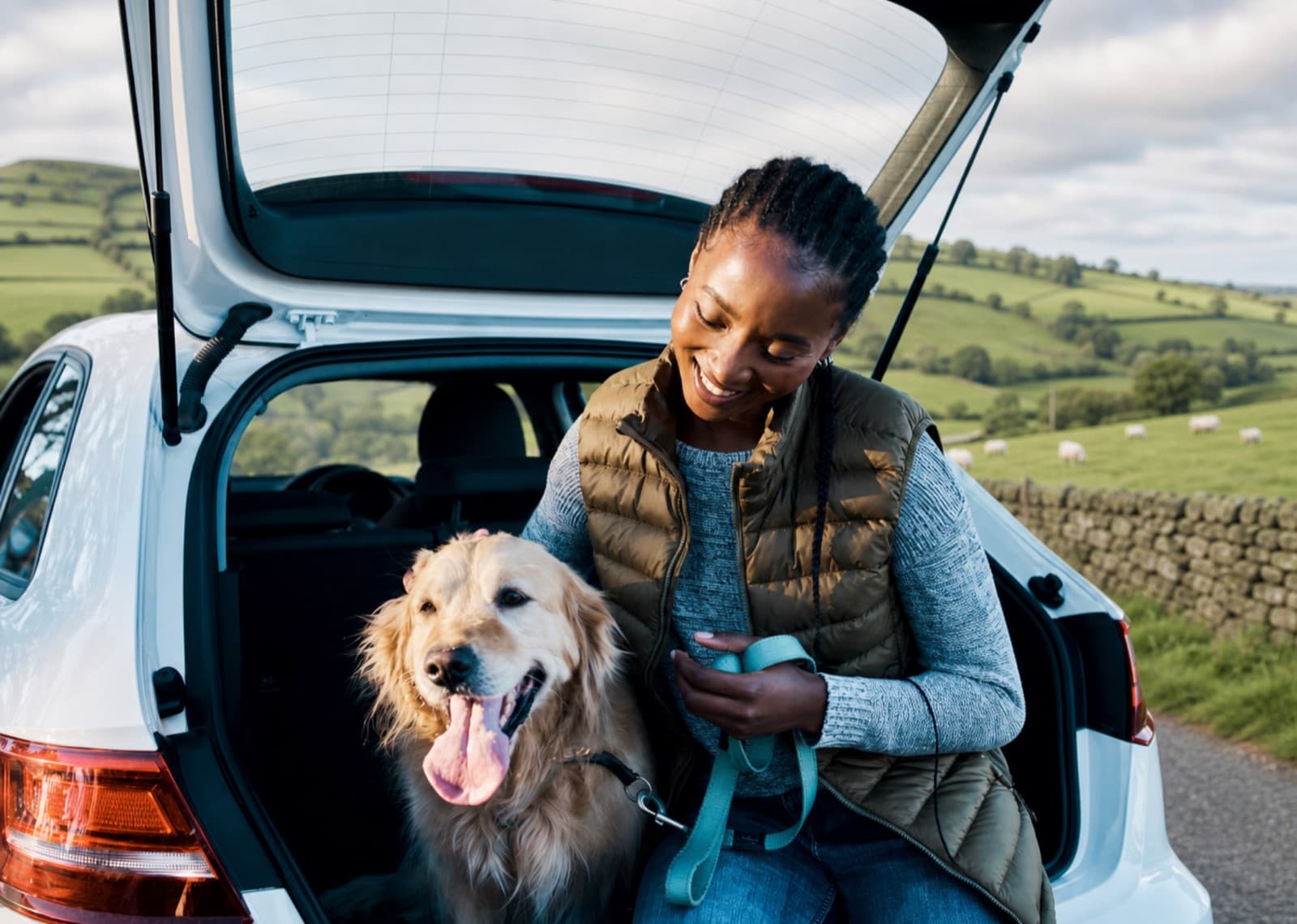
Keep early walks quiet and close to home, on a well fitted harness with the lead clipped on before the front door opens (haapaw step-in harness and lead). Plenty of rescue dogs bolt in the first weeks, so check his tag is engraved with your details and get the microchip record transferred into your name. Keeping those chip details current is required by law here and very easy to forget in the excitement of a new arrival.
Let him choose the pace of affection
The hardest instruction for a new adopter is to do less. Resist the urge to loom over him or hold his face. Sit sideways on the floor with a cup of tea and read something instead. Let him come to you, stroke him for a few seconds, then stop. If he leans back in, carry on. If he moves away, you have your answer, and you have also just taught him that you listen.
The same goes for guests, and for children who very much want to be friends immediately. A dog who is never cornered works out quickly that people are safe. Affection given on his terms in the first month buys you a dog who actively seeks your company by the sixth.
Should you leave him on his own yet?
You will have to at some point, so build it deliberately and do not discover it by accident. Start with a couple of minutes on the other side of the front door while he has something absorbing to chew (KONG Classic), and come back before he notices you have gone. Stretch the time out gradually across the weeks.
Try not to leave a newly adopted dog for a full working day in the first fortnight. Our guide on leaving your dog home alone covers how to build the time up and how to tell genuine distress from an ordinary grumble at the door.
What if he is not the dog you expected?
Almost nobody gets exactly the dog described on the listing, because kennels flatten a personality and a home brings it back. The spaniel cross who was calm and gentle at the centre may turn out to need two proper walks and a job to do. That is not a mistake. That is information.
Work with the dog in front of you. If you are still learning what his likely mix wants from life, our breed guides are a fair place to start. For the practical side, which dog breed fits your life explains how energy and handling needs turn into ordinary weekday demands. Adjust the exercise and the enrichment. Then give him the months he needs before you decide who he is.
Rescue dogs are not damaged goods waiting to be fixed. Most of them are ordinary dogs having an extraordinary fortnight. What mends it is not clever training but a kind, repeatable week happening over and over until it stops feeling new.
Frequently asked questions
How long before my rescue dog stops hiding?
Usually days for the worst of it, not weeks, and it happens faster if you stop coaxing. Sit nearby and drop the odd treat without making eye contact. Carry on with your evening as normal. Hiding is a coping strategy rather than a rejection of you. If he is still tucked away and refusing food after a fortnight, speak to the rescue and to your vet.
Should my rescue dog sleep in my bedroom?
It is fine, as long as you are happy for it to carry on for a while. Plenty of unsettled dogs sleep better with company in the room, and they can be moved out by degrees once they are confident. What unsettles a dog is changing the answer every night. Pick the arrangement you could live with in six months and be consistent from the first night.
My rescue dog will not eat. Is that normal?
In the first days, usually yes. A missed meal or two is common in a dog who is still overwhelmed, and it rarely means much on its own. Serve at set times, leave the bowl down for a short while, then lift it without any fuss. Keep offering the food he arrived on. If he is eating nothing at all beyond a couple of days, or drinking very little, ring your vet.
When can I start training a rescue dog?
Sooner than you think, in the smallest possible doses. House manners begin on day one through routine and quietly rewarding what you like. Formal sessions can wait until he is eating and sleeping normally, then keep them to a few minutes at a time so he finishes wanting more. Work recall on a long line well before you trust it off lead, however reliable he seems in the garden.