You cannot prevent bloat outright, but you can lower the odds and catch it early. Feed two or three smaller meals rather than one big one. Slow a fast eater down with the right bowl and keep mealtimes calm. Leave an hour between food and hard exercise. Then learn the emergency signs, because speed to the vet matters most of all.
What is bloat, in plain words?
Bloat is the everyday name for something your vet will call gastric dilatation and volvulus, usually shortened to GDV. The stomach fills with gas and fluid until it is stretched tight. In the worst version it then twists on itself, which seals the gas in and cuts off the blood supply. That second part is what turns a swollen stomach into an emergency, because nothing can escape and the dog cannot put it right by burping or being sick.
Owners find it frightening because it moves quickly, and because it tends to happen at home on an ordinary evening, never somewhere convenient. The useful thing to hold on to is that it announces itself. There is a short set of signs that most owners can learn in five minutes, and recognising them early is genuinely the part that matters most. Everything else here sits underneath that.
Which dogs carry the risk?
The pattern is a body shape rather than a temperament. Dogs built with a deep, narrow chest carry more risk than dogs built round and wide, because the stomach hangs with more room to move. That is why the same names come up again and again. The Great Dane and the Weimaraner are the classic examples. Setters, Standard Poodles, Bloodhounds and German Shepherds sit on the same list. Dobermanns belong there too.
None of this makes any of them a bad choice of dog. They are wonderful animals and the risk is not a reason to rule them out. It simply means that if you own one, a handful of ordinary habits are worth building in from the first week. Know the emergency signs by heart, because a panic is no time to look them up. Age matters as well, with older dogs generally at more risk than young ones, and a family history of bloat is a fair thing to ask a breeder about.
What can you actually change at mealtimes?
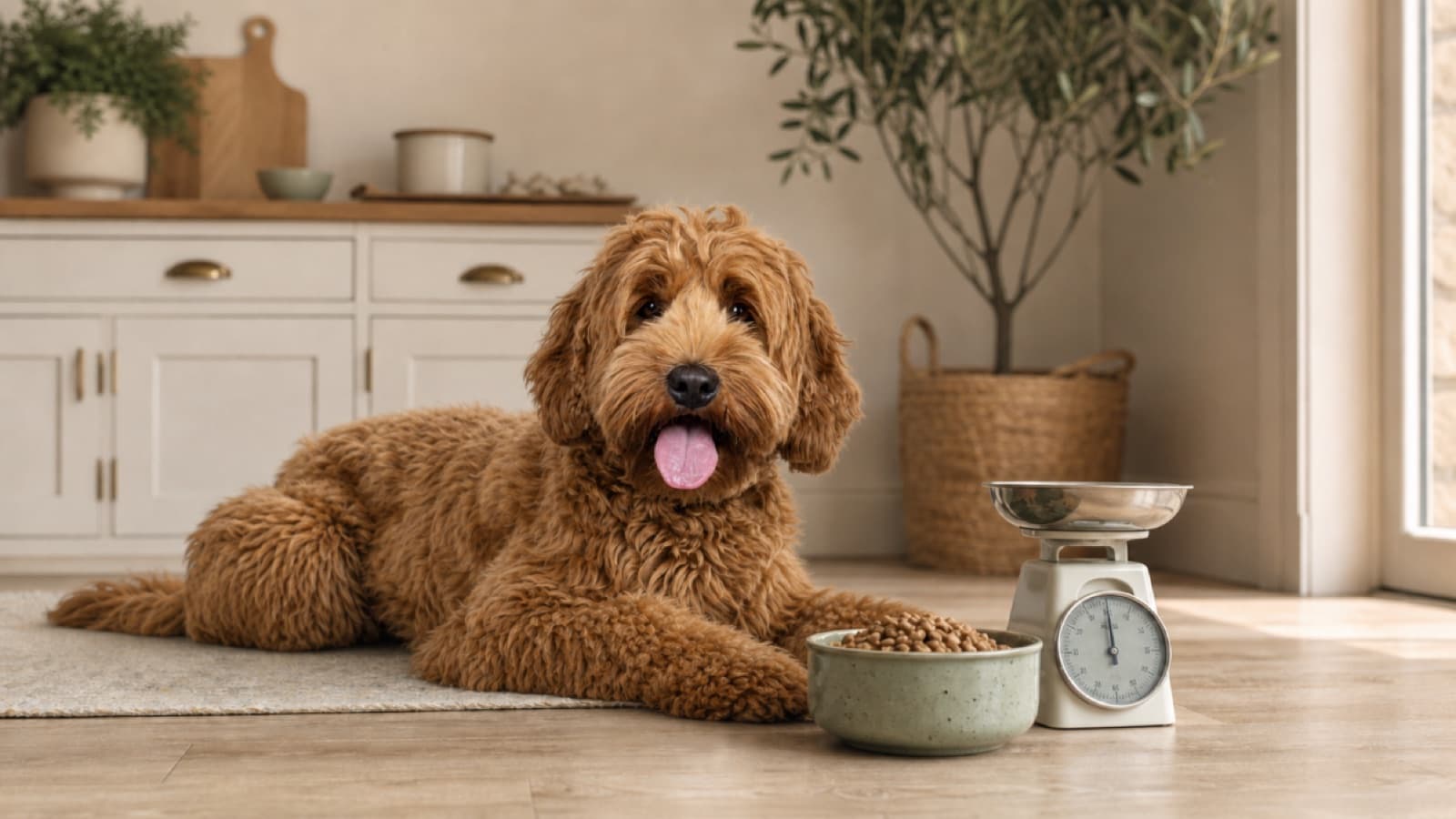
Split the day's food into two meals, or three for a big dog who eats keenly. One enormous meal asks the stomach to stretch further in a single go than it ever needs to, and dividing it asks nothing of you but a second trip to the tub. If you are not certain what the daily total should be, our guide to portions and body condition walks you through it. You judge it by the dog in front of you, not by the number printed on the bag.
Then slow a gulper down. A dog who empties a bowl in twenty seconds is swallowing a good deal of air alongside the food. A slow feeder, a puzzle bowl or a meal scattered across a snuffle mat all do the same job, which is to make the dog take a breath between mouthfuls. We go through what works and what only looks clever in slow feeders and puzzle bowls, and there is a wider range of shapes and heights in the bowls and feeders part of our directory.
Keep the room calm while they eat. Two dogs racing each other through supper is a recipe for gulping, so feed them in separate rooms if that is the dynamic in your house. The same goes for putting a bowl down the moment you walk through the door, when the dog is already spinning with excitement. Let that drop first, then feed.
Water should always be available, which is not the same thing as letting a dog sink a full bowl in one go after a hard run. Offer some, let them settle for a few minutes, then offer more.
How long should you leave between food and exercise?
Give a big meal time to settle before anything energetic, and give an energetic session time to settle before a big meal. An hour on either side is the habit most owners of deep-chested breeds end up keeping. It is easier to hold to than it sounds once the walk and the feed have swapped places in your routine. A gentle lead walk to the end of the road is a different thing altogether from a game of fetch or twenty minutes of hard running at the field.
Puppies of the big and giant breeds deserve a mention of their own here. They are growing fast, eating a great deal and inclined to treat every meal as a race against nobody. Our guide to feeding a large or giant breed puppy covers how to spread that intake sensibly through the day while they are still building.
What are the signs that mean phone the vet now?
These are the signs to act on, at any hour.
The belly looks swollen or feels hard and drum-tight, often high up behind the ribs.
The dog is retching or trying to be sick and nothing is coming up.
The dog cannot settle. It paces about and gets up again the moment it lies down.
Heavy drooling, noticeably more than is normal for that dog.
Obvious distress: whining, or turning again and again to stare at the flank.
Gums gone pale. Fast shallow breathing, or a collapse.
If you see this, ring your vet or the out of hours service straight away and say you think it may be bloat. Do not wait to see whether it passes on its own. Do not wait for morning. Do not try to relieve it yourself at home. This is one of the few situations where driving in and being told it was a false alarm counts as a good evening. Knowing exactly who you would ring at two in the morning is worth sorting out long before you need it, which is a large part of why we wrote finding the right vet.
Is there anything a vet can do in advance?
There is an operation, a gastropexy, in which the stomach is tacked to the body wall so that it cannot twist. In some of the highest risk breeds it is done at the same time as neutering, so the dog only goes under once. Whether it makes sense for your dog depends on the breed, on the individual animal and on your vet's own view of the evidence. Raise it as a question at the next appointment, because it is not a decision to make from an article. We are not going to recommend it here, or talk you out of it. Your vet comes first on anything clinical, and this sits firmly in that category.
Does the food itself make a difference?
Owners often ask whether switching format fixes it. The honest answer is that format is one small part of a much bigger picture, and no lever that removes the risk. What matters more is how the meal is eaten, and how settled the dog is while eating it. If you are weighing up the three formats for other reasons anyway, our guide to dry, wet or raw sets out what each one really asks of you day to day.
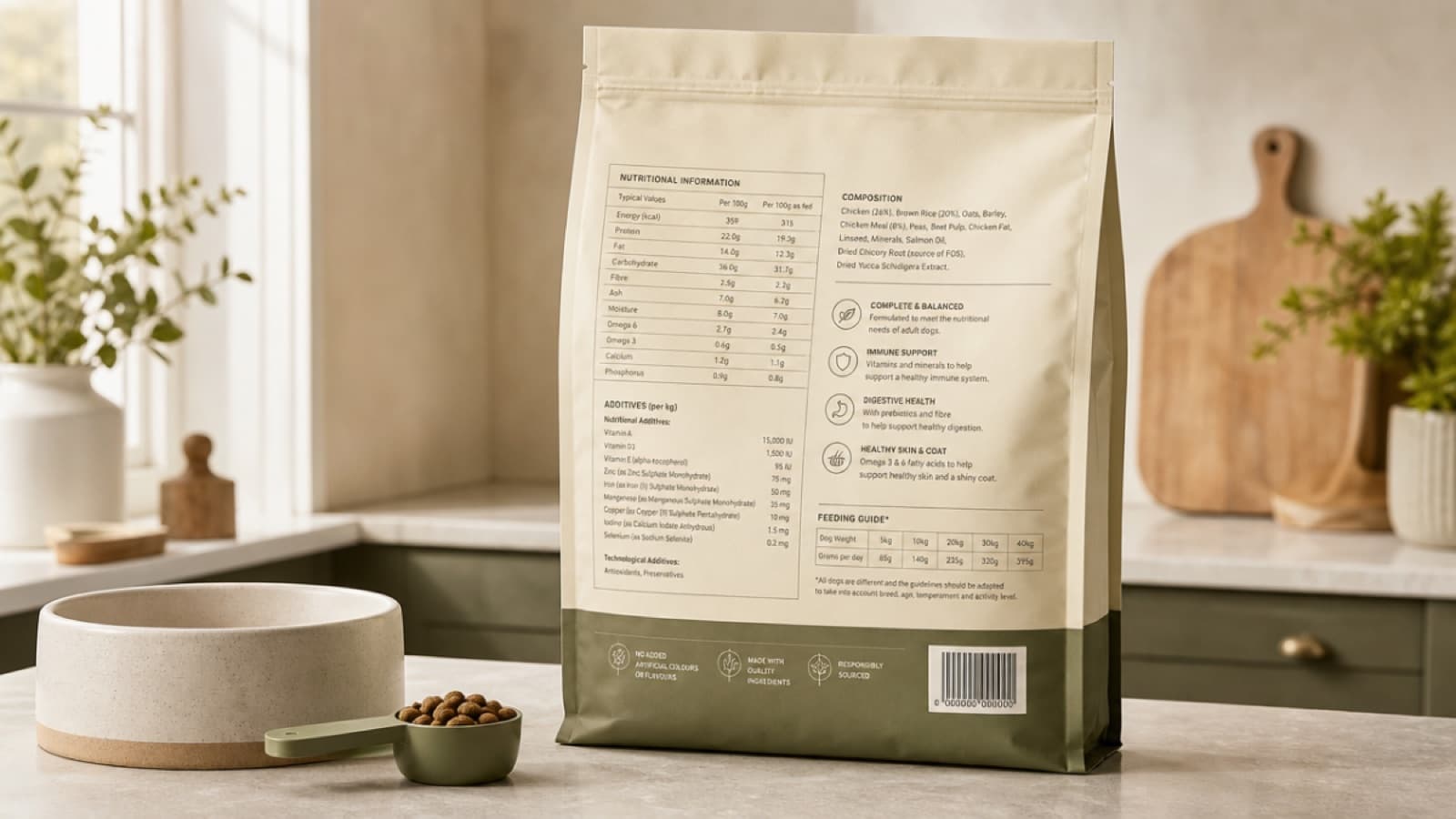
What a good food does do is make the rest of this easier. A recipe your dog digests comfortably, in a portion you can actually measure, takes a lot of the guesswork out of the evening and leaves you with fewer ravenous, bolted meals to manage. Every food in our reviews is scored on protein and processing, nutritional balance, transparency and value, so you can see how a recipe stacks up before it ever reaches the bowl.
And hold on to the honest version of all this. Smaller meals, a slower bowl and a calm half hour either side of dinner are sensible habits, not a guarantee. They are worth doing, and they are still not the thing that saves a dog. Knowing the signs, and ringing without hesitating, is.
Frequently asked questions
Should I use a raised bowl for a deep-chested dog?
Ask your vet about your particular dog and skip the rules of thumb. Raised bowls have been recommended and then questioned in turn over the years, and the picture is genuinely unsettled. What is not in dispute is that slowing the eating down helps, and you can do that at floor height or raised. If your dog has a reason to eat higher up, such as a neck or joint problem, that one conversation answers both questions at once.
Can a puppy get bloat?
It is far more common in adult and older dogs, but no age is completely exempt, so build the habits early and do not wait until three. With a large or giant breed puppy you are already feeding several times a day, which is exactly the shape you want. Keep the bowl slow, keep the room calm and save the wild post-meal games for later. It becomes automatic long before the risk really rises.
My dog looks bloated after eating but seems fine. Do I still ring the vet?
If the belly is hard and distended and the dog is uncomfortable, ring. That is one picture: a dog burping after a big meal, bright and settled, asking for a walk. A dog who paces and drools and retches with nothing coming up is quite another. You are not expected to tell those two apart with certainty at nine at night. That is what the out of hours line exists for, and nobody minds the call.
Does exercise before a meal matter as much as after?
Both are worth managing, though most owners only think of the after. A dog who comes in panting hard from the field will gulp food and water together, which is the pattern you are trying to avoid. Let them come down properly first, offer a little water and not a full bowl, then feed once the breathing has settled. Ten quiet minutes usually does it, and it asks almost nothing of you.