

Most important facts
- Group
- Working
- Size
- Giant
- Weight
- 50–79 kg
- Lifespan
- 7–10 years
- Coat
- Short, smooth
- Energy
- Moderate
- Height
- 71–86 cm
- Colours
- Fawn, brindle, blue, black or harlequin
- Shedding
- Moderate
- Est. feeding cost
- ~£2.34 a day
- Gear to consider
- Extra-large orthopaedic bed, raised slow-feed bowl, heavy-duty car ramp
Typical dry food, adult
About the Great Dane
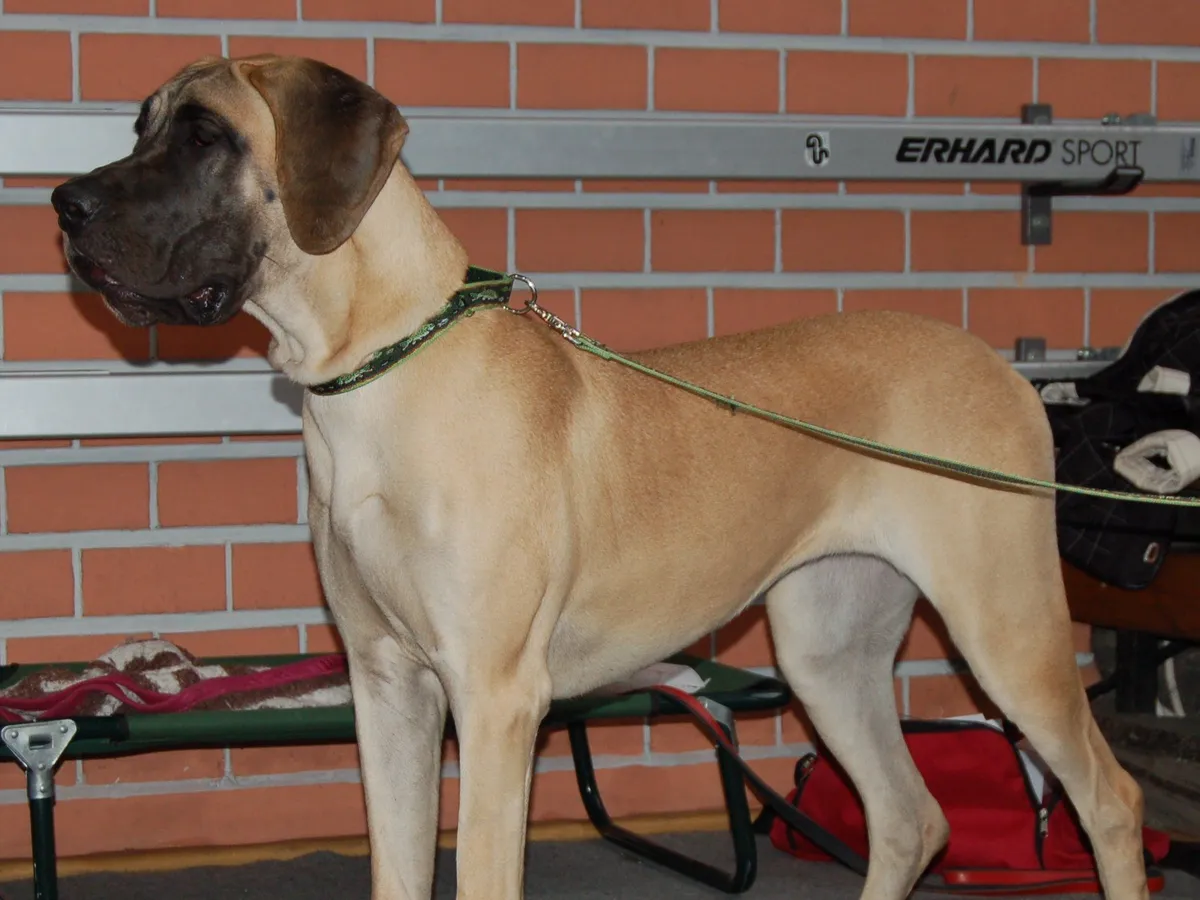
The Great Dane, despite the name, is a German breed, developed from the powerful boar hounds kept by German nobility, who housed their favourites in bedchambers as prized chamber dogs. The modern type was standardised in nineteenth-century Germany, where the breed is still called the Deutsche Dogge. How it came to be named after Denmark remains a quirk of history nobody has fully explained.
Great Danes are affectionate, patient and surprisingly gentle for their size, often described as a lap dog in a giant's body. They tend to be good-natured with familiar children and calm indoors once past the boisterous puppy stage, though play with small children should always be supervised.
They can be sensitive and prone to separation distress if left alone for long, so build up time apart gradually from puppyhood. Early socialisation and training matter while they are still small enough to manage, as an untrained adult Dane is a great deal of dog on a lead.
Common health conditions
Things Great Dane owners commonly watch for. Guidance, not veterinary advice.
Gastric dilatation-volvulus (bloat)
A life-threatening emergency where the stomach fills with gas and can twist. Feed smaller, more frequent meals and rest your dog either side of exercise.
Dilated cardiomyopathy
A heart-muscle disease that is common in the breed. Keep up regular vet check-ups to catch early signs, and keep weight healthy to spare the heart.
Hip and elbow dysplasia
Malformation of the joints that can lead to early arthritis. A controlled growth rate as a puppy, on a correctly portioned large-breed diet, is the best protective step.
Wobbler syndrome
A condition affecting the neck vertebrae that can cause unsteadiness in the back legs. Keep a lean body condition to reduce load on the spine.
Osteosarcoma (bone cancer)
Great Danes have one of the higher reported rates of this bone cancer among UK breeds. Have any new lameness or swelling checked promptly.
Feeding a Great Dane
Great Danes have a relatively modest energy requirement for their size once mature, so it is easy to overfeed a breed this large and strain joints already working hard. A large-breed complete food, portioned to body condition rather than by eye, is the safest starting point, alongside regular weigh-ins and rib checks.
Great Danes are deep-chested and at real risk of bloat. Feed two or three smaller meals, avoid vigorous exercise either side of eating, and ask your vet whether a slow-feed bowl would help. Puppies need a carefully controlled growth-rate diet, as growing too fast is linked to joint problems later.
Every dog is different — weight, age and activity all shift what a Great Dane needs. The turns these breed tendencies into a shortlist matched to your dog’s age, size, budget and needs.
Typical adult weight
50–79 kg
Est. daily calories
1,580–2,970 kcal
A broad guide for an average-activity adult in good body condition — not veterinary advice. Real needs vary with age, neutering, activity, health and body condition, so no two Great Danes eat exactly the same. Get a personalised estimate or estimate feeding costs.
- Per day
- ~£2.34
- Per month
- ~£71
- Per year
- ~£855
A broad typical monthly budget guide, not a live price quote. Food format, calorie density, pack size and retailer pricing all change the real cost.
Find the right food for your Great Dane
Foods ranked to your dog
Answer a few quick questions and the Food Finder ranks foods to your Great Dane by score, price, life stage and fit.
Breed at a glance
- Exercise needs5/10
- Appetite6/10
- Trainability6/10
- Good with children6/10
- Shedding4/10
- Tolerates being alone3/10
The good & the worth-knowing
The good
- Gentle, affectionate temperament for such an imposing size
- Low-maintenance short coat that needs only weekly brushing
- Calm indoors as an adult, content with a settled family routine
Worth knowing
- One of the shortest lifespans of any breed, with several serious health conditions
- Size brings real costs, as food, bedding, cars and vet treatment are all sized up
- Puppy growth needs careful management, and an adult needs genuine space at home
Best matched accessories
All accessoriesThe collections that suit the breed, judged by the same independent standard.
Common owner questions
How much should I feed a Great Dane puppy?
Feed a large-breed puppy food formulated to control growth rate, following the pack guidance and adjusting little and often as they grow. A food that is too rich can push growth too fast and raise the risk of joint problems. Our Food Finder can help confirm the amount.
Why are Great Danes prone to bloat, and how can feeding help?
Their deep, narrow chest makes gastric dilatation-volvulus a genuine risk. Two or three smaller meals, a calmer feeding pace and rest around mealtimes all help, alongside knowing the signs and treating bloat as an emergency.
How much exercise does a Great Dane need?
Adults generally do well on about an hour a day, taken as a couple of walks, plus some off-lead time somewhere secure. Puppies need much less while joints and growth plates develop.
Are Great Danes good with children?
They are typically patient and gentle with children they know, but their sheer size means even a friendly lean or nudge can knock a small child over, so supervision during play is always sensible.