


Most important facts
- Group
- Hound
- Size
- Giant
- Weight
- 40–55 kg
- Lifespan
- 6–8 years
- Coat
- Rough, wiry double coat
- Energy
- Moderate
- Height
- 71–86 cm
- Colours
- Grey, brindle, red, black, white or fawn
- Shedding
- Light
- Est. feeding cost
- ~£2.05 a day
- Gear to consider
- Slow-feeder bowl, orthopaedic-support dog bed, extra-large well-padded harness
Typical dry food, adult
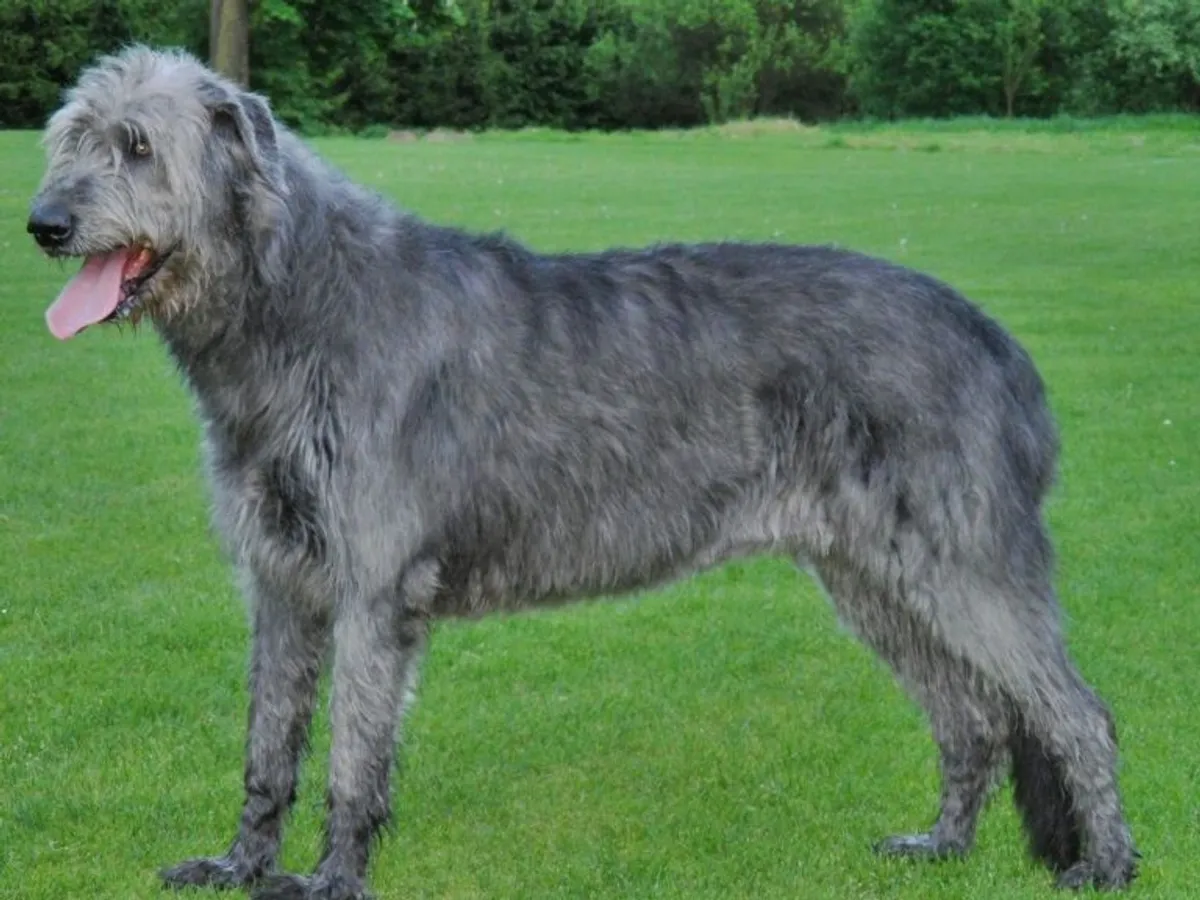
About the Irish Wolfhound
The Irish Wolfhound descends from the great hounds of ancient Ireland, gifted to Roman consuls and prized by chieftains for hunting wolf and elk. When the wolves of Ireland were gone the breed all but vanished with them, until Captain George Graham set about reviving it in the nineteenth century using Deerhound, Great Dane and Borzoi blood. His reconstruction became the towering, gentle breed recognised today.
Despite their imposing size, Irish Wolfhounds are calm, affectionate and easy-going with their families. They are typically patient with children and sociable with other dogs, though their sighthound instincts mean cats and small animals may trigger a chase. They are not natural guard dogs, with sheer size usually deterrent enough.
Indoors, Wolfhounds are relatively low-key, content to stretch out for much of the day, but they still need daily walks and, ideally, safe space for a controlled sprint. They are agreeable enough to train, though as sighthounds they can be independent-minded and are not especially food-motivated in the way gundogs often are.
Common health conditions
Things Irish Wolfhound owners commonly watch for. Guidance, not veterinary advice.
Dilated cardiomyopathy
A weakening of the heart muscle and the single biggest cause of death in the breed. Keep up regular vet checks and a steady, healthy body condition.
Gastric dilatation-volvulus (bloat)
A life-threatening stomach twist that deep-chested giants are prone to. Feed several smaller meals a day and keep exercise easy straight after food.
Osteosarcoma (bone cancer)
An aggressive bone cancer seen more often in giant breeds. Have any new lameness or swelling in an older Wolfhound checked promptly.
Hip and elbow dysplasia
Malformed joints linked to growing too fast as a puppy. Feed a controlled-growth giant-breed puppy food to limit strain.
Portosystemic shunt
An inherited liver blood-vessel defect that can affect how a puppy processes nutrients. Choose a breeder who health-tests for it.
Feeding a Irish Wolfhound
Feeding is inseparable from health management in this breed from puppyhood onwards. Puppies should have a giant-breed puppy food that controls calorie density and the calcium-to-phosphorus balance, deliberately slowing growth, since rapid early growth in giants is strongly linked to joint problems. Several smaller measured meals a day beat free-feeding or a couple of large ones.
Adult Wolfhounds do best on two or more smaller meals a day. That keeps a giant appetite manageable, and deep-chested breeds are at heightened risk of bloat. Keep vigorous exercise an hour away from mealtimes, and keep a Wolfhound lean rather than heavy to spare a heart and joints already working hard.
Every dog is different — weight, age and activity all shift what a Irish Wolfhound needs. The turns these breed tendencies into a shortlist matched to your dog’s age, size, budget and needs.
Typical adult weight
40–55 kg
Est. daily calories
1,340–2,260 kcal
A broad guide for an average-activity adult in good body condition — not veterinary advice. Real needs vary with age, neutering, activity, health and body condition, so no two Irish Wolfhounds eat exactly the same. Get a personalised estimate or estimate feeding costs.

- Per day
- ~£2.05
- Per month
- ~£62
- Per year
- ~£750
A broad typical monthly budget guide, not a live price quote. Food format, calorie density, pack size and retailer pricing all change the real cost.
Find the right food for your Irish Wolfhound
Foods ranked to your dog
Answer a few quick questions and the Food Finder ranks foods to your Irish Wolfhound by score, price, life stage and fit.
Breed at a glance
- Exercise needs7/10
- Appetite6/10
- Trainability6/10
- Good with children7/10
- Shedding3/10
- Tolerates being alone3/10
The good & the worth-knowing
The good
- Gentle, calm and affectionate temperament
- Generally good with children and other dogs when well socialised
- Surprisingly low-key indoors for such a large breed

Worth knowing
- Short average lifespan compared with most breeds
- Substantial food and veterinary costs given their size
- Needs a large home, garden and vehicle to accommodate comfortably
Best matched accessories
All accessoriesThe collections that suit the breed, judged by the same independent standard.
Common owner questions
How much should I feed a growing Irish Wolfhound puppy?
Giant-breed puppies need controlled, not maximised, growth. Use a giant-breed puppy food, feed measured portions three to four times a day well into adolescence, and check body condition regularly. A vet or our Food Finder can help set a starting portion for age and projected adult size.
Why are Irish Wolfhounds prone to bloat, and how can I reduce the risk?
Their deep, narrow chest makes a stomach twist more likely than in most breeds. Feed two or more smaller meals, avoid boisterous exercise straight after eating, and slow a fast eater down. Sudden restlessness, unproductive retching or a swollen abdomen needs emergency vet attention.
Do Irish Wolfhounds need a lot of exercise?
They need daily walks plus, ideally, safe off-lead space for a controlled sprint, as they are sighthounds at heart despite the calm indoor manner. Limit a puppy's exercise carefully while joints develop, since over-exercising a growing giant raises joint risks.
How long do Irish Wolfhounds live, and does diet play a part?
Most live around six to eight years, one of the shorter lifespans of any breed, largely due to heart disease and cancer. A lean, healthy weight and a life-stage-appropriate diet won't change genetics, but they reduce avoidable strain on the heart and joints.