

Most important facts
- Group
- Hound
- Size
- Large
- Weight
- 36–45 kg
- Lifespan
- 8–10 years
- Coat
- Harsh
- Energy
- Moderate
- Height
- 71–81 cm
- Colours
- Blue-grey, grey, brindle or sandy
- Shedding
- Moderate
- Est. feeding cost
- ~£1.83 a day
- Gear to consider
- Slow-feeder bowl, orthopaedic bed, snug-fitting sighthound collar
Typical dry food, adult
About the Deerhound
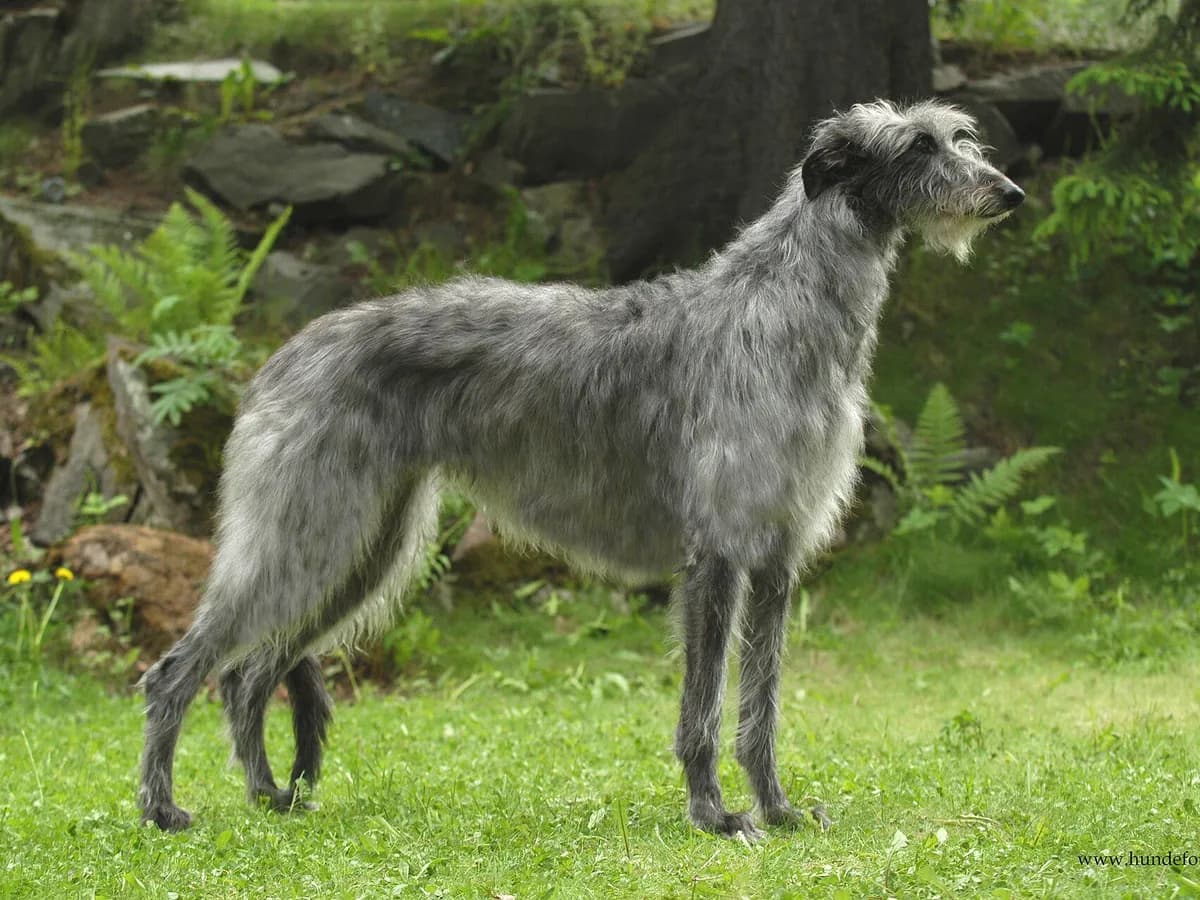
The Deerhound is an ancient Highland breed, kept for centuries to course red deer across open ground, and at times its ownership was restricted to the Scottish nobility. The breed declined with the end of large-scale deer coursing and was revived by dedicated breeders in the nineteenth century. It remains close in type to its historical form and is classed as a vulnerable native breed.
Deerhounds are often described as gentle giants, dignified, calm and affectionate with their own family without the boisterousness their size might suggest. They are typically good with children they know, though sheer size means play with toddlers should be supervised, and away from home they tend to be reserved rather than nervous.
Bred to course deer over open Highland ground, they keep a powerful chase instinct and will pursue anything that runs, so recall around livestock and wildlife needs realistic management. Indoors they are happy to sleep much of the day once exercised, but they don't thrive left alone for long, and training rewards patience over repetition.
Common health conditions
Things Deerhound owners commonly watch for. Guidance, not veterinary advice.
Gastric dilatation-volvulus (bloat)
As a deep-chested giant, the Deerhound is at raised risk of bloat, where the stomach fills with gas and can twist. Feed smaller, measured meals, use a slow-feeder, and rest your dog around mealtimes.
Dilated cardiomyopathy (DCM)
A weakening of the heart muscle seen more often in Deerhounds, usually from middle age. Keep up regular vet check-ups to catch early signs, and keep your dog at a healthy weight.
Osteosarcoma (bone cancer)
Giant breeds carry a higher lifetime risk of this aggressive bone cancer. Have any new limping, swelling or reluctance to bear weight checked promptly.
Portosystemic shunt (liver shunt)
An inherited abnormality of blood flow around the liver recorded in the breed. If diagnosed, follow your vet's guidance on a specially formulated diet.
Feeding a Deerhound
Deerhounds should be kept lean throughout life, with ribs easily felt and a clear waist, to protect the joints and spare a heart already predisposed to disease in this breed. A quality giant-breed complete food suits them best in two or three measured meals, never one large bowlful. Their deep chest makes free-feeding a poor idea.
Because deep-chested giants carry a real bloat risk, many owners use a slow-feeder bowl, keep mealtimes calm, and avoid strenuous exercise for an hour either side of eating. Raise puppies on a controlled-growth large-breed formula, as growing too fast adds pressure to developing joints.
Every dog is different — weight, age and activity all shift what a Deerhound needs. The turns these breed tendencies into a shortlist matched to your dog’s age, size, budget and needs.
Typical adult weight
36–45 kg
Est. daily calories
1,230–1,950 kcal
A broad guide for an average-activity adult in good body condition — not veterinary advice. Real needs vary with age, neutering, activity, health and body condition, so no two Deerhounds eat exactly the same. Get a personalised estimate or estimate feeding costs.
- Per day
- ~£1.83
- Per month
- ~£56
- Per year
- ~£669
A broad typical monthly budget guide, not a live price quote. Food format, calorie density, pack size and retailer pricing all change the real cost.
Find the right food for your Deerhound
Foods ranked to your dog
Answer a few quick questions and the Food Finder ranks foods to your Deerhound by score, price, life stage and fit.
Breed at a glance
- Exercise needs8/10
- Appetite6/10
- Trainability5/10
- Good with children7/10
- Shedding4/10
- Tolerates being alone3/10
The good & the worth-knowing
The good
- Gentle, dignified temperament that belies its size
- Athletic and fast when running, but genuinely relaxed indoors
- Striking, distinctive looks with a low-maintenance coat for its length
Worth knowing
- Very high exercise needs and a strong chase instinct that makes off-lead recall difficult
- Short lifespan with several serious breed-associated health conditions to plan and insure for
- Sheer size means more space, giant-breed bedding and a higher food bill than most budgets expect
Best matched accessories
All accessoriesThe collections that suit the breed, judged by the same independent standard.
Common owner questions
How much exercise does a Deerhound actually need?
Plan for an hour or two a day, ideally with room for a proper safe run rather than just lead walks. They're natural sprinters with a strong chase instinct, so secure, enclosed space for off-lead time matters more than distance covered.
Why do Deerhounds need feeding differently to other large dogs?
The deep chest carries a higher risk of bloat, so smaller, more frequent meals are safer than one large bowlful. Feed calmly, and away from exercise either side. Body condition should stay lean, which also eases pressure on the heart and joints.
Are Deerhounds good with children and other pets?
Generally yes, they're known for a soft, patient temperament with people they know. Their size means supervision with very young children is sensible, and their sighthound instinct means small pets need careful introductions.
How much does it cost to feed a Deerhound well?
Expect a higher food bill than most breeds simply due to size. Sheer size means a good complete food disappears quickly, before treats or prescription needs are counted. Our Food Finder can help narrow down suitable large-breed options.