Feed a complete puppy food built for large or giant breeds, so calcium, phosphorus and energy are all held in check and growth stays steady, never rushed. Weigh every portion, split the day into two or three meals, and keep your puppy on the lean side. Stay on puppy food until roughly 18 months, longer for giants, and let your vet guide the switch.
Why does a big puppy need feeding differently?
A giant breed puppy can go from something you carry indoors under one arm to something leaning its whole weight on your hip in a few months. The frame underneath is not keeping that pace. The growth plates at the ends of the long bones stay open far longer in these dogs than in a small terrier. The skeleton is still soft and still forming while the body sitting on top of it gets heavier every week.
Which is why the goal is not a big puppy. The goal is a puppy who reaches its adult size slowly and stays lean the whole way there. Feeding more does not make a taller dog, it makes a heavier one sooner, and the joints are what carry that extra weight while they are least ready for it. No food can promise a good set of hips, and anyone who tells you otherwise is selling something. What steady feeding does is stop you asking a puppy skeleton to hold adult weight before its time.
It matters most in the breeds that finish tallest and heaviest. If you have brought home a Great Dane or a Bernese mountain dog, you are at the deep end of this question. Labrador and rottweiler owners are in the same conversation with a little more room for error.
What does a large breed puppy food actually change?
Three things, and not one of them is simply more. Calcium and phosphorus are held inside a tighter window, because a growing skeleton takes up calcium from the bowl whether the body has asked for it or not. The energy density is usually pulled back a little, so a hungry puppy can eat a proper bowlful without piling weight on. And the kibble is often a bigger piece, which slows down a dog who inhales.
It is worth knowing how few foods are genuinely built this way. In our analysis, 4,700 recipes carry size information, and 77% of them list all five sizes. Most puppy foods, in other words, are sold as suitable for everything from a chihuahua to a mastiff. Only 999 recipes, around 21%, are built for one or two sizes, and just 208 of those are aimed at large or giant dogs.
A generic puppy food is not automatically wrong for your dog. A recipe designed around big growth has simply had these questions asked of it on purpose. Every food in our reviews is scored on protein and processing, nutritional balance, transparency and value. You can see how the large breed puppy options stack up against the all-rounders, without taking the badge on the front of the bag at face value.
How do you find the calcium number on the label?
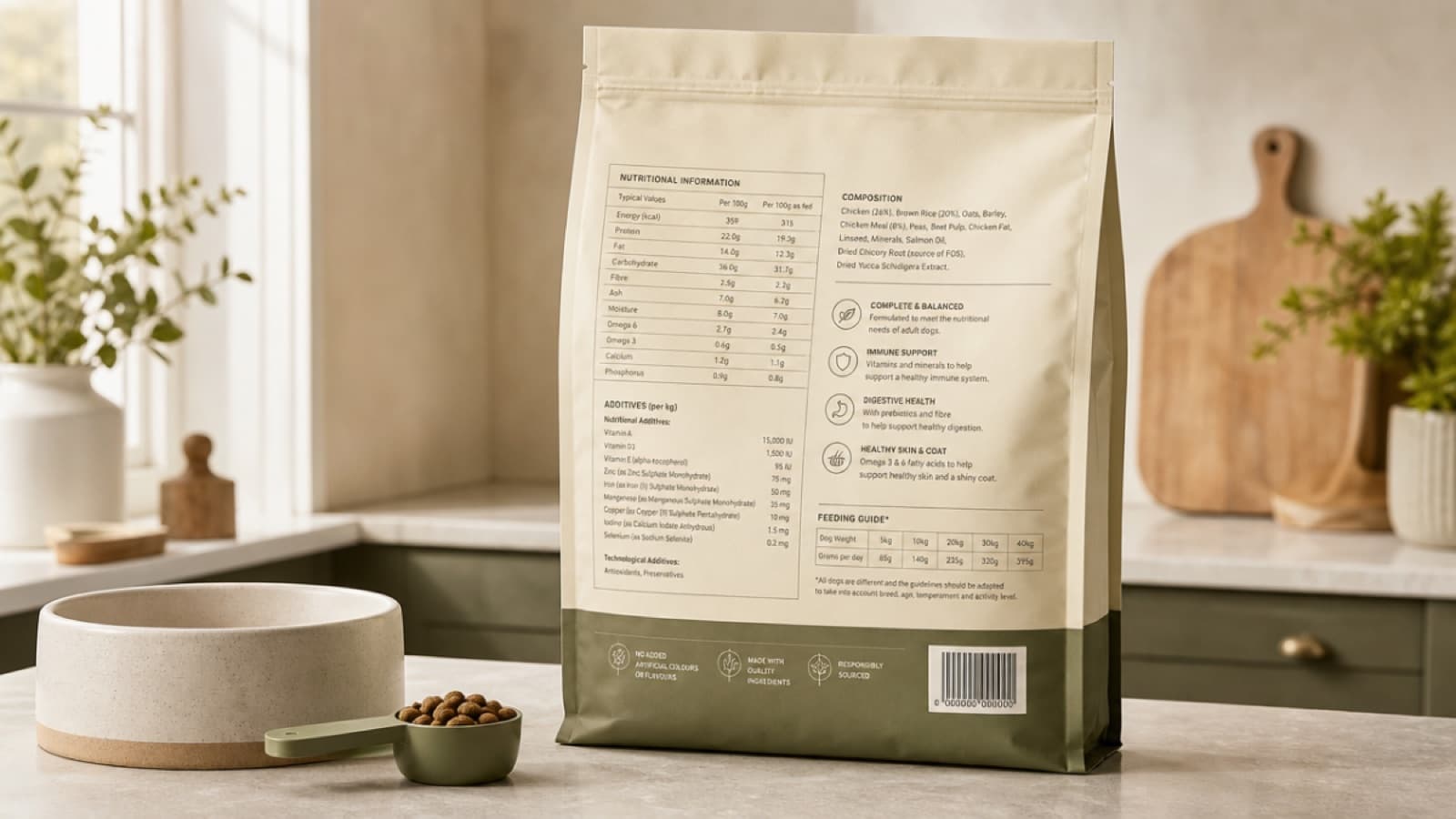
Turn the bag over and look under Analytical Constituents. Calcium and phosphorus appear there as percentages when a brand chooses to declare them, which is the catch. Of the 1,324 puppy recipes we analysed, only 44% declare calcium at all, so the number is worth hunting for and worth an email to the brand when it is missing. Our guide to reading a dog food label walks through the rest of that panel.
The other half of this is what you add on top. A complete puppy food is already balanced for growth, so calcium tablets, bone meal toppers and a daily lump of cheese quietly push the total up in a way you cannot see from the bowl. If someone has suggested a supplement for your puppy, treat that as a conversation with your vet before anything goes in. It is not a decision for a forum thread at eleven at night.
How much should a large breed puppy eat?
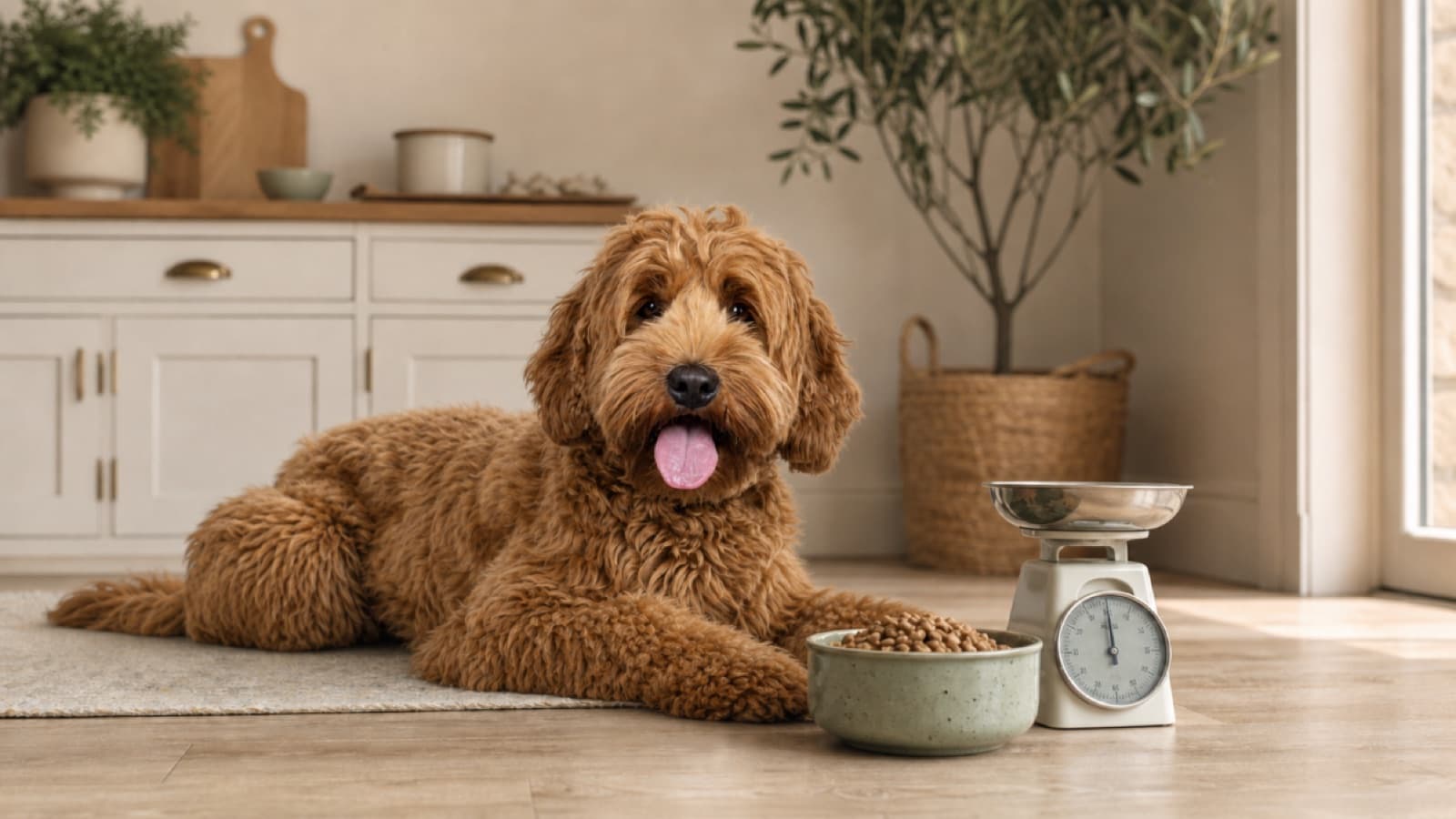
Weigh it. A scoop is a rough instrument and the error repeats itself twice a day for a year and a half, which is how a lean puppy quietly becomes a heavy one. Kitchen scales take five seconds. Use the feeding guide on the pack as your opening figure, then adjust from what you can feel on your dog. That guide is written for an average puppy and yours is a real one.
Split the day's food across meals, never in one go. Three meals a day suits most large breed puppies until somewhere around four to six months, then two a day after that, and two stays the pattern for life in a big dog. One enormous meal is a habit worth avoiding in a deep-chested breed, and the warning signs of bloat are better read now than looked up in a panic later.
Free feeding is the real trap. Leave a bowl down all day for a growing giant and most of them will keep going back to it, and the top-ups nobody counts are usually what tips the balance. Treats and whatever gets handed down from the table all belong in the day's total.
The check that matters is your hands, not the scales under the dog. Run your fingers along the ribs and you should feel them easily under a thin covering, with a waist visible from above and a tuck up behind the ribs from the side. In a growing large breed, slightly lean is the right side to err on. Our guide to portions and body condition has the full check, and the calorie calculator gives you a sanity check on the day's total when the pack guide looks generous.
When does a large breed puppy move on to adult food?
Later than most owners expect, and never on a birthday. Small dogs have generally finished growing at around a year. Large and giant breeds wait longer, often nearer 18 months, and the very biggest are still filling out through the chest after that. Moving a still-growing dog onto an adult food early means feeding a recipe that was never designed for the job it is doing.
Judge it by build and by what your vet sees at the next check. A date in the diary does not decide it. When the switch does come, take a week to ten days over it, mixing a little more of the new food in each day so nothing hits the gut all at once. The month by month puppy guide sets out the general shape of the first year. For how far to let the breed on the paperwork steer your choice, see whether breed should change what goes in the bowl.
What should send you to the vet?
Some things want a call the same day rather than a week of watching. Phone your vet if your puppy limps or goes stiff after a rest. Do the same for a joint that looks swollen or feels hot, and for a back end that hops with both legs together. Phone too for a sudden refusal to put weight on a leg, or a puppy who goes off food for more than a day. Growing pains are a real thing in big puppies, but so are the problems that look exactly like them, and only your vet can tell you which one is in front of you.
One set of signs is a straight emergency. A deep-chested dog who is restless and retching without bringing anything up needs a vet immediately. Add a belly that looks swollen or feels tight and it is an emergency at whatever hour it happens to be. That is not a morning job.
This is also the reason cover is worth sorting early in a big breed. Joints and growth are the sort of thing owners of large dogs end up discussing with an insurer, and every week you wait is another week in which something can be noted on the record. Our guide to whether a puppy needs insurance covers what that looks like in practice.
Frequently asked questions
Can I feed an ordinary puppy food to a large breed puppy?
You can, but check the label first. A food built for large or giant growth holds calcium, phosphorus and energy in a tighter window, which is the whole point of the category. If you are using an all-sizes recipe, find the calcium figure under Analytical Constituents, weigh the portions properly and keep your puppy lean. If the brand will not tell you the calcium number, that is worth asking about before you commit to a sack of it.
Should I give my large breed puppy a calcium or joint supplement?
Not on your own initiative. A complete puppy food is already balanced for growth, so extra calcium from tablets or toppers lands on top of a total that was already set. A growing skeleton takes it up whether or not it needs it. If a breeder or a trainer has recommended something, ask your vet before it reaches the bowl. Your vet knows your dog and knows the rest of the diet it sits in.
My puppy looks skinny. Should I feed more?
Usually not, and lanky is normal in a big adolescent. Use your hands rather than your eyes. The ribs should be easy to feel under a thin covering, with a waist from above and a tuck behind the ribs from the side. If the ribs are sharp to the touch, the spine stands proud or your puppy is visibly losing condition, book a vet check and do not simply pile more into the bowl.
When do I stop feeding puppy food to a giant breed?
Later than a year. Large and giant breeds often keep growing to nearer 18 months, and the biggest are still broadening after that. The switch goes by build and by your vet's read of your dog, and not by a date on the calendar. When you do change, take a week to ten days over it and mix the new food in gradually so the gut has time to keep up with you.