

Most important facts
- Group
- Crossbreed
- Size
- Large
- Weight
- 25–34 kg
- Lifespan
- 10–15 years
- Coat
- Wavy to curly
- Energy
- High
- Height
- 51–61 cm
- Colours
- Cream, gold, apricot, red or black
- Shedding
- Light
- Est. feeding cost
- ~£1.47 a day
- Gear to consider
- Slow-feeder bowl, detangling grooming brush, no-pull harness
Typical dry food, adult
About the Goldendoodle
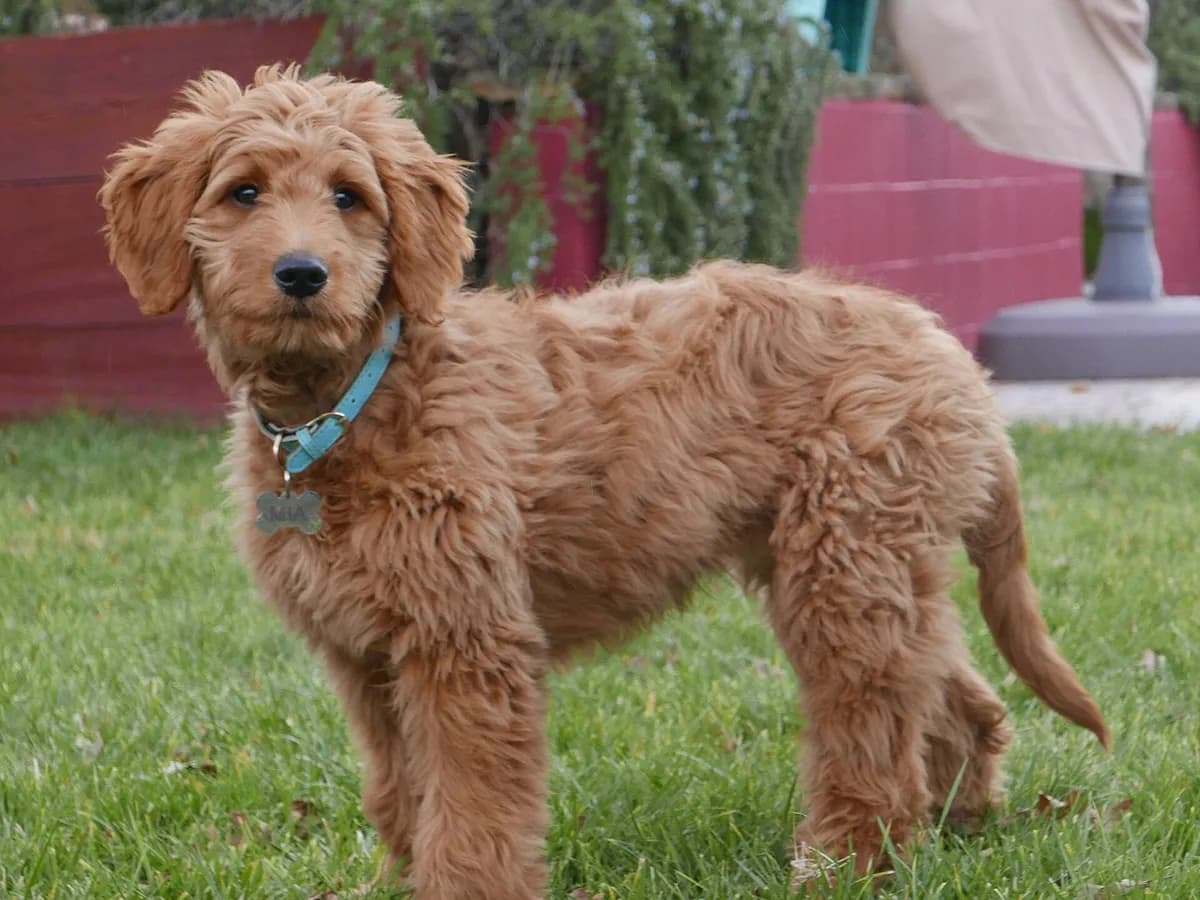
The Goldendoodle emerged in the 1990s in Australia and North America, following the Labradoodle's example of crossing a proven family gundog with the Poodle in the hope of a lower-shedding companion. The cross grew quickly into one of the most popular doodle types worldwide. It has no Kennel Club recognition and no fixed standard, which is why size and coat vary noticeably from one litter to the next.
Goldendoodles typically combine the Golden Retriever's affectionate, easy-going warmth with the Poodle's sharp intelligence. They are sociable, biddable dogs that get on well with children, and with visitors and other pets, when properly socialised. They're eager to please and not independent-minded, which makes early training and everyday handling straightforward.
That same intelligence and food motivation makes them quick learners, but training treats add up fast. Count them within the daily total, and not on top of meals. They are genuinely people-oriented and tend not to do well left alone for long, sometimes developing anxious or destructive habits.
Common health conditions
Things Goldendoodle owners commonly watch for. Guidance, not veterinary advice.
Hip dysplasia
Common in both Golden Retrievers and Poodles, so it can appear in the cross too. Keep puppies lean on a controlled-growth diet to protect developing joints.
Progressive retinal atrophy (PRA)
Sight fades gradually with this inherited eye condition. Choose health-tested parents, and watch for early signs such as bumping into things in dim light.
Ear infections
Floppy, often hairy ears trap moisture and wax. Check and dry the ears regularly after walks or swims.
Weight gain
Food-motivated from the Golden Retriever side and often less active than owners expect. Measure meals and keep treats limited.
Feeding a Goldendoodle
As a cross between two active, solidly built breeds, the Goldendoodle typically needs a moderate-to-high calorie diet, but appetite tends to outpace true energy need, as Golden Retriever ancestry brings a strong food drive. Let visible body condition set the portion. Weigh the food and adjust it, and do not simply trust a fixed daily amount.
Hip and elbow trouble can come from either parent breed. A puppy formula with controlled calcium and calories keeps growth steady and unhurried, with no rapid bulk. Coat condition benefits from good omega-3 and omega-6 intake, particularly with the denser Poodle-type coat, and joint-support diets are worth discussing with a vet in the senior years.
Every dog is different — weight, age and activity all shift what a Goldendoodle needs. The turns these breed tendencies into a shortlist matched to your dog’s age, size, budget and needs.
Typical adult weight
25–34 kg
Est. daily calories
940–1,770 kcal
A broad guide for an average-activity adult in good body condition — not veterinary advice. Real needs vary with age, neutering, activity, health and body condition, so no two Goldendoodles eat exactly the same. Get a personalised estimate or estimate feeding costs.
- Per day
- ~£1.47
- Per month
- ~£45
- Per year
- ~£539
A broad typical monthly budget guide, not a live price quote. Food format, calorie density, pack size and retailer pricing all change the real cost.
Find the right food for your Goldendoodle
Foods ranked to your dog
Answer a few quick questions and the Food Finder ranks foods to your Goldendoodle by score, price, life stage and fit.
Breed at a glance
- Exercise needs7/10
- Appetite8/10
- Trainability8/10
- Good with children9/10
- Shedding3/10
- Tolerates being alone3/10
The good & the worth-knowing
The good
- Warm, sociable temperament that generally suits family life and other dogs
- Highly intelligent and food-motivated, which makes training relatively straightforward
- Coat variation means some individuals shed considerably less than a purebred Golden Retriever

Worth knowing
- High grooming demands, often including regular professional trims whatever the coat type
- Needs a good amount of daily exercise and mental stimulation to stay settled
- Prone to separation distress if routinely left alone for long stretches
Best matched accessories
All accessoriesThe collections that suit the breed, judged by the same independent standard.

Common owner questions
Are Goldendoodles hypoallergenic?
Not guaranteed. Coat type varies, as some inherit the Poodle's low-shedding curl and others a looser Golden Retriever-type coat that sheds more, so allergy sufferers should meet the specific dog or litter before assuming a good fit.
How much should I feed a Goldendoodle?
Feed to body condition rather than a fixed amount, especially given the food motivation inherited from the Golden Retriever side. Our Food Finder can help match a portion and formula to your dog's age, size and activity level.
Do Goldendoodles need a lot of grooming?
Yes. Whichever coat type they inherit, most Goldendoodles need brushing several times a week and a professional trim every six to eight weeks to prevent matting, particularly around the ears and legs.
Are Goldendoodles prone to putting on weight?
They can be, partly through strong food motivation and partly because owners underestimate how much exercise this energetic cross needs. Regular weigh-ins and measured meals, with the Food Finder to check portions, keep them at a healthy weight.