Dry the ears every time your dog swims or comes home soaked. Wrap a soft towel around a finger, wipe the inside of the flap and the opening, and never push into the canal. Look and sniff weekly. Use an ear cleaner only if your vet has shown you how. A smelly, sore ear is a vet appointment, and not something to manage at home.
Some product links in this article are affiliate links. Off the Leash may earn a commission if you buy through one, at no cost to you, and it never changes what we recommend.
Why do the same dogs get ear trouble every summer?
A dog's ear canal is not the short open tube most people picture. It runs down, then turns a corner, so the deepest part sits at the bottom of a bend. Warm damp air gets in there easily. It has a much harder time getting back out.
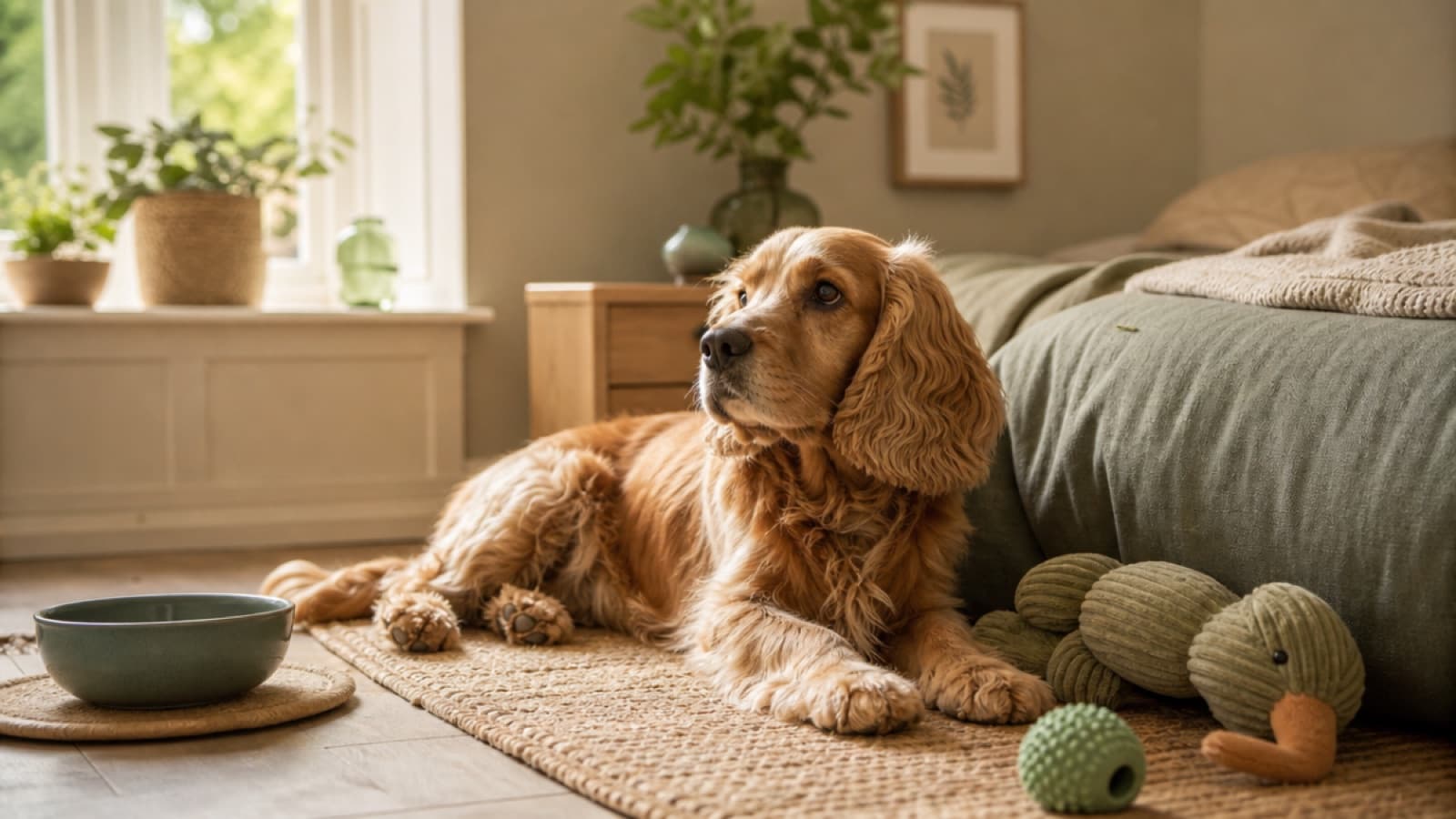
Now lay a heavy ear flap over the opening like a lid and you have a spot that stays warm and wet for hours after a swim. That is the whole story behind repeat ear trouble in a cocker spaniel or an English springer. A basset hound has the same problem for a different reason, because those ears sweep through wet grass all the way home.
Coat matters as much as ear shape. A cockapoo grows fine hair right at the canal opening, and that hair holds water the way a flannel does. None of this means those dogs are badly built. It means the ear needs a hand from you, and the hand takes about a minute.
What to do in the ten minutes after a wet walk
Dry the ears before you dry anything else. Wet fur on the back will sort itself out. A wet ear canal will not.
Wrap a soft towel around your index finger and wipe the inside of the flap, then the opening itself, going only as far as your finger travels comfortably. If you meet resistance, you have gone far enough. There is no version of this where you push. For a dog with a lot of hair, lift the flap and hold it up for a few seconds afterwards so air can actually reach the opening.
A thin absorbent cloth does this far better than the stiff old towel hanging by the back door. Keep a soft ear cloth in the car (one like this), so the job happens at the river and not an hour later at home. We keep a stack of dog towels by the door for exactly this reason. For a dog who swims most days through the summer, a dedicated drying cloth (PETTOM pocket towel) that lives with the lead earns its keep by about week two.
How often should you look inside your dog's ears?
Once a week, and it takes ten seconds. Lift the flap, look, and have a sniff. You are building a picture of what normal looks like on your dog, so that abnormal is obvious later.
A healthy ear is pale pink inside, dry to slightly waxy, and smells of very little. Your dog should not flinch when you lift the flap or rub the base of the ear. Some dogs carry a small amount of pale wax all the time and that is simply their ear.
Do this on the sofa in the evening. Straight after a walk, when everyone is keyed up, is the wrong moment for it. A dog who has been checked calmly every week since puppyhood will let a vet look properly, and that is worth a great deal on the day it matters.
Ear cleaner, plucking and cotton buds: what is safe?
Cotton buds are the easy one. Never, in the canal, for any reason. They push debris downwards and they can do real damage to a structure you cannot see. Cotton wool on a fingertip, staying in the parts you can see, is the limit.
Ear cleaner is not a thing to start on your own initiative. Some are fine for routine use, some are absolutely not right for an ear that is already inflamed or damaged, and the difference is not printed on the front of the bottle. Ask at your next appointment, get shown the technique on your own dog, and then use the one your vet handed you. If you have not settled on a practice yet, our guide to finding the right vet covers what to ask.
Plucking the hair at the canal opening is a genuine judgement call rather than a rule. It helps some dogs and irritates others into the very inflammation you were trying to avoid. Raise it with your groomer and your vet together, and for a hairy breed make it part of the standing appointment. It is no job for tweezers on a Sunday. Our post on choosing a dog groomer has the questions worth asking.
What does a brewing ear infection look and smell like?
Smell is usually the first honest signal. A sweet yeasty or sour note coming off an ear means something is growing in there, and it is rarely a false alarm.
Alongside that, watch for head shaking that does not stop, scratching at the ear, rubbing the side of the face along the carpet or the sofa, redness inside the flap, heat, or dark gritty discharge. A dog who suddenly does not want their head touched is telling you something specific. So is a dog who has gone quiet and is off their dinner for no other reason.
Some signs mean today rather than sometime this week. Phone your vet straight away for a head tilt, for wobbliness or loss of balance, or for blood or pus at the opening. Do the same for an ear swollen up like a cushion, or for clear pain when your dog is doing nothing at all.
This is a vet visit, not a chemist visit, and it is worth being blunt about why. Ear infections are caused by different things, they need different treatment, and the wrong drops in a damaged ear make matters worse. Your vet needs to look down the canal with a scope before anything goes in it.
Why does the same ear keep flaring up?
Once you have had three or four rounds of the same infection, the water stops being the whole explanation. Repeat ear trouble is very often the visible corner of an itchy skin story, and the ear is simply the place that shows it first.
The pattern is worth knowing. Look for paws licked pink and a blotchy tummy. The scratching arrives at the same time every year. One ear is usually the difficult one. When that is the shape of things, chasing each infection on its own is exhausting and never quite finishes. The conversation to have with your vet is about the underlying itch, not the current ear.
Diet is one part of that conversation and only a vet can tell you whether it is the part that matters for your dog. What you feed will not treat an infected ear and nothing in a bowl should be sold to you as a cure. It can still be a sensible thing to review while you work through the bigger picture, and our post on what to feed an itchy dog walks through how that is usually approached. If you are starting from a breed known for both swimming and skin sensitivity, the matched foods on our golden retriever guide are a reasonable place to begin. Every food in our reviews is scored on protein and processing, nutritional balance, transparency and value.
Does the swimming have to stop?
No. A spaniel who is not allowed in water is a miserable animal, and taking away the best part of your dog's week is a hard trade for a problem a towel usually solves.
What changes is the ten minutes afterwards. Dry the ears at the bank, then again at home. Lift the flaps afterwards so air can reach the opening, and keep the weekly look for Sunday before bed. For most dogs that is the entire intervention.
And when the smell turns up anyway, book the appointment early and do not wait to see. An ear caught in week one is a short course of treatment. An ear caught in month three is a much longer story, and your dog has been uncomfortable for all of it.
Frequently asked questions
Can I use human ear drops or witch hazel in my dog's ears?
No. Human ear products are made for a straight canal and a different set of problems, and some ingredients are painful or harmful in a dog's ear that is already inflamed. Home remedies from the internet fall in the same bin. If an ear needs something in it, it needs your vet to look down it first and hand you the right bottle for that specific ear.
Should I pluck the hair out of my dog's ears?
Only on advice. Plucking helps air reach the canal in some hairy breeds, and in others it leaves the skin sore and invites the exact inflammation you were avoiding. It depends on the dog, the coat and the ear's history. Ask your vet what they want for your dog, then make it part of the standing grooming appointment. It is not a job to do at home with tweezers.
How soon after swimming do I need to dry the ears?
Straight away is best, and the same day is the real deadline. The problem is warmth and moisture sitting in a bend in the canal for hours, so the sooner the water is out, the less time anything has to get going. Keep a cloth in the car and do it at the bank while your dog is still in walk mode. It takes about a minute per ear.
Can food cause repeat ear infections?
Sometimes it is part of the picture, but never assume it. Ears that flare up again and again are often the first visible sign of an itchy skin problem, and diet is one of several things a vet will work through with you. Food will not treat an ear that is already infected. Get the current ear seen, then have the longer conversation about what sits underneath it.