


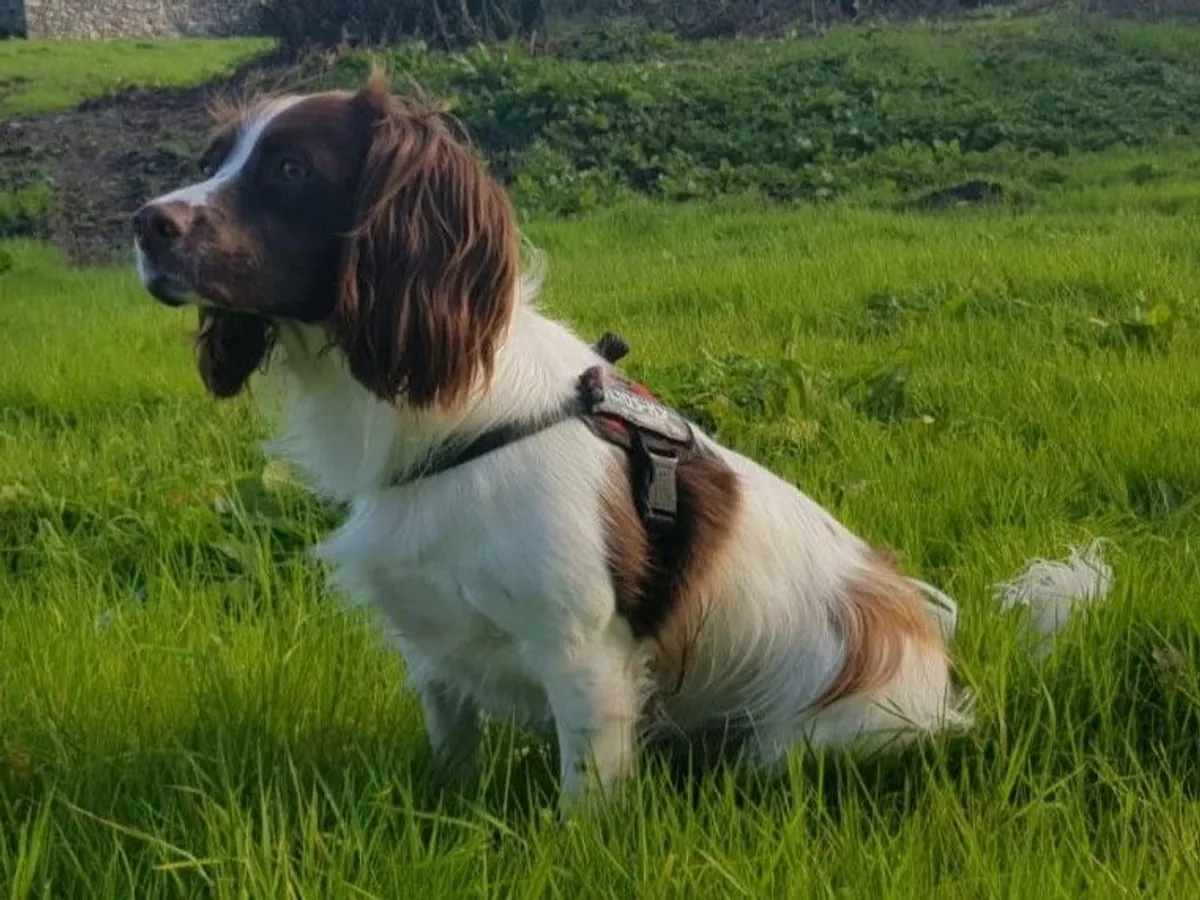

Most important facts
- Group
- Gundog
- Size
- Medium
- Weight
- 18–23 kg
- Lifespan
- 12–14 years
- Coat
- Medium-length
- Energy
- High
- Height
- 46–51 cm
- Colours
- Liver and white or black and white
- Shedding
- Moderate
- Est. feeding cost
- ~£1.08 a day
- Gear to consider
- Slow-feeder bowl, durable retrieving/gundog toys, all-weather harness with a long training line
Typical dry food, adult
About the English Springer Spaniel
The English Springer Spaniel takes its name from its original job of springing game from cover for the net, falcon or gun, a role land spaniels had filled in Britain for centuries. Springers and Cocker Spaniels were once separated simply by size within the same litters, until the breeds were formally split and the Springer was recognised in its own right in 1902. It remains one of Britain's most popular working gundogs.
English Springer Spaniels are affectionate and eager to please, traits that made them a favourite working gundog long before they became a family companion. They tend to be sociable with people and other dogs, keen to be involved in whatever the household is doing, and food-motivated in a way that makes training straightforward.
This is not a breed that settles with minimal stimulation. Without enough exercise and mental work, a Springer's energy and nose can turn into over-excitement or destructive habits. Working-line dogs are often even more driven than show lines and benefit from a job, whether scentwork, gundog training or long structured walks.
Common health conditions
Things English Springer Spaniel owners commonly watch for. Guidance, not veterinary advice.
Hip and elbow dysplasia
Joint laxity that can lead to early arthritis. Keep an active Springer lean and choose a diet with joint-support nutrients to protect the joints long term.
Otitis externa (ear infections)
Moisture and wax collect in those long, low-set ears. Check and dry the ears after swimming or muddy walks, with a skin-supporting diet as a useful extra.
Progressive retinal atrophy (PRA)
An inherited, gradually progressive eye disease. Choose breeders who screen parent dogs through the Kennel Club and BVA eye schemes.
Weight gain and obesity
Springers are notably more likely than most dogs to become overweight. Measure portions and resist a food-motivated nature at the treat tin.
Feeding a English Springer Spaniel
A Springer doing a couple of hours of exercise a day needs a reasonably energy-dense diet suited to an active medium breed. This is also a dog that will happily eat far more than it needs. Weigh meals out for the dog's actual activity level rather than leaving food down, and count training treats within the daily allowance.
Because hip and elbow dysplasia run in the breed, a diet with joint-support nutrients such as glucosamine, chondroitin and omega-3s is a sensible everyday choice, alongside a lean body condition. Vets see excess weight in this breed more than most, so regular body condition checks are one of the most useful feeding habits to build. Our Food Finder can match a recipe to your Springer's activity and life stage.
Every dog is different — weight, age and activity all shift what a English Springer Spaniel needs. The turns these breed tendencies into a shortlist matched to your dog’s age, size, budget and needs.
Typical adult weight
18–23 kg
Est. daily calories
730–1,320 kcal
A broad guide for an average-activity adult in good body condition — not veterinary advice. Real needs vary with age, neutering, activity, health and body condition, so no two English Springer Spaniels eat exactly the same. Get a personalised estimate or estimate feeding costs.


- Per day
- ~£1.08
- Per month
- ~£33
- Per year
- ~£395
A broad typical monthly budget guide, not a live price quote. Food format, calorie density, pack size and retailer pricing all change the real cost.
Best food for English Springer Spaniels
All food reviewsMatched on score, life stage, food type, breed size, fit, value and retailer availability. How we score.

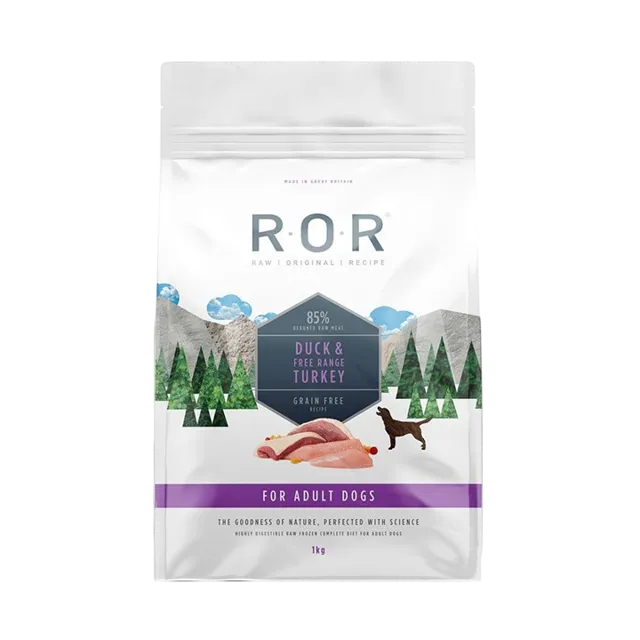


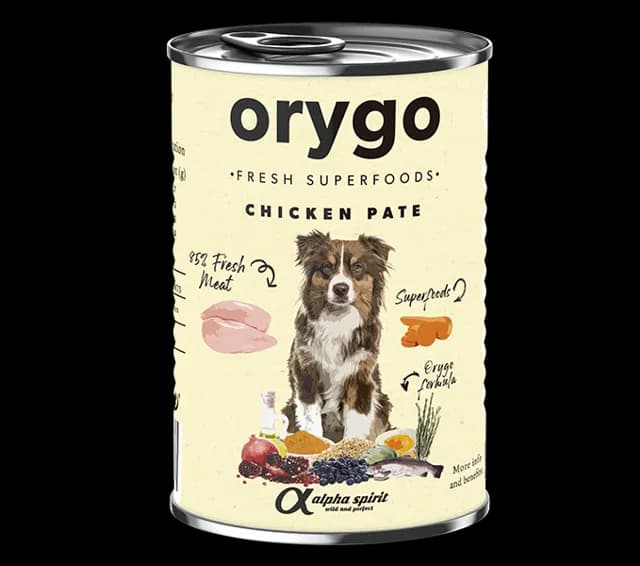
Ranked shortlists for English Springer Spaniels
Want the full food shortlist?
See foods matched to your English Springer Spaniel by score, price, life stage and fit.
Breed at a glance
- Exercise needs9/10
- Appetite8/10
- Trainability8/10
- Good with children8/10
- Shedding5/10
- Tolerates being alone4/10
The good & the worth-knowing
The good
- Affectionate, biddable and genuinely good with children and family life
- Highly trainable and eager to please, excelling at obedience, agility and gundog work
- Thrives on activity and makes an engaged companion for an active household

Worth knowing
- Needs well over two hours of proper exercise a day, so unsuited to a sedentary household
- Food-motivated and prone to weight gain if meals and treats aren't measured
- Pendulous ears and feathering need regular checking, drying and grooming
Best matched accessories
All accessoriesThe collections that suit the breed, judged by the same independent standard.




Common owner questions
How much exercise does an English Springer Spaniel need?
Plan for well over two hours a day, ideally split across walks with some off-lead running and scent or retrieving games. A bored, under-exercised Springer can become destructive or overweight.
Are English Springer Spaniels prone to putting on weight?
Yes. Springers carry excess weight more often than most breeds, largely because these food-motivated dogs often end up under-exercised in family life. Weigh meals and feed to body condition, and our Food Finder can help find a calorie-appropriate recipe.
How often does a Springer Spaniel need grooming?
Weekly brushing keeps the feathered coat free of tangles, with a trim roughly every three months to manage feathering on the ears, legs and belly. Check and dry the ears regularly, especially after swimming.
What should I feed an English Springer Spaniel?
A complete diet built for an active medium breed, with joint-support nutrients given the dysplasia risk, fed in weighed portions rather than left down all day. Match calories to actual daily exercise, adjusting as activity changes with age.