


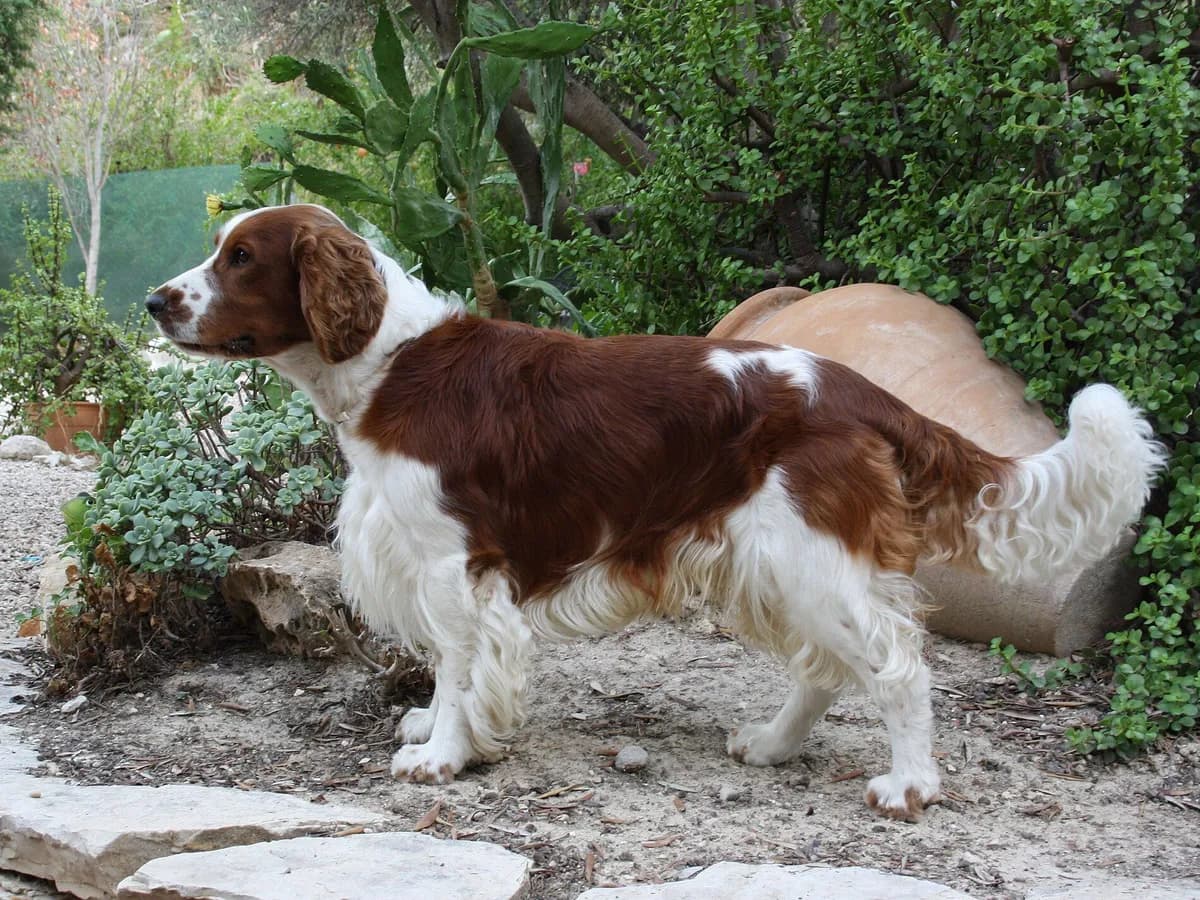

Most important facts
- Group
- Gundog
- Size
- Medium
- Weight
- 16–20 kg
- Lifespan
- 12–15 years
- Coat
- Silky, flat and glossy
- Energy
- High
- Height
- 43–48 cm
- Colours
- Rich red and white
- Shedding
- Moderate
- Est. feeding cost
- ~£1.04 a day
- Gear to consider
- Slow-feeder bowl, waterproof drying coat, durable retrieving dummies
Typical dry food, adult
About the Welsh Springer Spaniel
The Welsh Springer Spaniel is an ancient breed, with red-and-white spaniels of its type appearing in Welsh law tracts and Renaissance hunting art centuries before the Kennel Club recognised it in 1902. Bred to spring game on Welsh hillsides, it stayed a plainer, hardier worker than its English cousin. Devotees know the breed simply as the Welshie, and prize its loyalty above all.
Welsh Springer Spaniels are affectionate, loyal and often described as devoted velcro dogs that prefer to be near their people rather than off on their own. They're gentler and slightly more reserved with strangers than some other spaniels, but warm up quickly and are typically good with children and familiar dogs when socialised from puppyhood.
As a true working gundog, this breed is intelligent, eager to please and responsive to reward-based training that uses food as motivation, though that same food drive means treat portions need managing. Left under-exercised, Welsh Springers can become restless, vocal or prone to separation anxiety, so routine, exercise and mealtimes benefit from real structure.
Common health conditions
Things Welsh Springer Spaniel owners commonly watch for. Guidance, not veterinary advice.
Hip dysplasia
The hip joint is loose, and osteoarthritis can result. Keep this active breed lean and well-muscled to reduce joint strain considerably.
Elbow dysplasia
An inherited joint condition seen in working gundogs. Feed for a controlled growth rate as a puppy to support healthy joint development.
Glaucoma and hereditary cataracts
Eye conditions that can affect vision over time. Choose screened parents and book annual vet checks to catch changes early.
Ear infections
Moisture and wax collect in ears that are long and low-set, especially after swimming. Check and dry the ears regularly.
Obesity
A food-motivated, muscular breed that piles on weight if treats and portions aren't watched, adding strain to hips and elbows.
Feeding a Welsh Springer Spaniel
This is a working gundog with genuinely high energy needs when properly exercised, so an adult diet with moderate-to-high protein and decent fat suits most Welsh Springers, provided the dog does the exercise to match. Feed puppies a medium-breed food with controlled calcium, since rapid growth spurts contribute to dysplasia.
In practice this breed is also food-motivated and prone to weight gain, so portion by body condition, weigh meals, and deduct training treats from the daily ration. A joint-supporting food with glucosamine, chondroitin and omega-3s is sensible given the dysplasia risk, particularly in the senior years.
Every dog is different — weight, age and activity all shift what a Welsh Springer Spaniel needs. The turns these breed tendencies into a shortlist matched to your dog’s age, size, budget and needs.
Typical adult weight
16–20 kg
Est. daily calories
670–1,190 kcal
A broad guide for an average-activity adult in good body condition — not veterinary advice. Real needs vary with age, neutering, activity, health and body condition, so no two Welsh Springer Spaniels eat exactly the same. Get a personalised estimate or estimate feeding costs.


- Per day
- ~£1.04
- Per month
- ~£32
- Per year
- ~£380
A broad typical monthly budget guide, not a live price quote. Food format, calorie density, pack size and retailer pricing all change the real cost.
Find the right food for your Welsh Springer Spaniel
Foods ranked to your dog
Answer a few quick questions and the Food Finder ranks foods to your Welsh Springer Spaniel by score, price, life stage and fit.
Breed at a glance
- Exercise needs9/10
- Appetite8/10
- Trainability8/10
- Good with children8/10
- Shedding5/10
- Tolerates being alone4/10
The good & the worth-knowing
The good
- Affectionate, loyal family companion that bonds closely with its household
- Highly trainable and eager to please, especially with positive, reward-based methods
- Athletic and versatile, equally happy working in the field or on family adventures

Worth knowing
- Needs well over an hour of proper exercise daily and doesn't thrive as a low-activity pet
- Can develop separation anxiety if left alone regularly without preparation
- Coat and ears need consistent grooming and drying, particularly after swimming
Best matched accessories
All accessoriesThe collections that suit the breed, judged by the same independent standard.




Common owner questions
How much food does a Welsh Springer Spaniel need per day?
Start from the pack's feeding guide for their weight, split across two meals, then adjust for age, activity and the food's calorie density. Working dogs may need more, so feed to body condition and adjust if ribs become harder or easier to feel.
Are Welsh Springer Spaniels prone to weight gain?
Yes. They're food-motivated and muscular, and it's easy to overfeed a breed this enthusiastic about mealtimes. Regular weigh-ins and measured meals that count training treats within the daily allowance help keep weight healthy, which matters given their hip and elbow risk.
Do Welsh Springer Spaniels need a special joint-support diet?
Not necessarily from puppyhood, but given the breed's known predisposition to hip and elbow dysplasia, many owners choose an adult food with added glucosamine and chondroitin, especially from middle age onward. The Food Finder can help match a diet with joint-support credentials.
How much exercise does a Welsh Springer Spaniel need?
Plan for well over an hour a day of proper activity, ideally with some off-lead running, retrieving or scentwork rather than a gentle stroll alone. These are working gundogs bred for stamina, and under-exercised dogs are more likely to become bored, overweight or anxious.