


Most important facts
- Group
- Utility
- Size
- Large
- Weight
- 20–32 kg
- Lifespan
- 12–15 years
- Coat
- Curly, dense
- Energy
- High
- Height
- 45–60 cm
- Colours
- All solid colours
- Shedding
- Light
- Est. feeding cost
- ~£1.31 a day
- Gear to consider
- Slow-feeder bowl, professional-grade grooming brush and clippers, sturdy no-pull harness
Typical dry food, adult
About the Standard Poodle
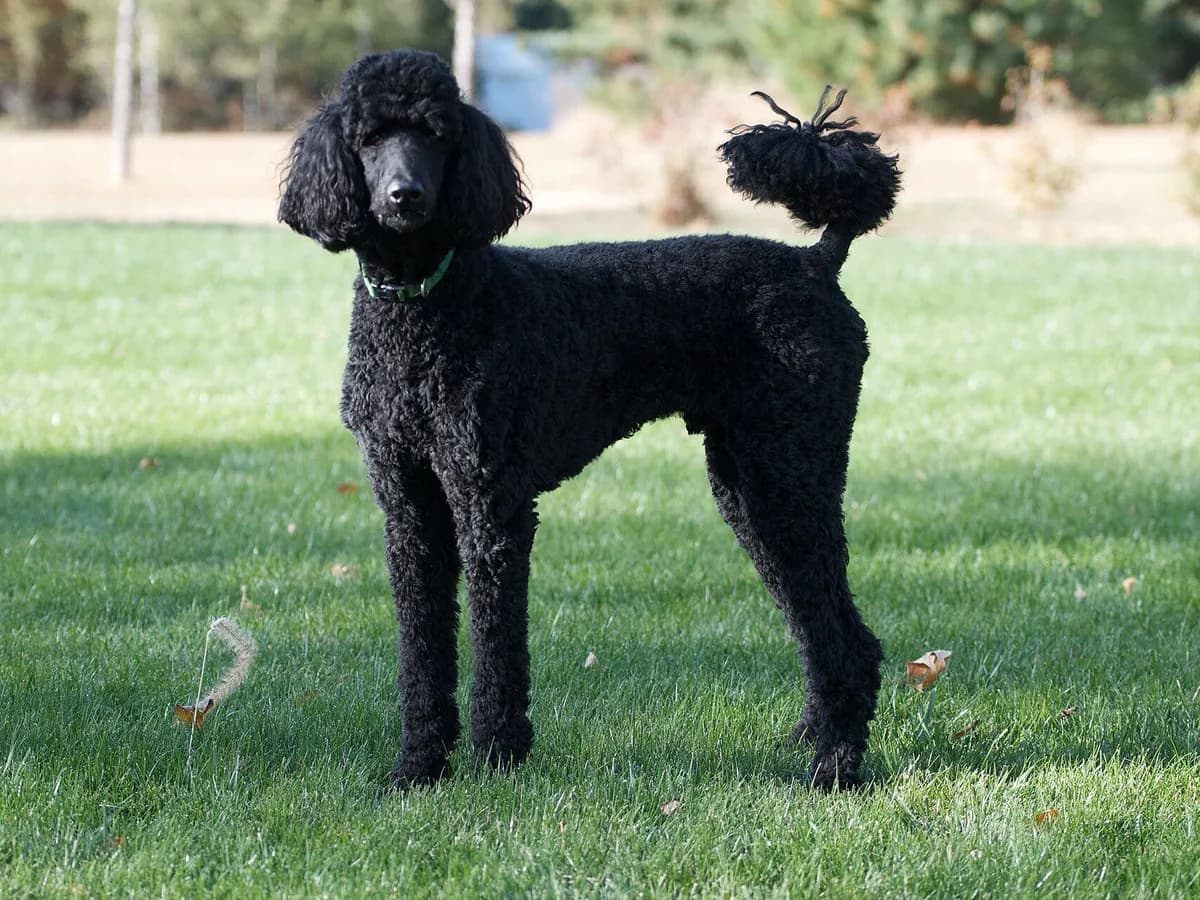
The Standard Poodle is the original of the three Poodle sizes, bred in Germany as a duck-retrieving water dog before France adopted it so wholeheartedly that it became the national breed. The elaborate clip began as pure function, protecting joints and chest in cold water while freeing the legs to swim. Beneath the topiary is one of dogdom's most capable working retrievers.
Don't let the elaborate show clips fool you. The Standard Poodle is a working gundog by origin, bred to retrieve from water, and it carries that working brain into family life. These are quick, eager learners who relish a task, and boredom rather than stubbornness is usually behind any behaviour problems.
Socially, Standard Poodles are typically affectionate and people-oriented, often bonding with the whole family rather than a single person, and they get on well with children when raised alongside them. That attachment means they can struggle with long periods alone, so build up alone time gradually and keep feeding and exercise routines consistent.
Common health conditions
Things Standard Poodle owners commonly watch for. Guidance, not veterinary advice.
Hip dysplasia
A common large-breed joint condition where the hip socket doesn't form snugly. Keep a Standard Poodle lean, and feed a diet that keeps growth steady and unhurried.
Bloat (gastric dilatation-volvulus)
This deep-chested breed is at real risk of a life-threatening stomach twist. Keep each meal small, and keep things calm straight after eating.
Sebaceous adenitis
An inherited autoimmune condition affecting the skin's oil-producing glands, causing dry, flaky coat. Feed good omega fatty acid levels alongside veterinary treatment.
Ear infections
Floppy ears combined with hair growing inside the canal trap moisture and wax. Check and clean the ears more regularly than you would for a prick-eared dog.
Feeding a Standard Poodle
Standard Poodles are working retrievers at heart, and an active adult can need more energy-dense food than its slim frame suggests. Bloat risk rises in deep-chested breeds, so how food is fed matters as much as what's fed. Divide the daily ration across two or three smaller meals, and leave a calm gap either side of exercise.
Protein quality is worth prioritising given this breed's athleticism and predisposition to autoimmune skin conditions, with good omega-3 and omega-6 levels supporting the coat. Because the breed is prone to hip dysplasia, puppies benefit from a large-breed formula controlling growth rate, and adults should stay lean.
Every dog is different — weight, age and activity all shift what a Standard Poodle needs. The turns these breed tendencies into a shortlist matched to your dog’s age, size, budget and needs.
Typical adult weight
20–32 kg
Est. daily calories
790–1,700 kcal
A broad guide for an average-activity adult in good body condition — not veterinary advice. Real needs vary with age, neutering, activity, health and body condition, so no two Standard Poodles eat exactly the same. Get a personalised estimate or estimate feeding costs.


- Per day
- ~£1.31
- Per month
- ~£40
- Per year
- ~£477
A broad typical monthly budget guide, not a live price quote. Food format, calorie density, pack size and retailer pricing all change the real cost.
Find the right food for your Standard Poodle
Foods ranked to your dog
Answer a few quick questions and the Food Finder ranks foods to your Standard Poodle by score, price, life stage and fit.
Breed at a glance
- Exercise needs8/10
- Appetite6/10
- Trainability9/10
- Good with children8/10
- Shedding1/10
- Tolerates being alone4/10
The good & the worth-knowing
The good
- Highly intelligent and trainable, thriving on structured activities and games
- Low-shedding coat that many allergy-sensitive households manage well
- Loyal, affectionate and generally excellent with children and family life

Worth knowing
- Grooming is a genuine, ongoing commitment with regular clipping, not just brushing
- Prone to separation-related distress if left alone for long stretches
- Deep chest brings a real bloat risk, so feeding routine matters more than for many breeds
Best matched accessories
All accessoriesThe collections that suit the breed, judged by the same independent standard.


Common owner questions
How much exercise does a Standard Poodle actually need?
Plan for at least an hour a day of proper activity, split across two outings, plus mental work, as this is a retriever bred to think as much as move. An under-exercised Standard Poodle tends to find its own, less welcome, outlets for that energy.
Is a Standard Poodle really hypoallergenic?
No dog is truly hypoallergenic, but the Standard Poodle's dense, curly single coat sheds very little loose hair, which is why it's often better tolerated by people with mild allergies. Regular clipping and bathing keeps loose hair and dander to a minimum.
Why do Standard Poodles need feeding split into smaller meals?
Gastric dilatation-volvulus is a medical emergency, and deep-chested breeds like the Standard Poodle are at raised risk. Split the day's food across two or three meals, use a slow-feeder bowl for gulpers, and avoid strenuous exercise right after eating to reduce that risk.
How should I adjust feeding as my Standard Poodle ages or changes activity level?
Portions genuinely need to track real-world exercise, not a fixed label amount, since a working adult may need considerably more than a family pet of the same weight. Our Food Finder can help match a food's energy density to your dog's routine.
Similar breeds
Photo: Tim Wilson from Blaine, MN, USA, CC BY 2.0, via Wikimedia Commons