



Most important facts
- Group
- Working
- Size
- Medium
- Weight
- 16–25 kg
- Lifespan
- 12–14 years
- Coat
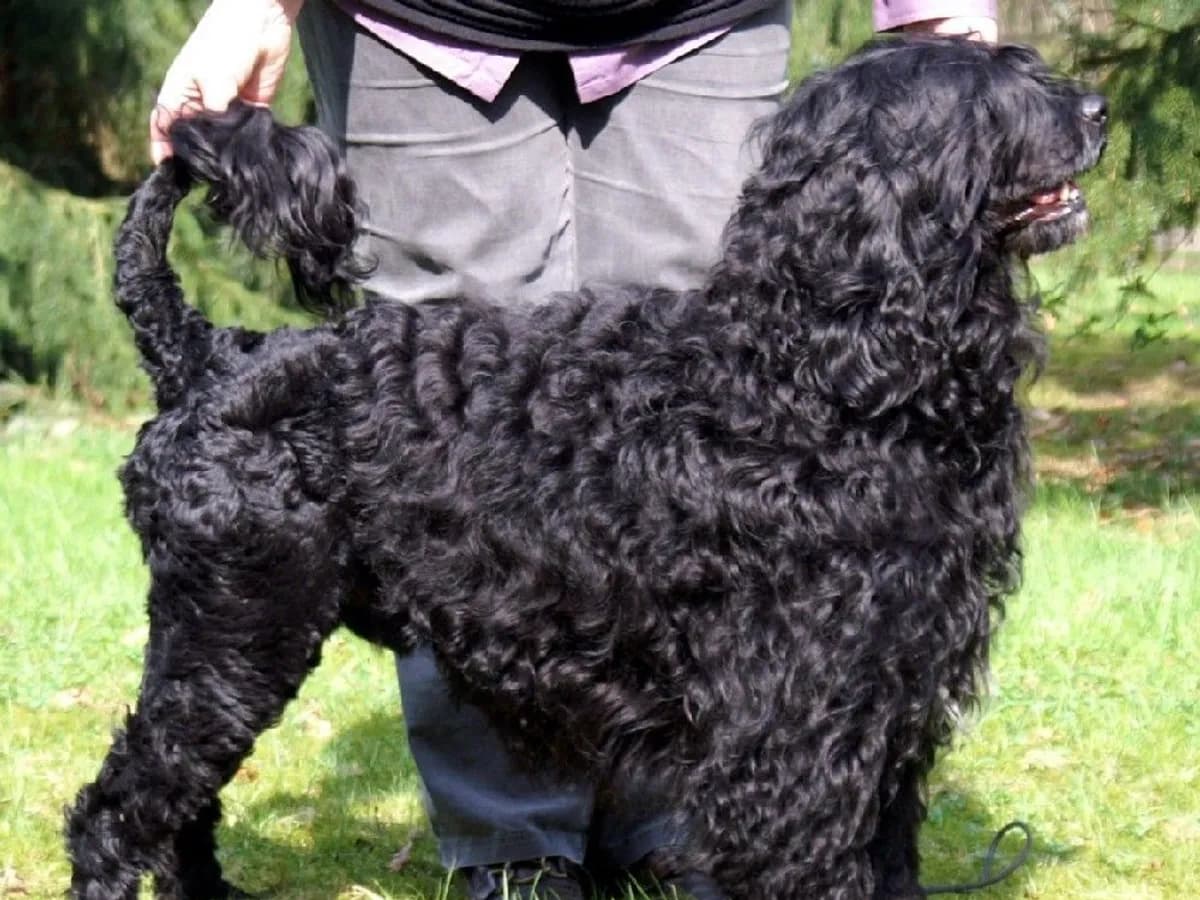
- Curly or wavy, single-coated
- Energy
- High
- Height
- 43–57 cm
- Colours
- Black, brown or white, solid or combined
- Shedding
- Light
- Est. feeding cost
- ~£1.07 a day
- Gear to consider
- Slicker brush and clipping kit, dog life jacket for swimming, durable retrieving toys
Typical dry food, adult
About the Portuguese Water Dog
The Portuguese Water Dog worked the fishing fleets of the Algarve for centuries, herding fish into nets, retrieving lost tackle and carrying messages between boats, its webbed feet and waterproof coat built for the job. The breed had almost vanished by the 1930s before the shipping magnate Vasco Bensaude rebuilt it from working survivors. Bo Obama's arrival at the White House made it briefly the most talked-about dog in the world.
Portuguese Water Dogs are affectionate and deeply bonded to their family, often described as a shadow that wants to be wherever the action is. Their working heritage means they're bright and quick to learn, but they need consistent handling and a genuine job, whether retrieving, swimming or canine sports.
That closeness to people cuts both ways. Left alone for long periods, this breed can develop separation anxiety, so it suits owners who can offer plenty of company and daily engagement. Once socialised, they usually live happily with children and other pets, and their enthusiasm reflects a breed built for sustained, purposeful activity.
Common health conditions
Things Portuguese Water Dog owners commonly watch for. Guidance, not veterinary advice.
Hip dysplasia
Loose joints can end in arthritis in later life. Keep this athletic breed lean, with a joint-support diet and controlled exercise as a puppy.
Progressive retinal atrophy (PRA)
An inherited, gradual deterioration of the retina. Ask breeders for parents' results under the BVA and Kennel Club eye scheme.
Juvenile dilated cardiomyopathy (JDCM)
A breed-associated inherited heart condition seen in some lines. Ask breeders about the DNA carrier test and cardiac screening of the parents.
Addison's disease (hypoadrenocorticism)
Documented in the breed more often than in dogs generally, with vague signs like lethargy or appetite changes. Keep routines consistent so changes stand out, and see a vet promptly.
Feeding a Portuguese Water Dog
This is a muscular, high-drive working breed, and food needs to support real activity rather than a sedentary lifestyle. Look for a complete diet with a good proportion of animal protein and moderate-to-higher fat to fuel swimming and retrieving sessions. Then set the daily amount by the dog actually in front of you, not by the bag's guideline alone.
Because Portuguese Water Dogs are naturally food-motivated and quick to put on weight once exercise drops off, keeping ribs easily felt under a light covering matters more than hitting a number on the scale. A joint-supportive formula with added glucosamine is worth considering given the hip dysplasia risk, and a slow-feeder bowl helps enthusiastic eaters.
Every dog is different — weight, age and activity all shift what a Portuguese Water Dog needs. The turns these breed tendencies into a shortlist matched to your dog’s age, size, budget and needs.
Typical adult weight
16–25 kg
Est. daily calories
670–1,410 kcal
A broad guide for an average-activity adult in good body condition — not veterinary advice. Real needs vary with age, neutering, activity, health and body condition, so no two Portuguese Water Dogs eat exactly the same. Get a personalised estimate or estimate feeding costs.


- Per day
- ~£1.07
- Per month
- ~£32
- Per year
- ~£389
A broad typical monthly budget guide, not a live price quote. Food format, calorie density, pack size and retailer pricing all change the real cost.
Find the right food for your Portuguese Water Dog
Foods ranked to your dog
Answer a few quick questions and the Food Finder ranks foods to your Portuguese Water Dog by score, price, life stage and fit.
Breed at a glance
- Exercise needs8/10
- Appetite7/10
- Trainability9/10
- Good with children8/10
- Shedding1/10
- Tolerates being alone3/10
The good & the worth-knowing
The good
- Highly intelligent and eager to please, so training tends to progress quickly
- Low-shedding coat suits households wanting less hair around the home
- Genuinely loves water and family activity, making an engaged, active companion

Worth knowing
- Needs a serious grooming commitment, including regular professional clipping
- Can develop separation anxiety if regularly left alone for long stretches
- Requires a good hour or more of daily exercise plus mental stimulation
Best matched accessories
All accessoriesThe collections that suit the breed, judged by the same independent standard.




Common owner questions
How much exercise does a Portuguese Water Dog need?
Plan for at least an hour of proper activity a day, ideally including swimming or retrieving games, plus training and puzzle work to occupy their sharp mind. An under-exercised Portuguese Water Dog can become restless or destructive.
What should I feed a Portuguese Water Dog?
Choose a complete diet built for an active, medium-to-large working breed, and portion it to keep your dog at a healthy body condition rather than following the pack guideline blindly. Our Food Finder can help match a formula to their activity level and any joint-support needs.
Do Portuguese Water Dogs shed much?
Very little. Their curly or wavy single coat sheds minimally, which is why the breed appeals to allergy-conscious households, though no dog is completely non-allergenic. That low shedding comes with a trade-off of frequent brushing and regular professional clipping.
Are Portuguese Water Dogs prone to putting on weight?
Yes, if their exercise drops below what this working breed needs, they can gain weight quickly. Feeding to body condition and measuring meals accurately keep them in shape, and our Food Finder can match a suitable diet.
Similar breeds
Photo: Silke Hollje-Schumacher, CC BY-SA 3.0, via Wikimedia Commons