


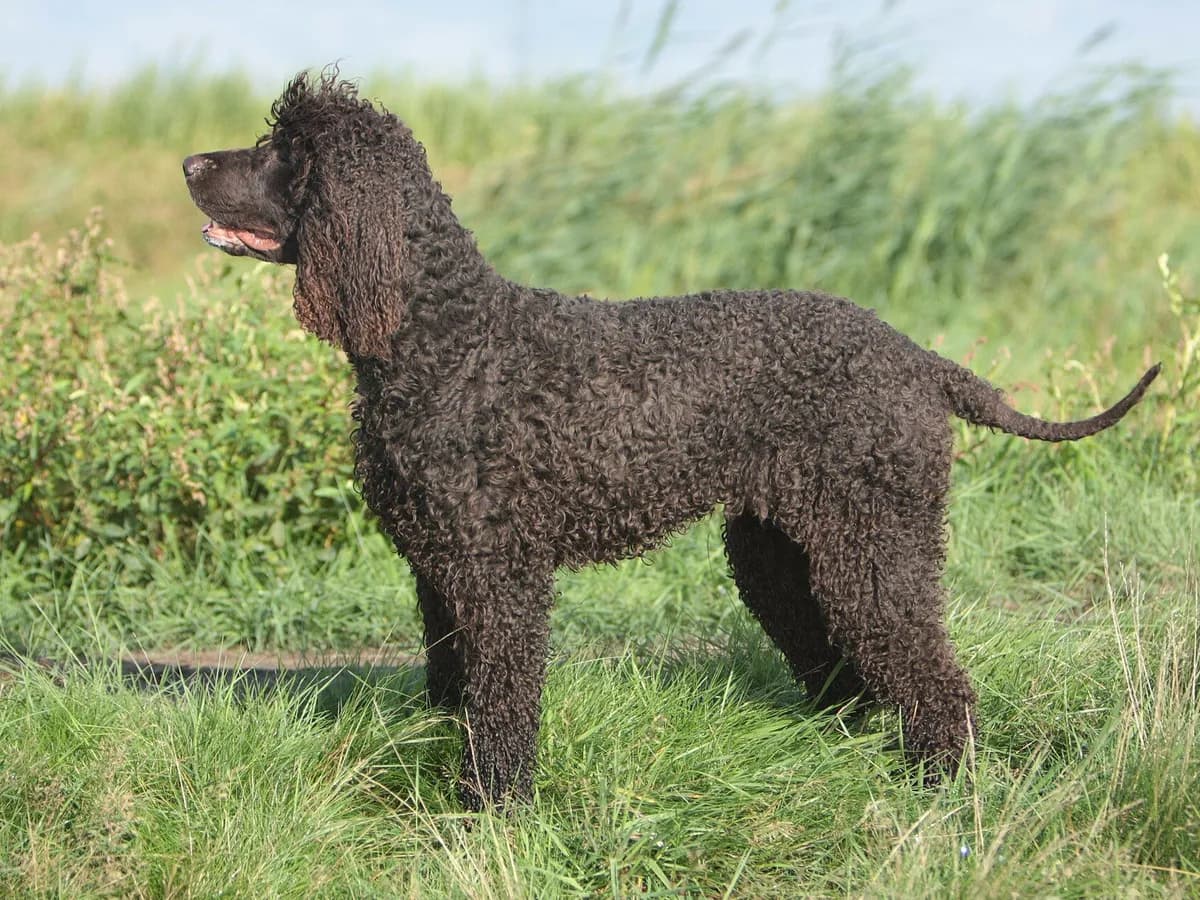

Most important facts
- Group
- Gundog
- Size
- Medium
- Weight
- 20–30 kg
- Lifespan
- 10–12 years
- Coat
- Dense, tight
- Energy
- High
- Height
- 51–59 cm
- Colours
- Rich dark liver
- Shedding
- Light
- Est. feeding cost
- ~£1.31 a day
- Gear to consider
- Tough retrieving toys, detangling grooming comb, slow-feeder bowl
Typical dry food, adult
About the Irish Water Spaniel
The Irish Water Spaniel is the oldest of the surviving water spaniels. The modern breed traces largely to Justin McCarthy's Dublin dog Boatswain in the 1830s, whose descendants fixed the curly liver coat and distinctive smooth rat tail. Wildfowlers prized the breed for retrieving from cold estuaries and marshes. Today it is classed as a vulnerable native breed, with only a small number registered each year.
Irish Water Spaniels are often described as clever, alert and a touch clownish, with the breed standard itself noting an endearing sense of humour alongside a naturally watchful streak with strangers. They think independently, which makes training rewarding but occasionally testing, so keep sessions varied, positive and food-motivated.
Bred to work tirelessly retrieving wildfowl from cold water, they carry that drive into pet life as a need for real mental and physical stimulation, not just a walk round the block. Without enough outlet they can become vocal or restless, and they bond tightly with their household, so build up alone-time tolerance gradually from puppyhood.
Common health conditions
Things Irish Water Spaniel owners commonly watch for. Guidance, not veterinary advice.
Hip dysplasia
An inherited joint condition common in the breed. Keep your dog lean, with a diet that supports steady rather than rapid growth.
Progressive retinal atrophy (PRA)
An inherited, gradually progressive eye disease found in the breed. Choose health-tested parents, and support general eye and coat health with good omega oils.
Ear infections (otitis externa)
The long, low-set ears and curly coat trap moisture, especially after swimming. Check and dry the ears after water work, and flag recurring trouble to your vet.
Hypothyroidism
Weight gain, a dull coat and low energy in middle age can all point to an underactive thyroid. If diagnosed, feeding is adjusted alongside medication to keep weight in check.
Feeding a Irish Water Spaniel
Irish Water Spaniels are working gundogs at heart, and even those kept as pets tend to be more active than the average dog, particularly with regular swimming. A complete food with moderate-to-high protein supports muscle and recovery, with portions reviewed seasonally, since exercise often drops outside the shooting season and appetite doesn't follow suit.
A deep chest raises bloat risk, so split the day's food across two or more meals and avoid strenuous exercise or swimming straight after eating. Both hip dysplasia and thyroid issues are seen in the breed. Little else an owner does matters as much as keeping a lean, visible waist throughout life.
Every dog is different — weight, age and activity all shift what a Irish Water Spaniel needs. The turns these breed tendencies into a shortlist matched to your dog’s age, size, budget and needs.
Typical adult weight
20–30 kg
Est. daily calories
790–1,620 kcal
A broad guide for an average-activity adult in good body condition — not veterinary advice. Real needs vary with age, neutering, activity, health and body condition, so no two Irish Water Spaniels eat exactly the same. Get a personalised estimate or estimate feeding costs.


- Per day
- ~£1.31
- Per month
- ~£40
- Per year
- ~£479
A broad typical monthly budget guide, not a live price quote. Food format, calorie density, pack size and retailer pricing all change the real cost.
Find the right food for your Irish Water Spaniel
Foods ranked to your dog
Answer a few quick questions and the Food Finder ranks foods to your Irish Water Spaniel by score, price, life stage and fit.
Breed at a glance
- Exercise needs9/10
- Appetite6/10
- Trainability6/10
- Good with children7/10
- Shedding2/10
- Tolerates being alone3/10
The good & the worth-knowing
The good
- Highly intelligent and versatile, excelling at retrieving and water work
- Low-shedding curly coat suits some allergy-conscious households
- Loyal, affectionate bond with their own family once trust is established

Worth knowing
- Coat needs committed, regular grooming to prevent matting and keep the ringlets healthy
- Independent, sometimes aloof streak that calls for patient, consistent training
- Not well suited to being left alone for long stretches or to a low-activity household
Best matched accessories
All accessoriesThe collections that suit the breed, judged by the same independent standard.




Common owner questions
How much exercise does an Irish Water Spaniel need?
At least an hour a day of proper activity, ideally including some swimming or retrieving, as this is a breed developed to work in water. Under-exercised dogs can become bored and destructive, and matching food to actual activity prevents gradual weight gain.
Is the Irish Water Spaniel a good family dog?
They can be, especially in households used to a characterful breed that isn't as instantly biddable as some gundogs. They bond closely with their family, sometimes to the point of aloofness with strangers, and do well with children who understand dog boundaries.
Do Irish Water Spaniels shed a lot?
Very little, thanks to the dense curly coat, part of the breed's appeal to allergy-conscious households, though no breed is truly non-allergenic. The trade-off is a coat that mats easily and needs regular brushing and periodic trimming.
What should I feed an Irish Water Spaniel to keep them a healthy weight?
A complete food suited to an active, medium-large working breed, with portions adjusted for how much swimming or retrieving they're actually doing that week. Keep condition lean and recheck portions every few months, and our Food Finder can help match feeding to activity.