


Most important facts
- Group
- Gundog
- Size
- Medium
- Weight
- 11–16 kg
- Lifespan
- 12–15 years
- Coat
- Dense
- Energy
- Moderate
- Height
- 41–48 cm
- Colours
- Off-white, brown, orange or roan
- Shedding
- Light
- Est. feeding cost
- ~£0.86 a day
- Gear to consider
- Slow-feeder bowl, grooming comb and curved shears for coat upkeep, durable scent-work or foraging toys
Typical dry food, adult
About the Lagotto Romagnolo
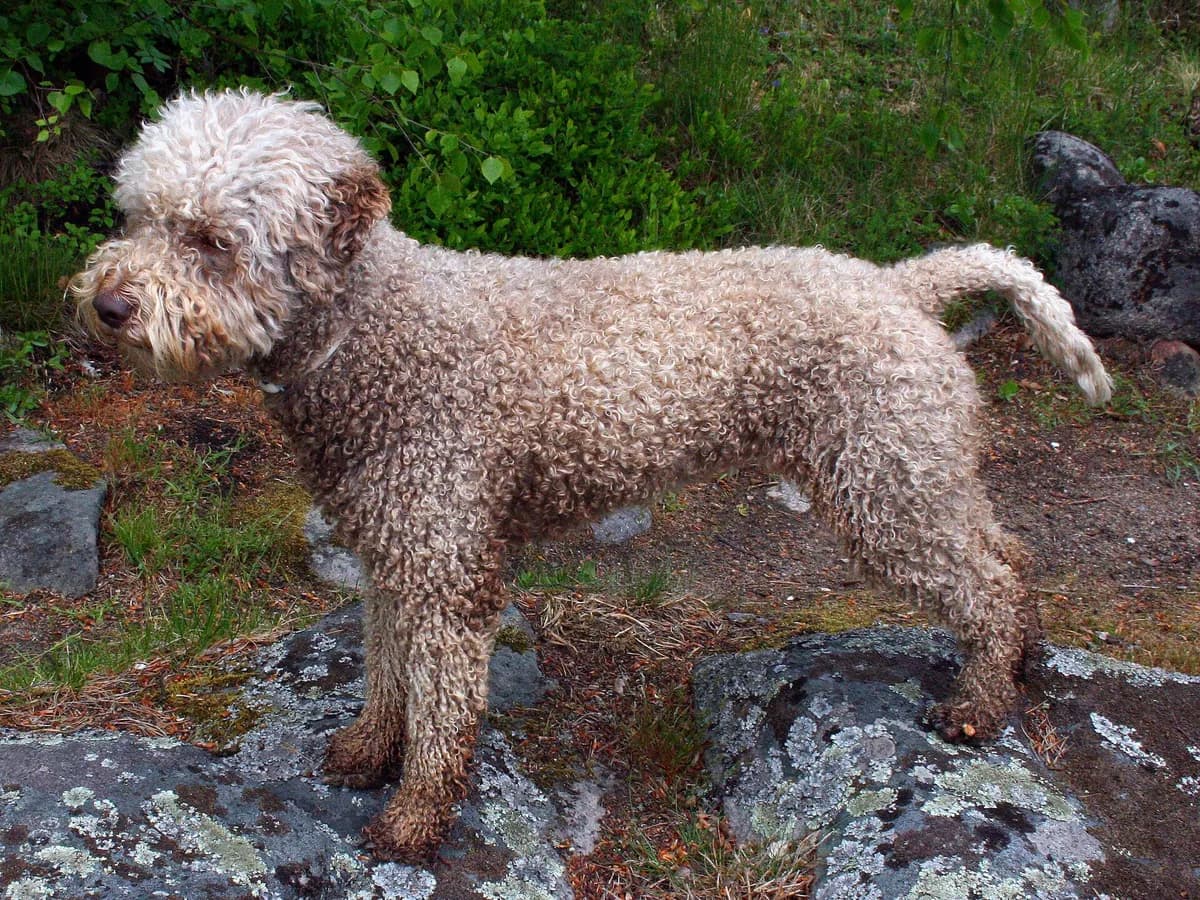
The Lagotto Romagnolo retrieved waterfowl from the marshes of Romagna in northern Italy for centuries, and when those wetlands were drained in the nineteenth century, its keen nose found new employment hunting truffles. It is now the world's only breed kept primarily for truffle work, and is often cited as the ancestor of the modern water dogs. Recognition and rising popularity have reached Britain only relatively recently.
Lagottos are lively, intelligent and deeply affectionate dogs that form close bonds with their families. Bred to work independently sniffing out truffles, they are natural problem-solvers with an excellent nose and a strong drive to search and forage, which makes food-based training and puzzle feeding particularly effective. A tired Lagotto is a contented one.
They can be reserved with strangers and are known to be vocal, alert watchdogs. Given their working background, Lagottos do best with regular mental stimulation alongside exercise. Without it, that same food drive and intelligence turns towards counter-surfing or scavenging on walks, so structured feeding routines keep behaviour settled.
Common health conditions
Things Lagotto Romagnolo owners commonly watch for. Guidance, not veterinary advice.
Hip and elbow dysplasia
Malformation of the joints that can cause pain and reduced mobility. Keep a Lagotto lean through accurately portioned meals.
Juvenile epilepsy
A hereditary form of epilepsy seen in young puppies, usually resolving within weeks. The Kennel Club recommends DNA testing breeding stock, so ask breeders for results.
Lagotto storage disease (neuronal ceroid lipofuscinosis)
A serious inherited neurodegenerative condition. DNA testing of parent dogs is the main safeguard, and reputable breeders can show clear results.
Hyperuricosuria and kidney stones
Higher uric acid levels can predispose some Lagottos to bladder or kidney stones. Keep hydration good and ask your vet about urinary-friendly diets.
Weight gain
This compact, muscular breed piles on weight quickly if overfed. Check body condition regularly and measure portions rather than trusting the bag guideline.
Feeding a Lagotto Romagnolo
Lagottos are a small-to-medium, muscular breed with a strong food drive inherited from their truffle-hunting heritage, prone to opportunistic eating and steady weight gain if portions aren't measured. A complete diet with moderate energy density suits most adults, with treats for training or foraging games counted towards the daily allowance.
Because hip and elbow health matter for this active breed, food with joint-supporting nutrients such as glucosamine and appropriate calcium is worth prioritising, particularly during puppyhood when growth should stay steady. The dense coat benefits from good omega-3 and omega-6 intake, and discuss urinary-support diets with your vet if stones have ever been an issue.
Every dog is different — weight, age and activity all shift what a Lagotto Romagnolo needs. The turns these breed tendencies into a shortlist matched to your dog’s age, size, budget and needs.
Typical adult weight
11–16 kg
Est. daily calories
510–900 kcal
A broad guide for an average-activity adult in good body condition — not veterinary advice. Real needs vary with age, neutering, activity, health and body condition, so no two Lagotto Romagnolos eat exactly the same. Get a personalised estimate or estimate feeding costs.


- Per day
- ~£0.86
- Per month
- ~£26
- Per year
- ~£315
A broad typical monthly budget guide, not a live price quote. Food format, calorie density, pack size and retailer pricing all change the real cost.
Find the right food for your Lagotto Romagnolo
Foods ranked to your dog
Answer a few quick questions and the Food Finder ranks foods to your Lagotto Romagnolo by score, price, life stage and fit.
Breed at a glance
- Exercise needs5/10
- Appetite7/10
- Trainability8/10
- Good with children7/10
- Shedding2/10
- Tolerates being alone4/10
The good & the worth-knowing
The good
- Highly intelligent and trainable, excelling at scent work and truffle hunting
- Low-shedding curly coat suits many allergy-conscious households
- Affectionate, loyal and well suited to family life

Worth knowing
- Coat needs regular clipping every couple of months to prevent matting
- Prone to several inherited conditions, so health testing matters when choosing a puppy
- Can be vocal and noses at things constantly, a trait bred in for truffle work
Best matched accessories
All accessoriesThe collections that suit the breed, judged by the same independent standard.

Common owner questions
How much should I feed my Lagotto Romagnolo?
Portion to your dog's body condition rather than a generic scoop, checking that ribs are easily felt but not visible and adjusting as activity changes. Our Food Finder can suggest a suitable complete food and starting portion.
Is the Lagotto Romagnolo prone to food allergies or a sensitive stomach?
Some individuals do show sensitivities, so introduce new foods gradually and watch for loose stools or itching. A diet with easily digestible protein sources can help if problems arise.
How much grooming does a Lagotto Romagnolo need?
The curly, woolly coat doesn't shed in the usual sense but mats readily, so it needs brushing several times a week and clipping roughly every six to eight weeks. Good nutrition makes the coat easier to manage between grooms.
Is the Lagotto Romagnolo good with children?
Generally yes. They are affectionate, biddable family dogs, though their strong nose and mouthy tendencies mean young children should be supervised around food and toys.