


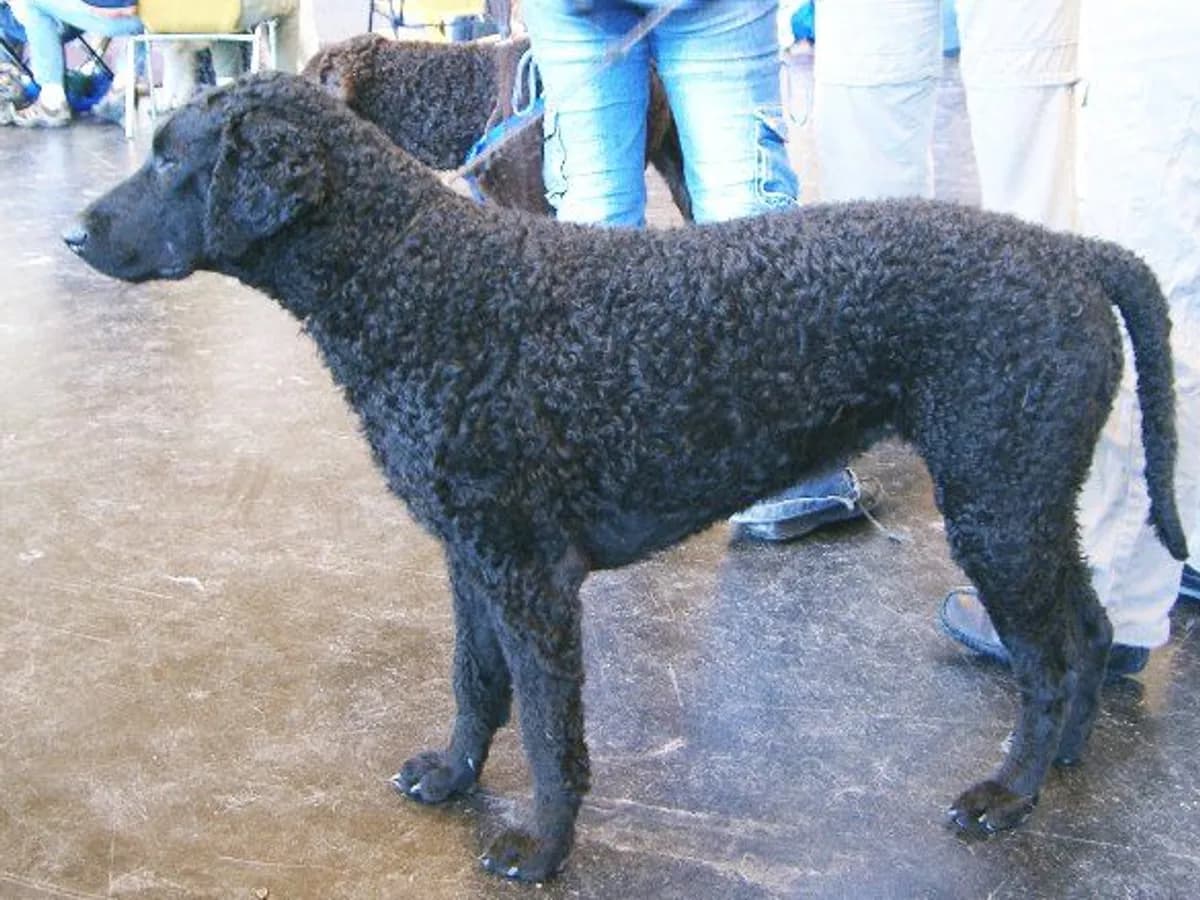

Most important facts
- Group
- Gundog
- Size
- Large
- Weight
- 29–41 kg
- Lifespan
- 10–12 years
- Coat
- Dense, tight
- Energy
- High
- Height
- 58–69 cm
- Colours
- Black or liver
- Shedding
- Light
- Est. feeding cost
- ~£1.68 a day
- Gear to consider
- Slow-feeder bowl, orthopaedic dog bed, rubber curry brush
Typical dry food, adult
About the Curly Coated Retriever
The Curly Coated Retriever is generally considered the oldest of the retriever breeds. It was developed in England in the early nineteenth century from water spaniels, retrieving setters and, it is often suggested, the poodle, which may explain the coat. It was a favourite of English gamekeepers for its stamina and soft mouth. Numbers have fallen since, and it is now classed as a vulnerable native breed in the UK.
Curly Coated Retrievers are typically bold, self-confident and independent-minded, a step apart from the eager-to-please temperament of Labradors. The Kennel Club standard describes them as intelligent, steady and reliable, and many seem aloof with strangers while being deeply devoted to their own family.
That independence means training benefits from consistency and variety rather than repetition. The breed generally does well with children once socialised early, though its size and exuberance call for some care with toddlers. A Curly given proper exercise and a job to do, whether retrieving, swimming or scentwork, is typically a settled, good-natured presence at home.
Common health conditions
Things Curly Coated Retriever owners commonly watch for. Guidance, not veterinary advice.
Hip dysplasia
A concern in large, active breeds. Keep puppies at a lean body condition and avoid overfeeding through growth spurts to support the joints.
Gastric dilatation-volvulus (bloat)
Deep-chested dogs are at higher risk. Feed smaller meals more often, and leave a gap between eating and vigorous exercise.
Glycogen storage disease type IIIa (GSD IIIa)
An inherited metabolic condition specific to the breed. Choose a breeder who DNA-tests parents, and mention the breed to your vet if unexplained lethargy appears.
Progressive retinal atrophy and cataracts
Hereditary eye conditions the breed clubs screen for. Book annual eye checks, particularly for working and breeding dogs.
Ear infections
Pendant ears combined with a love of swimming can trap moisture. Dry and check the ears after wet walks.
Feeding a Curly Coated Retriever
The Curly is large and deep-chested, so a feeding routine built around smaller, more frequent meals is thought to help reduce bloat risk. One large bowlful is the thing to avoid. A slow-feeder bowl and calm mealtimes are worth building in from puppyhood, along with a quiet hour either side of eating.
This is a working retriever with genuinely high energy output when worked properly, so portions should track actual activity rather than a generic large-breed guideline. Many adults do well on a moderate-to-high protein diet that supports lean muscle without tipping into excess weight. For puppies, a large-breed growth formula is the better start. The Food Finder can offer a steer.
Every dog is different — weight, age and activity all shift what a Curly Coated Retriever needs. The turns these breed tendencies into a shortlist matched to your dog’s age, size, budget and needs.
Typical adult weight
29–41 kg
Est. daily calories
1,050–2,040 kcal
A broad guide for an average-activity adult in good body condition — not veterinary advice. Real needs vary with age, neutering, activity, health and body condition, so no two Curly Coated Retrievers eat exactly the same. Get a personalised estimate or estimate feeding costs.


- Per day
- ~£1.68
- Per month
- ~£51
- Per year
- ~£612
A broad typical monthly budget guide, not a live price quote. Food format, calorie density, pack size and retailer pricing all change the real cost.
Find the right food for your Curly Coated Retriever
Foods ranked to your dog
Answer a few quick questions and the Food Finder ranks foods to your Curly Coated Retriever by score, price, life stage and fit.
Breed at a glance
- Exercise needs8/10
- Appetite7/10
- Trainability7/10
- Good with children7/10
- Shedding3/10
- Tolerates being alone4/10
The good & the worth-knowing
The good
- Loyal, intelligent and biddable working retriever that thrives with an active family
- Distinctive low-shedding curly coat needs less routine brushing than many retrievers
- Excellent water dog and field companion for owners who enjoy the outdoors

Worth knowing
- A vulnerable native breed in the UK, so puppies and experienced breeders can be harder to find
- Needs a substantial daily exercise commitment with varied, mentally engaging activity
- Prone to bloat as a deep-chested breed, so feeding routine and meal timing matter
Best matched accessories
All accessoriesThe collections that suit the breed, judged by the same independent standard.
Common owner questions
How much exercise does a Curly Coated Retriever need?
Plenty. This is a high-energy working gundog, and it typically needs well over an hour a day of varied exercise, ideally swimming, retrieving games or scentwork. Under-exercised Curlies can become bored and destructive.
How can I reduce the risk of bloat in this breed?
Two smaller meals, or three, beat one large one, so split the ration and use a slow-feeder bowl if your dog gulps. Keep vigorous exercise clear of mealtimes. If the abdomen looks swollen or your dog retches unproductively, treat it as a vet emergency.
Do Curly Coated Retrievers need a joint-support diet?
Not necessarily from puppyhood, but keeping them lean throughout life is the biggest single thing an owner can do for the hips and joints. Many owners move to a joint-support formula from middle age, and the Food Finder can help match one.
Is the curly coat high-maintenance to groom?
It's less demanding than it looks. The coat shouldn't be brushed out, as that ruins the curl, but left to dry naturally after a bath or towel-dried. Regular ear checks after water work matter more than coat brushing.