


Most important facts
- Group
- Gundog
- Size
- Large
- Weight
- 25–36 kg
- Lifespan
- 10–13 years
- Coat
- Thick, harsh
- Energy
- High
- Height
- 53–66 cm
- Colours
- Brown, sedge or deadgrass
- Shedding
- Moderate
- Est. feeding cost
- ~£1.48 a day
- Gear to consider
- Tough retrieving dummies, no-pull harness, slow-feeder bowl
Typical dry food, adult
About the Chesapeake Bay Retriever
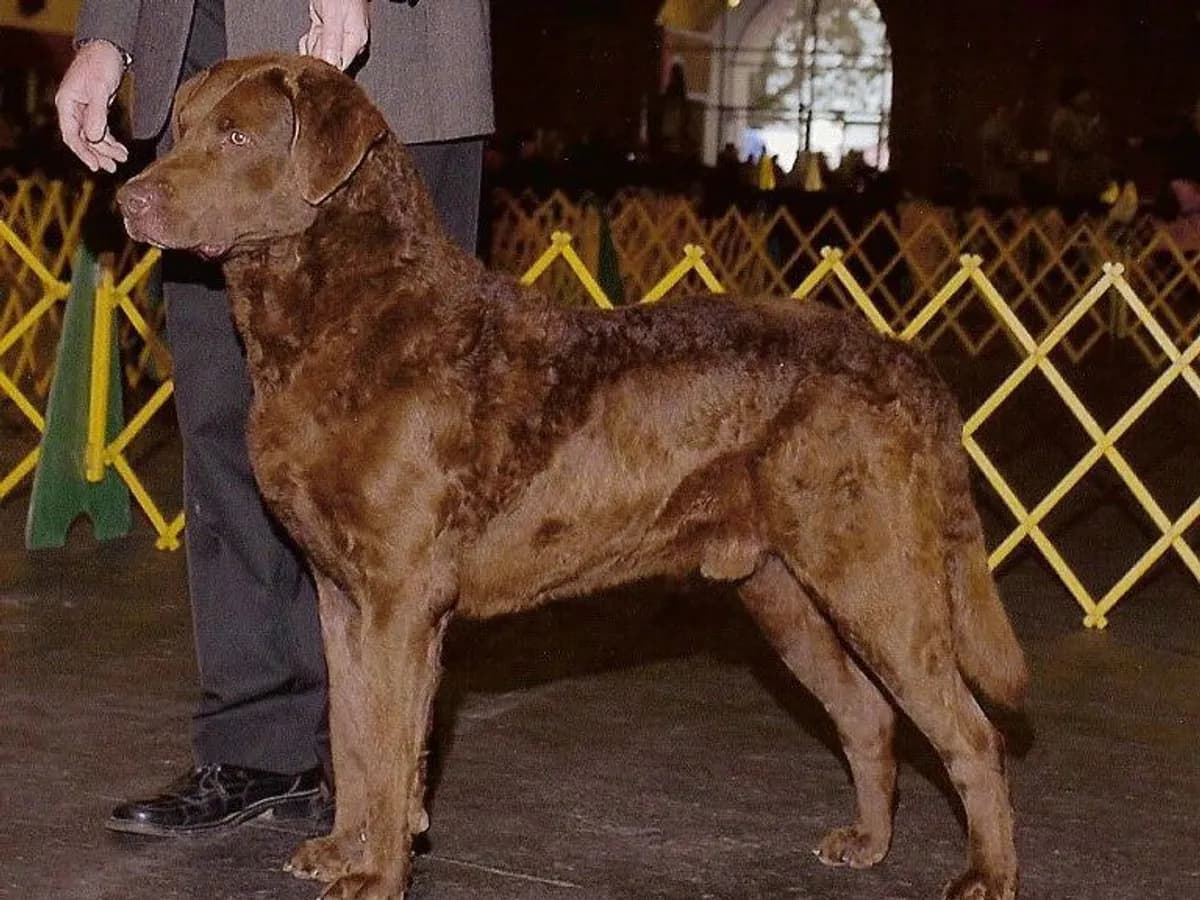
The Chesapeake Bay Retriever traces back to two Newfoundland-type puppies rescued from a shipwreck off the coast of Maryland in 1807. Hunters working the cold waters of Chesapeake Bay crossed their descendants with local retrieving dogs. The result was a retriever with a dense, oily coat built for icy swims, and the breed is still honoured today as the official state dog of Maryland.
Bright and fiercely loyal to its own family, the Chessie is more independent-minded and protective than the average gundog. Early training and plenty of socialisation help it become a confident, biddable companion, and head off stubbornness. This is not usually a first-dog breed.
It thrives with an experienced, active owner who gives it a job to do, whether formal retrieving work, long daily swims or scent and fitness games. Left under-stimulated, its intelligence and drive can tip into pushiness or destructive behaviour, so a settled routine matters as much as feeding it well.
Common health conditions
Things Chesapeake Bay Retriever owners commonly watch for. Guidance, not veterinary advice.
Hip and elbow dysplasia
Malformed joints cause pain and early arthritis. Keep your Chessie lean and feed a growth-controlled large-breed diet through puppyhood.
Progressive retinal atrophy (PRA)
An inherited eye condition causing gradual vision loss. Ask breeders for eye or DNA test results, and watch for hesitancy in dim light.
Exercise-induced collapse (EIC)
A genetic disorder seen in retrievers causing hind-limb weakness after intense exertion. Build activity up gradually with a proper cool-down rather than sudden all-out bursts.
Ear infections
A water-loving breed with floppy ears traps moisture after swimming. Dry the ears thoroughly after water work to prevent recurring infections.
Obesity
A food-motivated retriever that piles on weight if intake isn't matched to exercise. Measure meals and check body condition regularly rather than following pack guidelines blindly.
Feeding a Chesapeake Bay Retriever
This is a big, muscular, high-drive dog with an appetite to match, so food should be energy-dense enough to fuel long days in the field or water without unmanageable bowl sizes. Puppies do best on a controlled-growth large-breed formula, since overly rapid growth is linked to a higher risk of hip and elbow dysplasia.
Adults doing genuine working days may benefit from a working-dog formula with higher fat and protein, while less active pet Chessies should have portions reviewed regularly against body condition. This food-motivated breed gains weight quickly once intake outpaces exercise, so measured meals and a joint-supportive diet are worth prioritising long term.
Every dog is different — weight, age and activity all shift what a Chesapeake Bay Retriever needs. The turns these breed tendencies into a shortlist matched to your dog’s age, size, budget and needs.
Typical adult weight
25–36 kg
Est. daily calories
940–1,850 kcal
A broad guide for an average-activity adult in good body condition — not veterinary advice. Real needs vary with age, neutering, activity, health and body condition, so no two Chesapeake Bay Retrievers eat exactly the same. Get a personalised estimate or estimate feeding costs.
- Per day
- ~£1.48
- Per month
- ~£45
- Per year
- ~£541
A broad typical monthly budget guide, not a live price quote. Food format, calorie density, pack size and retailer pricing all change the real cost.
Find the right food for your Chesapeake Bay Retriever
Foods ranked to your dog
Answer a few quick questions and the Food Finder ranks foods to your Chesapeake Bay Retriever by score, price, life stage and fit.
Breed at a glance
- Exercise needs9/10
- Appetite8/10
- Trainability6/10
- Good with children7/10
- Shedding6/10
- Tolerates being alone4/10
The good & the worth-knowing
The good
- Powerful, tireless working retriever built for water and field
- Deeply loyal and protective of its own family
- Distinctive weatherproof coat suited to cold, wet conditions
Worth knowing
- Strong-willed and independent, so needs a confident, consistent handler
- High exercise and mental-stimulation needs that don't suit a sedentary household
- Oily, water-resistant coat has a distinctive odour and sheds steadily year-round
Best matched accessories
All accessoriesThe collections that suit the breed, judged by the same independent standard.

Common owner questions
How much exercise does a Chesapeake Bay Retriever need?
An hour or two of vigorous activity a day is the minimum, ideally including swimming or retrieving games, plus mental work through training or scentwork. An under-exercised Chessie is far more likely to become pushy indoors.
Is the Chesapeake Bay Retriever a good family dog?
It can be, especially with children it has grown up alongside, but its size, strength and protective streak mean early socialisation and supervision around visitors matter. It generally suits families with some dog-handling experience.
How much should I feed a Chesapeake Bay Retriever?
Portion to actual daily activity and not a generic large-breed guideline, since this breed's food drive can outpace its real needs. Use our Food Finder to match a food's energy density to your dog's size, age and activity, and reassess body condition regularly.
Does the Chesapeake Bay Retriever shed a lot?
Yes, its dense double coat sheds steadily year-round with heavier seasonal moults, and the naturally oily coat carries a stronger dog odour than many retrievers. Regular brushing helps manage the loose hair.
Similar breeds
Photo: George Makatura, Public domain, via Wikimedia Commons