

Most important facts
- Group
- Working
- Size
- Giant
- Weight
- 34–68 kg
- Lifespan
- 10–12 years
- Coat
- Dense double coat
- Energy
- Low
- Height
- 61–76 cm
- Colours
- Black, black and tan, gold or blue-grey
- Shedding
- Heavy
- Est. feeding cost
- ~£2.05 a day
- Gear to consider
- Slow-feeder bowl, orthopaedic bed, undercoat rake brush
Typical dry food, adult
About the Tibetan Mastiff
For centuries the Tibetan Mastiff guarded the monasteries and nomad camps of the Tibetan plateau, its deep bark and imposing presence deterring wolves and snow leopards. Travellers from Marco Polo onwards wrote home in awe. Specimens were gifted to Queen Victoria in the nineteenth century, and a speculative bubble in 2010s China briefly made it the world's most expensive dog.
Tibetan Mastiffs are calm, watchful and deeply loyal to their own family, but naturally reserved and wary of strangers. They were bred to guard, not to herd or retrieve, so they think for themselves and can be stubborn. Consistent, patient training matters from an early age, well before any problems appear.
Despite their imposing bulk, most Tibetan Mastiffs are surprisingly still indoors, often more active at night, with bursts of alertness rather than constant activity. This lower baseline energy means their feeding plan needs to match what they actually burn day to day, not their size alone, to avoid weight gain that strains hard-working joints.
Common health conditions
Things Tibetan Mastiff owners commonly watch for. Guidance, not veterinary advice.
Hip and elbow dysplasia
Malformed joints are common in this giant breed. Keep puppies on controlled-growth large-breed food and adults lean to take pressure off the joints.
Gastric dilatation-volvulus (bloat)
A deep chest makes this life-threatening stomach twist more likely. Keep meals small and give two or three across the day, then rest after eating.
Hypothyroidism
Weight gain and hair loss can both point to an underactive thyroid. If weight piles on despite steady feeding, book a vet check before you simply cut portions.
Entropion and ectropion (eyelid conditions)
The deep-set eyes are prone to eyelids rolling in or out. Check regularly to catch irritation early, well before it affects comfort.
Feeding a Tibetan Mastiff
Tibetan Mastiffs are large and slow to mature, so a puppy needs a large-breed puppy food that controls calcium and calories. Growing too quickly on rich food is one of the biggest risk factors for the hip and elbow dysplasia this breed is prone to. Follow feeding guidelines closely and have growth checked at vet visits.
As adults, their giant frame combined with a naturally lower energy level makes overfeeding an easy trap, so regular body condition checks, rather than pack guidelines alone, keep weight off the joints. The deep chest also carries a raised bloat risk. Slow the eating pace, keep your dog rested around mealtimes, and split the day's food into two or three smaller meals.
Every dog is different — weight, age and activity all shift what a Tibetan Mastiff needs. The turns these breed tendencies into a shortlist matched to your dog’s age, size, budget and needs.
Typical adult weight
34–68 kg
Est. daily calories
1,180–2,320 kcal
A broad guide for an average-activity adult in good body condition — not veterinary advice. Real needs vary with age, neutering, activity, health and body condition, so no two Tibetan Mastiffs eat exactly the same. Get a personalised estimate or estimate feeding costs.
- Per day
- ~£2.05
- Per month
- ~£62
- Per year
- ~£748
A broad typical monthly budget guide, not a live price quote. Food format, calorie density, pack size and retailer pricing all change the real cost.
Find the right food for your Tibetan Mastiff
Foods ranked to your dog
Answer a few quick questions and the Food Finder ranks foods to your Tibetan Mastiff by score, price, life stage and fit.
Breed at a glance
- Exercise needs5/10
- Appetite6/10
- Trainability4/10
- Good with children5/10
- Shedding8/10
- Tolerates being alone4/10
The good & the worth-knowing
The good
- Deeply loyal and naturally protective of home and family
- Calm, dignified temperament indoors despite their imposing size
- A historically hardy breed well suited to cooler climates
Worth knowing
- A strong, independent streak means training takes patience, and this is rarely a first dog
- The dense double coat sheds heavily once a year and needs regular brushing
- Size and guarding instinct call for thorough, early socialisation and secure boundaries
Best matched accessories
All accessoriesThe collections that suit the breed, judged by the same independent standard.
Common owner questions
How much should I feed a Tibetan Mastiff?
Base portions on the dog in front of you, not on pack guidelines alone. Check body condition regularly and adjust for their genuinely lower activity level. Our Food Finder can suggest a suitable large-breed food and starting portion for their age and weight.
Are Tibetan Mastiffs prone to bloat?
Yes. The breed's deep chest raises the risk of gastric dilatation-volvulus. Sensible precautions are two or three meals across the day, a slower-paced bowl, and no strenuous exercise in the time straight after eating.
Do Tibetan Mastiffs need a lot of exercise?
Less than their size suggests. A solid walk or two a day plus something to occupy their guarding instincts is usually enough. Overfeeding relative to this moderate activity level is a common and avoidable cause of weight gain.
Are Tibetan Mastiffs good with children?
They can be, particularly with children they have grown up around, but their size and protective instinct mean time with unfamiliar children or visitors should always be supervised and introductions handled carefully.
Similar breeds
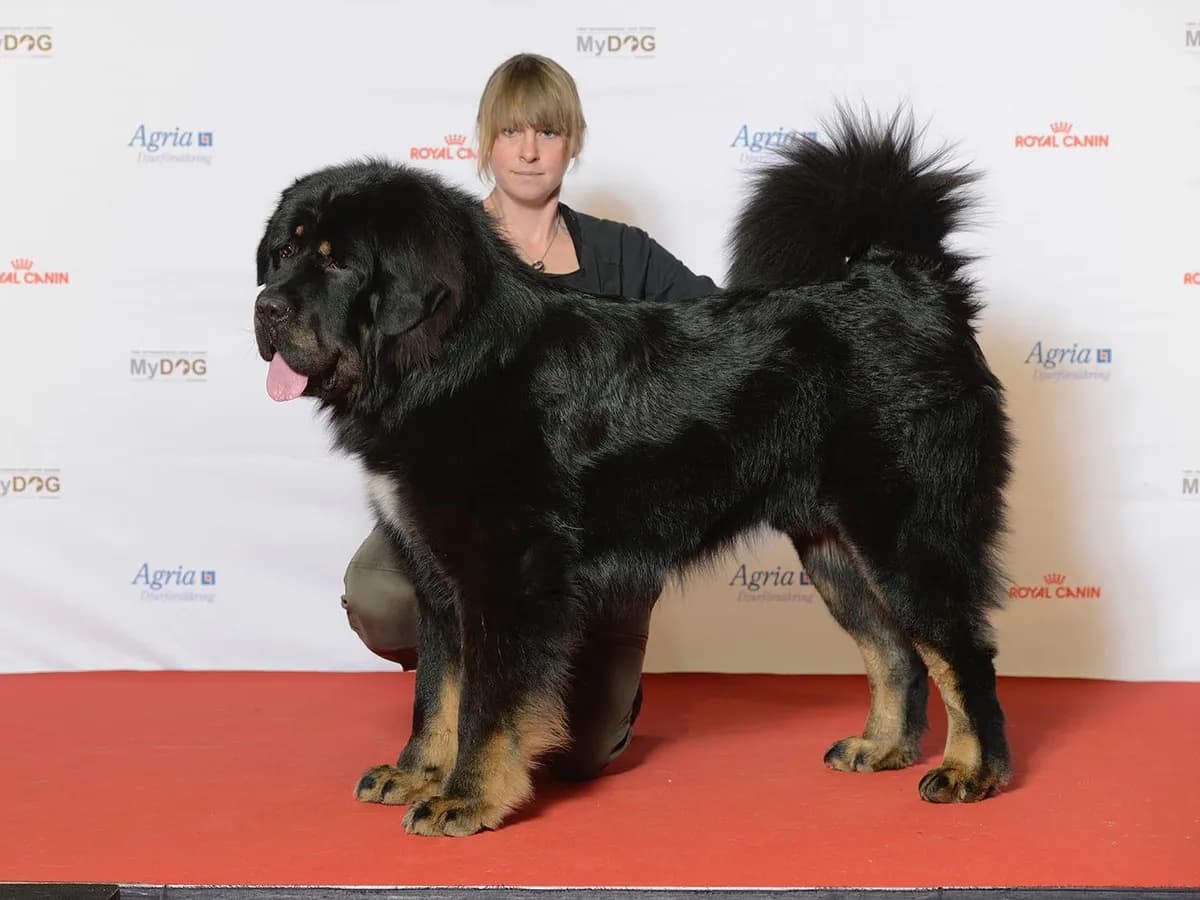
Photo: Svenska Mässan from Sweden, CC BY 2.0, via Wikimedia Commons