

Most important facts
- Group
- Pastoral
- Size
- Giant
- Weight
- 45–77 kg
- Lifespan
- 10–12 years
- Coat
- Long or short
- Energy
- Moderate
- Height
- 64–75 cm
- Colours
- Grey, fawn, cream, brindle or piebald
- Shedding
- Heavy
- Est. feeding cost
- ~£2.27 a day
- Gear to consider
- Giant-breed slow-feeder bowl, heavy-duty no-pull harness, orthopaedic joint-support bed
Typical dry food, adult
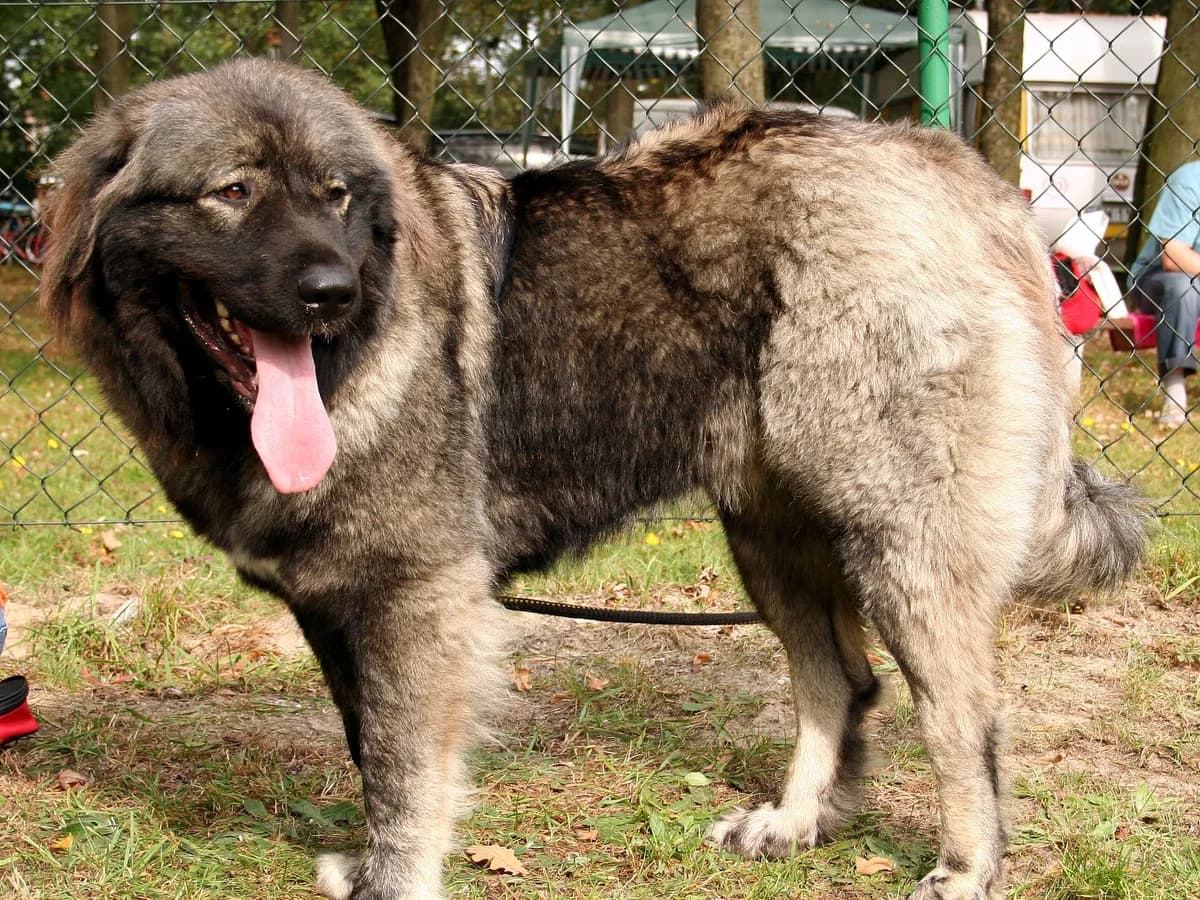
About the Caucasian Shepherd Dog
The Caucasian Shepherd Dog has guarded flocks in the mountains between the Black and Caspian Seas for many centuries, developed by shepherds who needed a dog capable of facing wolves and bears unsupervised. The Soviet Union later standardised and bred the type for guarding and military work, spreading it well beyond its homeland. It remains a working guardian across much of Eastern Europe, while staying a rare and demanding choice in the UK.
Bred to guard livestock unsupervised against wolves and bears, the Caucasian Shepherd is independent-minded, watchful and slow to trust anyone outside its family circle. It is typically calm and undemonstrative at home, but its guarding instinct is genuine, and it will act on perceived threats without waiting for instruction.
That independence makes training a long-term project rather than a quick win, and the breed responds best to a confident, consistent handler with extensive early socialisation. Feeding time is a useful daily chance to reinforce calm routines and handling, which matters for a dog whose adult size demands real trust between dog and owner.
Common health conditions
Things Caucasian Shepherd Dog owners commonly watch for. Guidance, not veterinary advice.
Hip and elbow dysplasia
Common in giant breeds. Keep puppies on a controlled-growth giant-breed diet and avoid excess weight through the growth phase.
Gastric dilatation-volvulus (bloat)
A life-threatening risk in deep-chested giants. Meals should be smaller and more frequent, with no vigorous exercise close to mealtimes.
Entropion
An inherited eyelid condition that can irritate the cornea. Keep up routine vet checks so it is caught early.
Obesity and joint strain
Extra weight is punishing on a frame this large. Portion to body condition, and weigh the food out on scales, never by eye or by scoop.
Feeding a Caucasian Shepherd Dog
A dog this large has a big appetite but a comparatively modest energy output for its size, so overfeeding is the biggest risk to manage. Target body condition decides the portion here, and the bag guideline does not. Reassess as the growing puppy becomes an adult that may do little beyond patrolling its territory.
Raise puppies on a giant-breed formula that controls growth rate and calcium, since rapid early growth is linked to hip and elbow dysplasia at this size. Adults do better on smaller meals, two or three a day, given the deep chest and bloat risk. Ask your vet whether a joint-support formula with glucosamine and chondroitin is worth adding.
Every dog is different — weight, age and activity all shift what a Caucasian Shepherd Dog needs. The turns these breed tendencies into a shortlist matched to your dog’s age, size, budget and needs.
Typical adult weight
45–77 kg
Est. daily calories
1,460–2,910 kcal
A broad guide for an average-activity adult in good body condition — not veterinary advice. Real needs vary with age, neutering, activity, health and body condition, so no two Caucasian Shepherd Dogs eat exactly the same. Get a personalised estimate or estimate feeding costs.
- Per day
- ~£2.27
- Per month
- ~£69
- Per year
- ~£828
A broad typical monthly budget guide, not a live price quote. Food format, calorie density, pack size and retailer pricing all change the real cost.
Find the right food for your Caucasian Shepherd Dog
Foods ranked to your dog
Answer a few quick questions and the Food Finder ranks foods to your Caucasian Shepherd Dog by score, price, life stage and fit.
Breed at a glance
- Exercise needs5/10
- Appetite8/10
- Trainability4/10
- Good with children4/10
- Shedding8/10
- Tolerates being alone6/10
The good & the worth-knowing
The good
- Deeply loyal and protective of its family and home
- Imposing in size, calm and steady indoors
- A powerful natural deterrent for livestock and property guarding

Worth knowing
- Requires an experienced owner, secure boundaries and early, extensive socialisation
- Heavy year-round shedding with seasonal coat blow needs several grooming sessions a week
- Substantial ongoing costs for food, secure fencing and larger-format gear
Best matched accessories
All accessoriesThe collections that suit the breed, judged by the same independent standard.
Common owner questions
How much should I feed a Caucasian Shepherd Dog?
Set portions against body condition and never by guesswork, since this giant breed puts on weight its joints then have to carry. A giant-breed complete food beats one big bowlful when the day's food is broken into two or three sittings, and our Food Finder can help match a formula with joint support in mind.
How much exercise does a Caucasian Shepherd Dog need?
Around an hour to ninety minutes a day, split into shorter, calmer walks rather than one long, intense session, suits this breed's steady, patrolling temperament.
Are Caucasian Shepherd Dogs good with children?
They can be devoted and protective of children within their own family, but their sheer size and strong guarding instincts mean visits from other children need careful management. This is not usually a first-family breed.
How can I reduce the risk of bloat in a giant breed like this?
Divide the daily amount into two or three smaller meals, leave an hour either side of eating before strenuous exercise, and use a slow-feeder bowl to reduce gulping. These habits all lower the risk of gastric dilatation-volvulus in deep-chested giants.