



Most important facts
- Group
- Pastoral
- Size
- Giant
- Weight
- 40–79 kg
- Lifespan
- 10–15 years
- Coat
- Dense double coat; found in short and long-haired varieties
- Energy
- Moderate
- Height
- 65–78 cm
- Colours
- White, black, fawn, brindle or piebald
- Shedding
- Heavy
- Est. feeding cost
- ~£2.18 a day
- Gear to consider
- Giant-breed slow-feeder bowl, heavy-duty flat collar and lead, durable weatherproof outdoor bedding
Typical dry food, adult
About the Central Asian Shepherd
The Central Asian Shepherd is considered one of the oldest dog types still working today, shaped over thousands of years by nomadic herders across the territories of modern Turkmenistan, Uzbekistan, Kazakhstan and neighbouring regions. No breeder designed it. The harsh demands of guarding flocks against wolves did the refining. The Soviet Union later standardised the type, and it remains a prized working guardian across Central Asia.
Bred over thousands of years to guard livestock and homesteads, this breed is independent, self-assured and naturally territorial. It tends to be aloof with strangers and can be intolerant of unfamiliar dogs, while remaining loyal and gentle with its own family, including children and animals it has grown up alongside.
That independent streak carries into daily life, including mealtimes, as the breed was selected to make its own decisions rather than defer to a handler. Calm, consistent routines around food help prevent guarding behaviours, and early socialisation, confident handling and secure boundaries matter far more here than with typical companion breeds. It is not a match for first-time owners.
Common health conditions
Things Central Asian Shepherd owners commonly watch for. Guidance, not veterinary advice.
Hip dysplasia
A common concern in giant, fast-growing breeds. Feed a controlled-growth giant-breed puppy food and keep the adult lean to reduce strain on the joints.
Elbow dysplasia
Another joint concern at this size, and screening is advisable before breeding. Keep a lean body condition throughout life to ease the pressure.
Gastric dilatation-volvulus (bloat)
A deep-chested giant breed carries higher bloat risk. Two or three smaller meals help, along with a slow-feeder bowl and no vigorous exercise around mealtimes.
Von Willebrand's disease
An inherited bleeding disorder found in the breed. Choose a breeder who tests for it, and flag any unexplained bruising or prolonged bleeding to your vet.
Feeding a Central Asian Shepherd
As a giant breed, the Central Asian Shepherd grows slowly over two years or more, and rapid weight gain in puppyhood is linked to joint problems later. A giant-breed puppy formula with controlled calcium and energy density keeps growth steady. Weigh puppies regularly against a growth chart, and don't simply feed to appetite.
Adults are calmer than many working breeds day to day, so energy needs are only moderate despite the bulk, and portions should be judged against body condition rather than size alone. Splitting meals into two or three sittings, using a slow-feeder bowl and resting after eating all help manage bloat risk, while good-quality protein supports the dense double coat.
Every dog is different — weight, age and activity all shift what a Central Asian Shepherd needs. The turns these breed tendencies into a shortlist matched to your dog’s age, size, budget and needs.
Typical adult weight
40–79 kg
Est. daily calories
1,340–2,970 kcal
A broad guide for an average-activity adult in good body condition — not veterinary advice. Real needs vary with age, neutering, activity, health and body condition, so no two Central Asian Shepherds eat exactly the same. Get a personalised estimate or estimate feeding costs.


- Per day
- ~£2.18
- Per month
- ~£67
- Per year
- ~£798
A broad typical monthly budget guide, not a live price quote. Food format, calorie density, pack size and retailer pricing all change the real cost.
Find the right food for your Central Asian Shepherd
Foods ranked to your dog
Answer a few quick questions and the Food Finder ranks foods to your Central Asian Shepherd by score, price, life stage and fit.
Breed at a glance
- Exercise needs5/10
- Appetite8/10
- Trainability4/10
- Good with children6/10
- Shedding7/10
- Tolerates being alone7/10
The good & the worth-knowing
The good
- Deeply loyal and protective towards its family and home
- Calm and steady indoors once mature, despite strong guarding instincts
- Hardy and weather-tolerant, coping well with the UK's outdoor climate

Worth knowing
- Not a match for first-time owners or anyone wanting a highly biddable dog
- Strong guarding instincts mean early, thorough socialisation and secure boundaries are essential
- Giant size brings a shorter lifespan, higher food costs and a need for heavy-duty gear
Best matched accessories
All accessoriesThe collections that suit the breed, judged by the same independent standard.



Common owner questions
How much should I feed a Central Asian Shepherd?
There's no single figure that suits every dog of this size. Set portions against body condition, adjusting as the rib cover changes, and don't follow a bag guideline rigidly. Our Food Finder can help narrow down a suitable giant-breed food as a starting point.
Is the Central Asian Shepherd prone to bloat?
Yes, gastric dilatation-volvulus is a greater risk in a chest this deep, as in other giants. A slow-feeder bowl helps, with smaller and more frequent meals, and rest your dog before and after exercise.
Is this breed suitable for a family with children?
It can be, and the breed is traditionally described as gentle and protective with its own family. Its size and wariness of strangers mean thorough socialisation, secure fencing and adult supervision around visitors are all essential.
How much exercise does a Central Asian Shepherd need?
Moderate daily exercise suits this breed better than intense running, and secure outdoor space to patrol matters more than distance covered. Adjust portions if activity is lower than a working dog's.
Similar breeds
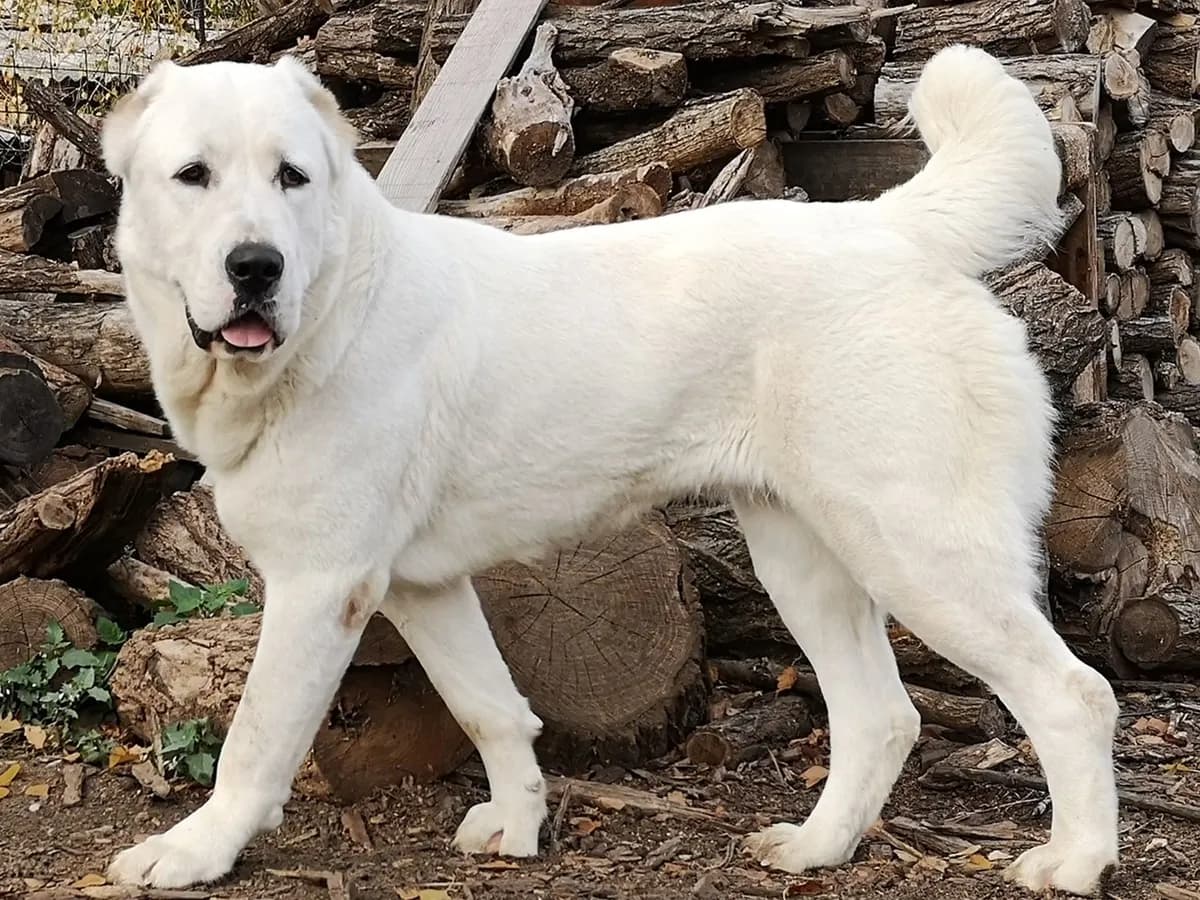
Photo: Halalosirambankiskecskek, CC BY-SA 4.0, via Wikimedia Commons