

Most important facts
- Group
- Pastoral
- Size
- Giant
- Weight
- 40–60 kg
- Lifespan
- 12–14 years
- Coat
- Short, dense
- Energy
- Moderate
- Height
- 71–81 cm
- Colours
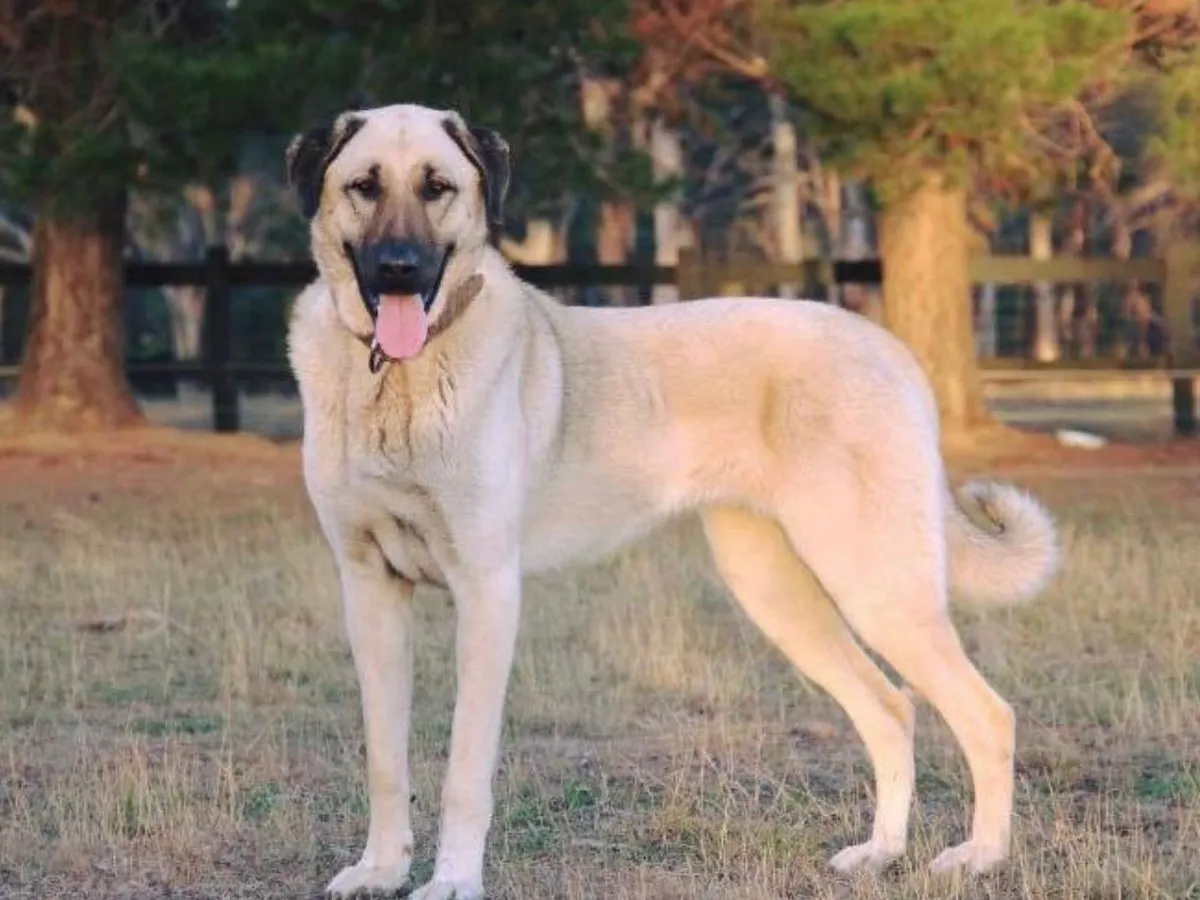
- Pale fawn to steel grey with black mask
- Shedding
- Moderate
- Est. feeding cost
- ~£2.10 a day
- Gear to consider
- Giant-breed orthopaedic bed, robust harness and lead sized for a large, powerful dog, slow-feeder bowl
Typical dry food, adult
About the Turkish Kangal
The Turkish Kangal has guarded flocks against wolves and bears on the Anatolian plateau for centuries, centred on the Sivas region, and Turkey regards the breed as a national treasure, at times restricting its export. Its measured, hold-your-ground guarding style has found modern work abroad, protecting livestock in cheetah conservation projects in Namibia so that farmers no longer shoot the cats.
Bred over centuries in central Turkey to guard flocks against wolves and bears, the Kangal is calm, watchful and impressively self-possessed for such a powerful dog. With its own family it is typically affectionate and steady, but it stays an independent thinker who makes its own decisions and does not look to a handler for them.
That independence, paired with a strong instinct to guard territory, means the Kangal is naturally reserved with strangers, and early, ongoing socialisation is essential to help it distinguish everyday visitors from genuine threats. Its size and protective instincts mean training needs to be consistent and started young, ideally with an owner experienced in large, strong-willed breeds.
Common health conditions
Things Turkish Kangal owners commonly watch for. Guidance, not veterinary advice.
Hip and elbow dysplasia
Common in giant, fast-growing breeds. Feed a controlled-growth large-breed puppy food and avoid excess weight to protect developing joints.
Gastric dilatation-volvulus (bloat)
Deep-chested breeds like the Kangal are at higher risk. Feed smaller meals through the day and hold off hard exercise either side of them.
Entropion
An inherited eyelid condition where the lid rolls inward, irritating the eye. It's usually corrected surgically once the dog is fully grown.
Hypothyroidism
Weight gain in middle age, along with low energy, can point to an underactive thyroid. Review diet and body condition alongside veterinary bloodwork if suspected.
Feeding a Turkish Kangal
Kangals are a giant breed, and rapid early growth can stress developing hips and elbows. A puppy food made for large breeds, with calcium and calories kept in check, does the job a standard formula cannot. Adults have a hearty appetite in keeping with their size, and portions should be judged against body condition rather than a one-size-fits-all scoop.
Because the Kangal is deep-chested, feeding practices that reduce bloat risk matter as much as the food itself. Give two or three smaller meals through the day rather than one large sitting, use a slow-feeder bowl to stop hurried gulping, and rest either side of exercise. Expect food costs to be substantial simply due to bodyweight.
Every dog is different — weight, age and activity all shift what a Turkish Kangal needs. The turns these breed tendencies into a shortlist matched to your dog’s age, size, budget and needs.
Typical adult weight
40–60 kg
Est. daily calories
1,340–2,410 kcal
A broad guide for an average-activity adult in good body condition — not veterinary advice. Real needs vary with age, neutering, activity, health and body condition, so no two Turkish Kangals eat exactly the same. Get a personalised estimate or estimate feeding costs.


- Per day
- ~£2.10
- Per month
- ~£64
- Per year
- ~£767
A broad typical monthly budget guide, not a live price quote. Food format, calorie density, pack size and retailer pricing all change the real cost.
Find the right food for your Turkish Kangal
Foods ranked to your dog
Answer a few quick questions and the Food Finder ranks foods to your Turkish Kangal by score, price, life stage and fit.
Breed at a glance
- Exercise needs8/10
- Appetite8/10
- Trainability5/10
- Good with children6/10
- Shedding6/10
- Tolerates being alone7/10
The good & the worth-knowing
The good
- Fiercely devoted guardian of family, home and livestock once a bond forms
- Calm, dignified and self-controlled temperament indoors despite an imposing size
- A naturally hardy breed with few exaggerated features and a robust constitution
Worth knowing
- Demands a confident, experienced owner and wide early socialisation
- Requires a lot of space, with a large secure garden or rural setting suiting it far better than town life
- Strong guarding instincts mean visitors, other dogs and unfamiliar children need careful management
Best matched accessories
All accessoriesThe collections that suit the breed, judged by the same independent standard.

Common owner questions
How much should I feed a Kangal?
Set portion sizes by the individual dog's age, weight and activity, since Kangals vary widely in size and a generic guide won't fit. Feeding to maintain a lean, visible waist and easily felt ribs matters more than hitting a fixed daily total, and our Food Finder can help match a diet to your dog.
Is the Kangal a good family dog?
Kangals can be devoted and protective towards their own family, including children they're raised with, but they are naturally reserved with strangers and need considerable space and experienced handling. They suit rural, secure homes better than typical suburban settings.
How much exercise does a Kangal need?
Plan for at least two hours of exercise a day, ideally with room to move about freely and less time on repetitive lead walks. These are working guardians bred to cover large territories.
Does the Kangal shed a lot?
Yes, this is a double-coated breed that sheds year-round with heavier seasonal moults. Regular brushing a few times a week keeps loose hair under control and the coat in good condition.
Similar breeds
Photo: Kangalshepherddog, CC BY-SA 4.0, via Wikimedia Commons