

Most important facts
- Group
- Pastoral
- Size
- Giant
- Weight
- 40–54 kg
- Lifespan
- 10–12 years
- Coat
- Thick
- Energy
- Low
- Height
- 65–80 cm
- Colours
- White, plain or with badger markings
- Shedding
- Heavy
- Est. feeding cost
- ~£2.05 a day
- Gear to consider
- Orthopaedic dog bed, slow-feeder bowl, de-shedding grooming tools
Typical dry food, adult
About the Pyrenean Mountain Dog
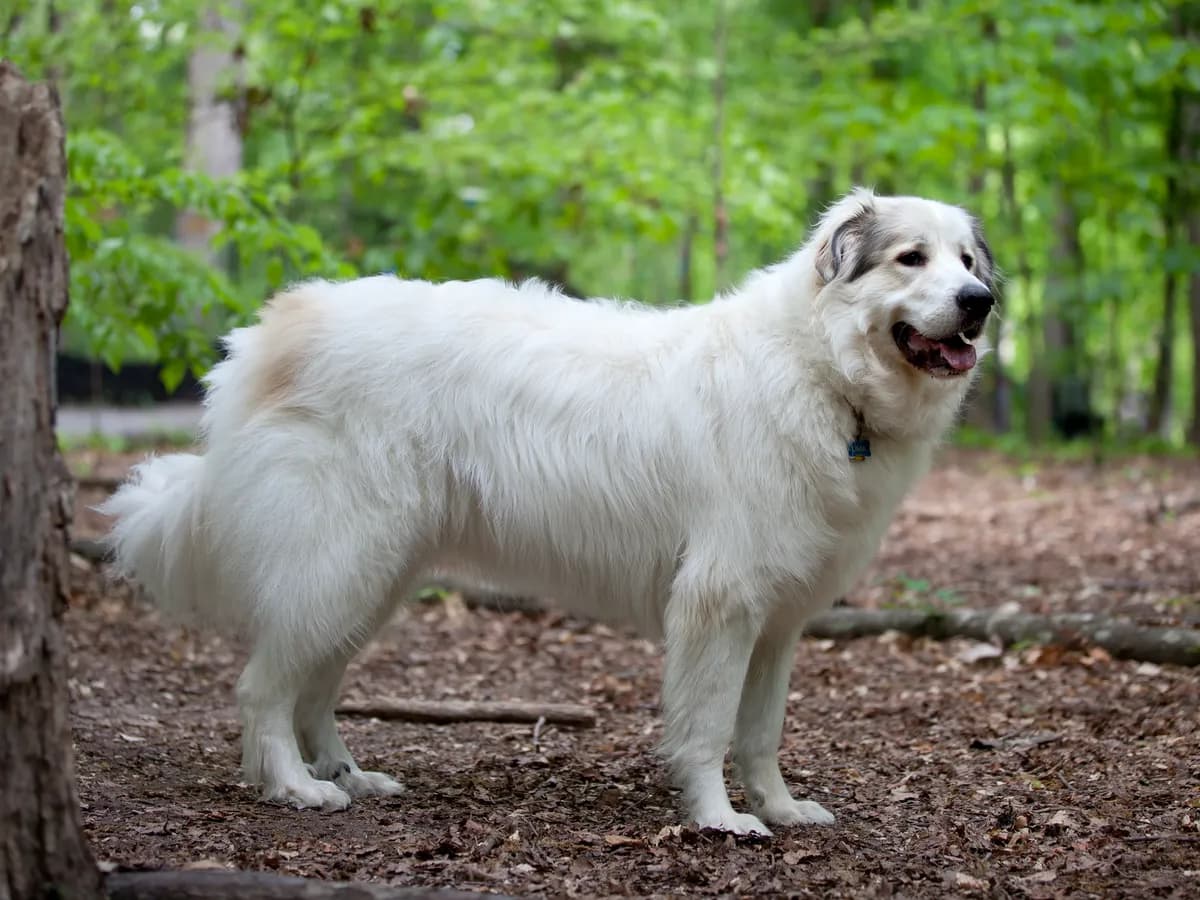
The Pyrenean Mountain Dog, known in France as the Patou, guarded flocks against wolves and bears on the high pastures of the Pyrenees for many centuries, working alone through the mountain nights. Louis XIV's court took the breed up in the seventeenth century, and it was declared the Royal Dog of France. Working Patous still protect flocks in the Pyrenees today.
Bred as an independent livestock guardian rather than a biddable working dog, the Pyrenean Mountain Dog is naturally calm, dignified and watchful, forming a deep bond with its family while remaining reserved with strangers. They are gentle and patient around children and move through the day at their own unhurried pace, suiting a settled household.
That independence, honed over generations of working alone at night, means they think for themselves and are not always quick to follow instructions, so early, consistent, reward-based training matters. They can be vocal after dark, a habit rooted in guarding instinct, and their sheer size means good manners around food and doors need teaching early.
Common health conditions
Things Pyrenean Mountain Dog owners commonly watch for. Guidance, not veterinary advice.
Hip and elbow dysplasia
A common orthopaedic issue in giant breeds. Feed puppies for controlled growth and keep adults at a healthy weight to protect the joints.
Gastric dilation-volvulus (bloat)
A life-threatening emergency more likely in deep-chested giants. Feed smaller, more frequent meals and keep calm periods either side of eating.
Osteosarcoma (bone cancer)
Diagnosed more frequently in large and giant breeds. Have any new lameness or swelling checked by a vet promptly.
Entropion
An inward-rolling eyelid that can irritate the cornea. Ask your vet to check the eyes at routine appointments.
Patellar luxation
The kneecap can come out of place. Keep weight in check to reduce strain on the joint alongside any veterinary management.
Feeding a Pyrenean Mountain Dog
As a giant breed, the Pyrenean Mountain Dog needs a slow, controlled growth rate as a puppy. A large-breed puppy food with regulated calcium and calorie density helps bones and joints develop at a steady pace and reduces the risk of problems such as hip dysplasia, already a known concern. Overfeeding a fast-growing giant puppy does far more harm than good.
Adults are typically calmer than their size suggests, so match portions to actual activity and body condition rather than weight alone, checking that ribs are easily felt. Because they are deep-chested and prone to bloat, feed two or more smaller meals with rest around mealtimes. Added joint-support nutrients are worth considering.
Every dog is different — weight, age and activity all shift what a Pyrenean Mountain Dog needs. The turns these breed tendencies into a shortlist matched to your dog’s age, size, budget and needs.
Typical adult weight
40–54 kg
Est. daily calories
1,340–1,950 kcal
A broad guide for an average-activity adult in good body condition — not veterinary advice. Real needs vary with age, neutering, activity, health and body condition, so no two Pyrenean Mountain Dogs eat exactly the same. Get a personalised estimate or estimate feeding costs.


- Per day
- ~£2.05
- Per month
- ~£62
- Per year
- ~£749
A broad typical monthly budget guide, not a live price quote. Food format, calorie density, pack size and retailer pricing all change the real cost.
Find the right food for your Pyrenean Mountain Dog
Foods ranked to your dog
Answer a few quick questions and the Food Finder ranks foods to your Pyrenean Mountain Dog by score, price, life stage and fit.
Breed at a glance
- Exercise needs5/10
- Appetite7/10
- Trainability4/10
- Good with children8/10
- Shedding9/10
- Tolerates being alone6/10
The good & the worth-knowing
The good
- Gentle, patient and protective with family, including children
- Calm, dignified temperament that is not highly demanding indoors
- Naturally watchful, making them a reassuring presence around the home
Worth knowing
- Heavy, near-constant shedding with a big seasonal coat blow needing regular brushing
- An independent, watchful nature that can make training slower than with biddable breeds
- Large size brings higher food, medication and veterinary costs, plus a need for space
Best matched accessories
All accessoriesThe collections that suit the breed, judged by the same independent standard.

Common owner questions
How much should I feed a Pyrenean Mountain Dog?
Feed to body condition and not a fixed amount. You should be able to feel the ribs easily without seeing them. Puppies need a large-breed formula fed to a controlled growth curve, and adults need less per kilo than smaller breeds. Our Food Finder can help match a diet to their life stage.
Are Pyrenean Mountain Dogs prone to bloat?
A deep chest raises the risk of gastric dilation-volvulus, a medical emergency. Sensible precautions include splitting the day's food across two or three meals, using a slow-feeder bowl for gulpers, and avoiding vigorous exercise straight after eating.
How much exercise does a Pyrenean Mountain Dog need?
Around an hour a day of steady walking is usually enough. They are not a high-energy breed and can overheat in warm weather given their thick coat. Limit a puppy's exercise further while joints and growth plates develop.
Do they shed a lot?
Yes. The dense double coat sheds year-round with a heavier seasonal blow, so regular brushing several times a week is needed to manage loose hair and prevent matting, particularly around the neck and britches.