
Most important facts
- Group
- Working
- Size
- Giant
- Weight
- 50–69 kg
- Lifespan
- 8–10 years
- Coat
- Dense
- Energy
- Moderate
- Height
- 66–71 cm
- Colours
- Black, brown or Landseer white and black
- Shedding
- Heavy
- Est. feeding cost
- ~£2.28 a day
- Gear to consider
- Slow-feeder or puzzle bowl, undercoat rake/deshedding tool, orthopaedic bed
Typical dry food, adult
About the Newfoundland
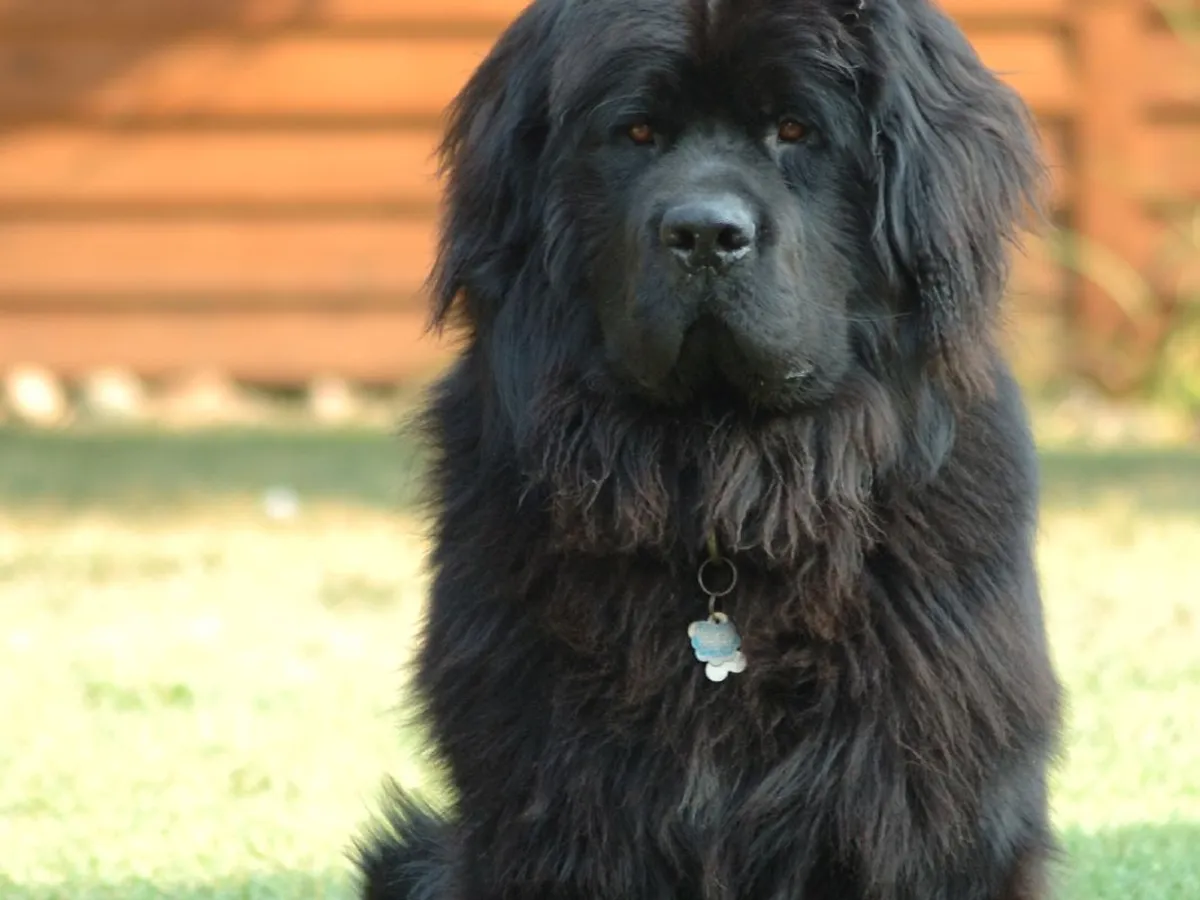
The Newfoundland was developed by fishermen on the island it is named for, hauling nets, pulling carts and plucking people from the icy North Atlantic thanks to webbed feet and a lifeguard's instinct. Tales of its rescues made it a Victorian favourite, immortalised in Landseer's paintings and as Nana, the canine nurse in Peter Pan. Working water-rescue Newfoundlands still serve with coastguards in Italy and France today.
Newfoundlands are gentle giants, calm, patient and thoroughly good-natured, with a devotion to family that has earned them a reputation as one of the most trustworthy breeds around children. They're slow to mature, both physically and mentally, and tend to be biddable and eager to please, though early socialisation and basic training still matter given the size involved.
Newfoundlands are rarely fussy and are often steady, enthusiastic eaters, which combined with their size means overfeeding is easy to miss until weight has already strained the joints. Their calm temperament means exercise needs are moderate relative to their bulk, so match portions to actual activity rather than sheer size.
Common health conditions
Things Newfoundland owners commonly watch for. Guidance, not veterinary advice.
Hip and elbow dysplasia
Joint laxity that leads to arthritis over time. Puppies should grow at a controlled rate and adults should stay lean, which keeps load off the joints.
Gastric Dilatation-Volvulus (bloat)
A life-threatening twisting of the stomach seen more often in deep-chested giants. Vigorous exercise around mealtimes is best avoided, and the day's food is better given as two or three smaller meals.
Subvalvular Aortic Stenosis (SAS)
An inherited narrowing below the aortic valve that can restrict blood flow from the heart. Ask breeders to show cardiac screening certificates.
Cystinuria
An inherited disorder causing cystine bladder or kidney stones. A DNA test is available, and affected dogs may need a tailored diet to manage stone formation.
Feeding a Newfoundland
A large-breed puppy formula that controls the rate of growth suits Newfoundland puppies. Rapid growth and excess calcium are linked to a higher risk of hip and elbow dysplasia in giants. Growth can take up to two years, so patience with portions pays off in sounder joints.
As adults, Newfoundlands don't need huge calorie intakes relative to their weight, so regular hands-on body condition checks under that thick coat catch weight gain early. The deep chest brings bloat risk, so keep things calm either side of mealtimes and serve the food as two or three smaller meals. Discuss joint-support nutrients with your vet, and dogs with a history of cystinuria may need a urinary-supportive diet.
Every dog is different — weight, age and activity all shift what a Newfoundland needs. The turns these breed tendencies into a shortlist matched to your dog’s age, size, budget and needs.
Typical adult weight
50–69 kg
Est. daily calories
1,580–2,680 kcal
A broad guide for an average-activity adult in good body condition — not veterinary advice. Real needs vary with age, neutering, activity, health and body condition, so no two Newfoundlands eat exactly the same. Get a personalised estimate or estimate feeding costs.

- Per day
- ~£2.28
- Per month
- ~£69
- Per year
- ~£832
A broad typical monthly budget guide, not a live price quote. Food format, calorie density, pack size and retailer pricing all change the real cost.
Find the right food for your Newfoundland
Foods ranked to your dog
Answer a few quick questions and the Food Finder ranks foods to your Newfoundland by score, price, life stage and fit.
Breed at a glance
- Exercise needs5/10
- Appetite8/10
- Trainability7/10
- Good with children9/10
- Shedding8/10
- Tolerates being alone4/10
The good & the worth-knowing
The good
- Gentle, patient temperament, especially around children
- Strong natural swimming ability and a history of water rescue work
- Calm, loyal and devoted companion once mature

Worth knowing
- Heavy shedding, drooling and a coat that needs regular attention
- A large, food-motivated appetite that makes weight gain easy to miss under the coat
- Predisposition to joint, heart and urinary conditions that call for screening and careful feeding
Best matched accessories
All accessoriesThe collections that suit the breed, judged by the same independent standard.
Common owner questions
How much exercise does a Newfoundland need?
Around an hour a day as an adult is typical, and many enjoy swimming as a joint-friendly alternative to walking. Puppies need exercise built up gradually to spare developing joints.
How much should I feed a Newfoundland?
Feed to body condition rather than a fixed amount, since a heavy coat can hide weight gain, and check by hand regularly. Splitting daily food into two or three meals is generally recommended for deep-chested breeds. Our Food Finder can match portion guidance to a Newfoundland's weight and life stage.
Are Newfoundlands prone to bloat?
Yes. Gastric dilatation-volvulus is a medical emergency, and this large, deep-chested breed is at raised risk of it. Feed smaller, more frequent meals, avoid vigorous activity straight after eating, and know the warning signs so you can seek urgent care.
Are Newfoundlands good with children?
Yes, they're well known for being patient and gentle with children, which is part of their nanny dog reputation. As with any giant breed, time with small children should still be supervised simply because of the dog's size.
Similar breeds
Photo: Flickr user DanDee Shots, CC BY 2.0, via Wikimedia Commons