


Most important facts
- Group
- Working
- Size
- Giant
- Weight
- 45–77 kg
- Lifespan
- 7–9 years
- Coat
- Long, dense
- Energy
- Moderate
- Height
- 65–80 cm
- Colours
- Lion yellow, red or sand with black mask
- Shedding
- Heavy
- Est. feeding cost
- ~£2.27 a day
- Gear to consider
- Raised slow-feeder bowl, orthopaedic bed, undercoat rake or de-shedding brush
Typical dry food, adult
About the Leonberger
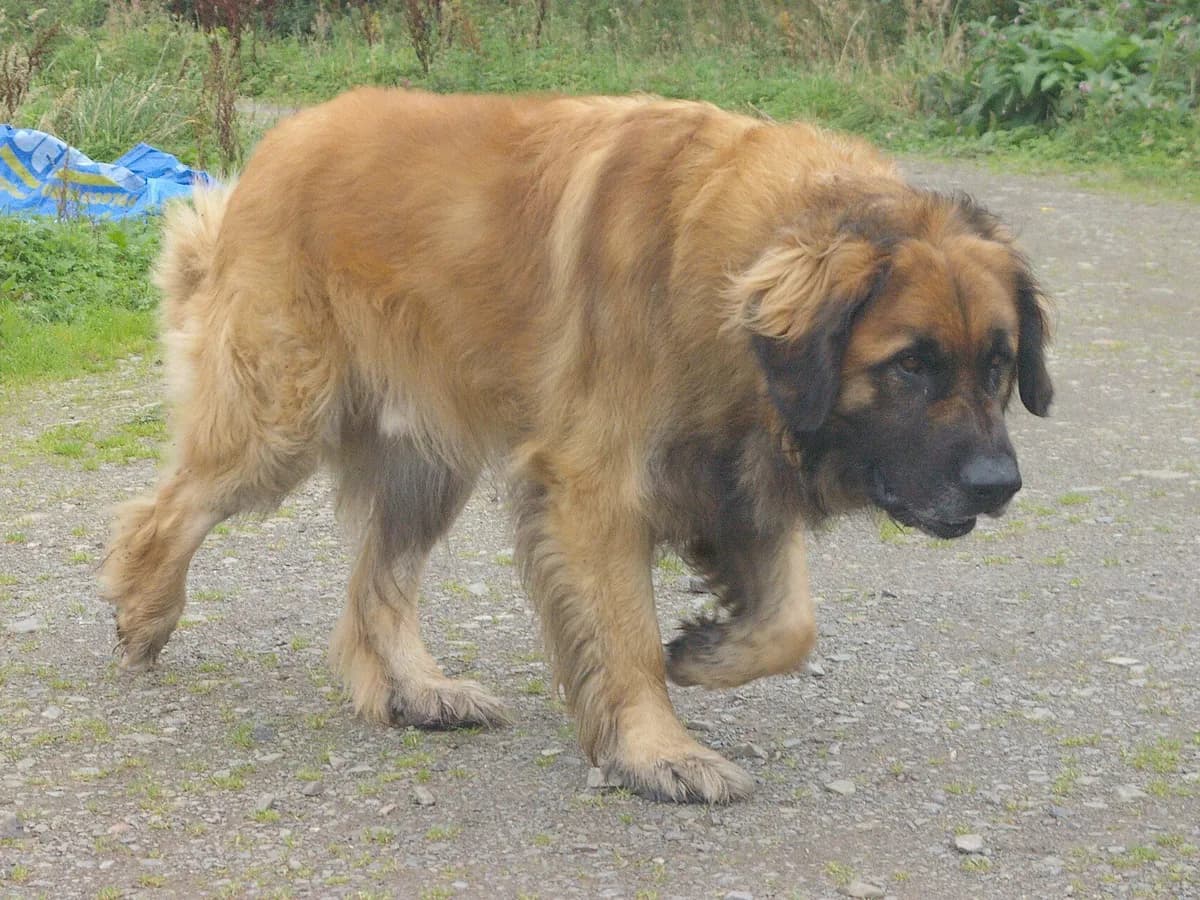
The Leonberger was created in the 1840s by Heinrich Essig, a councillor and dog dealer in the German town of Leonberg. He blended Newfoundland, St Bernard and Pyrenean Mountain Dog stock, reputedly to produce a dog resembling the lion on the town's crest. The breed graced European royal households before both world wars nearly wiped it out, and every modern Leonberger descends from the handful of dogs that survived.
Leonbergers were bred as versatile farm and water-rescue dogs, and it shows in their easy-going, unflappable nature. Their love of water rarely fades either. They are typically gentle and patient with children, and rarely aggressive. They are sociable with visitors and other dogs too, though their sheer size means basic manners and recall need to be solid from puppyhood.
Leonbergers thrive on being included in family life, not left to their own devices, and separation can be genuinely difficult for them. Mealtimes and calm, consistent daily routines build structure and confidence, alongside training that suits their intelligent but sensitive character.
Common health conditions
Things Leonberger owners commonly watch for. Guidance, not veterinary advice.
Hip and elbow dysplasia
Joint laxity that can lead to early arthritis. Keep a Leonberger lean throughout life to take real load off the joints.
Gastric dilatation-volvulus (bloat)
A deep, broad chest makes this breed a higher-risk candidate for this life-threatening emergency. Feed smaller meals more often, use a slow-feeder bowl, and rest either side of eating.
Leonberger polyneuropathy (LPN)
An inherited nerve condition seen in the breed, causing exercise intolerance, a changed bark or an unsteady gait. Ask about screening, and flag any new weakness to a vet promptly.
Osteosarcoma
Bone cancer occurs more often in giant breeds than average. Keep weight healthy, and have any new lameness or swelling checked quickly.
Feeding a Leonberger
A dog of this size needs a substantial daily ration, but guesswork with portions is a real risk in a breed prone to hip and elbow dysplasia and to bloat. A large-breed complete food, weighed out and split across two or more meals, supports steadier digestion and a more even rate of growth in puppies, and the smaller meals also lower bloat risk.
Keeping an adult Leonberger lean, with ribs easily felt but not seen, is one of the most effective things an owner can do, since every extra kilogram adds meaningful load to hard-working hips and elbows. A diet with joint-support nutrients, alongside steady rather than rapid puppy growth, gives this giant breed the best start.
Every dog is different — weight, age and activity all shift what a Leonberger needs. The turns these breed tendencies into a shortlist matched to your dog’s age, size, budget and needs.
Typical adult weight
45–77 kg
Est. daily calories
1,460–2,910 kcal
A broad guide for an average-activity adult in good body condition — not veterinary advice. Real needs vary with age, neutering, activity, health and body condition, so no two Leonbergers eat exactly the same. Get a personalised estimate or estimate feeding costs.
- Per day
- ~£2.27
- Per month
- ~£69
- Per year
- ~£828
A broad typical monthly budget guide, not a live price quote. Food format, calorie density, pack size and retailer pricing all change the real cost.
Find the right food for your Leonberger
Foods ranked to your dog
Answer a few quick questions and the Food Finder ranks foods to your Leonberger by score, price, life stage and fit.
Breed at a glance
- Exercise needs7/10
- Appetite8/10
- Trainability7/10
- Good with children9/10
- Shedding9/10
- Tolerates being alone3/10
The good & the worth-knowing
The good
- Gentle, patient temperament that suits calm family life
- A very large dog that is sociable, biddable and rarely aggressive
- Versatile working heritage, including natural swimming ability
Worth knowing
- A relatively short lifespan for the devotion this breed asks of its owners
- Heavy, near-constant shedding with seasonal coat blows needing dedicated grooming time
- Giant-breed running costs, as food, bedding, vet treatment and travel space all scale up
Best matched accessories
All accessoriesThe collections that suit the breed, judged by the same independent standard.
Common owner questions
How much should I feed a Leonberger puppy?
Giant-breed puppies need a food formulated to slow their growth down and never to maximise it, since fast weight gain is linked to joint problems later. Follow a large-breed puppy feeding guide, weigh meals out on scales, and check growth with a vet at regular weigh-ins.
Is bloat a real risk with this breed?
Yes, deep-chested giants like the Leonberger are more prone to gastric dilatation-volvulus. Feeding two or three smaller meals, using a slower-paced feeding bowl, and avoiding vigorous exercise around eating are all sensible, low-effort precautions.
How much exercise does a Leonberger need?
Adults generally do well with a couple of hours a day, split across walks and free time, but build a puppy's exercise up gradually to protect developing joints. Matching food to actual activity keeps body condition on track through the seasons.
Why does my Leonberger shed so much?
The dense double coat blows out heavily at least twice a year, and regular brushing with an undercoat tool keeps shedding manageable. The right food for skin and coat health can make a visible difference between blows.