


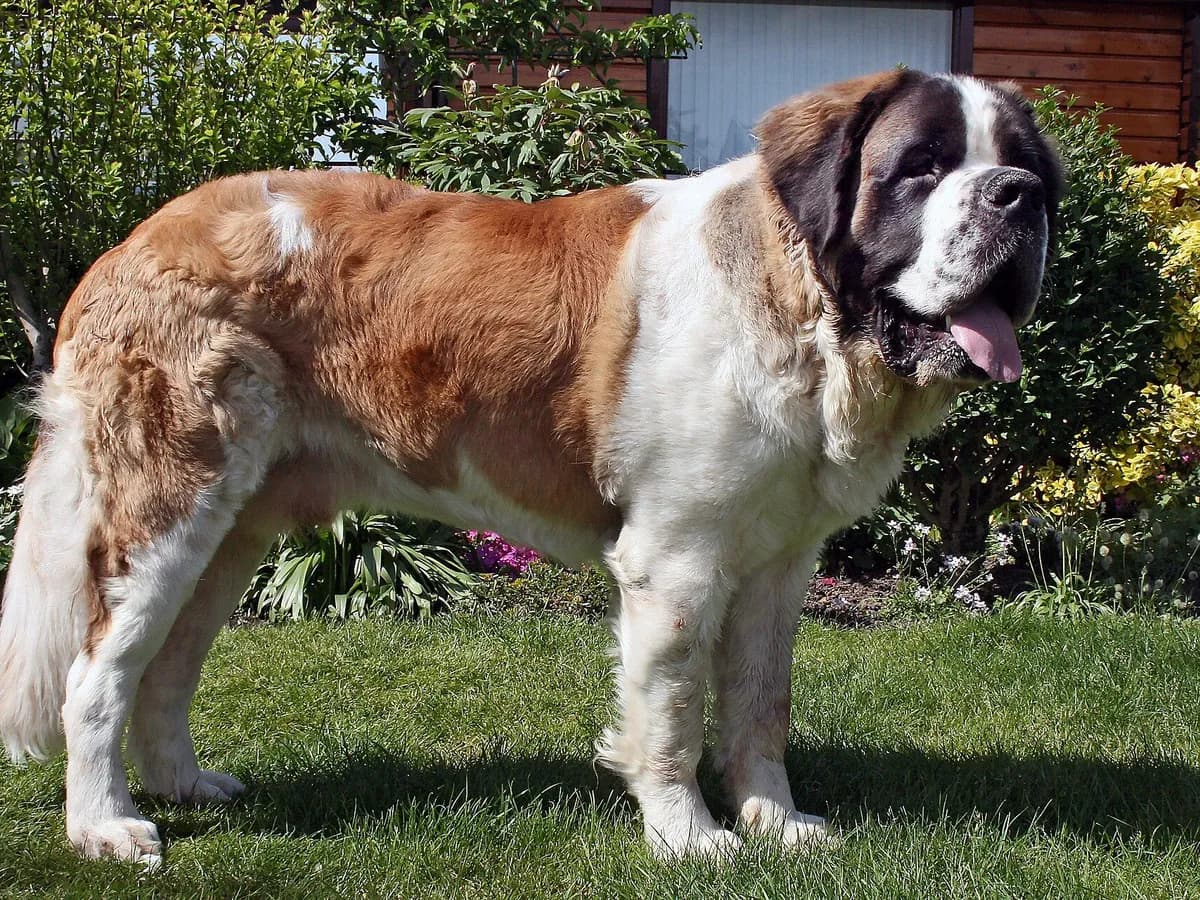

Most important facts
- Group
- Working
- Size
- Giant
- Weight
- 54–81 kg
- Lifespan
- 8–10 years
- Coat
- Dense double coat
- Energy
- Low
- Height
- 70–90 cm
- Colours
- Red or brindle with white
- Shedding
- Heavy
- Est. feeding cost
- ~£2.39 a day
- Gear to consider
- Large orthopaedic bed, slow-feeder or puzzle bowl, heavy-duty harness and lead
Typical dry food, adult
About the Saint Bernard
Monks at the Great St Bernard Hospice bred the Saint Bernard, high on the Alpine pass between Switzerland and Italy. The dogs found travellers lost in snow and led rescue parties to them. The most celebrated, Barry, is credited with saving some forty lives in the early 1800s. The brandy barrel, sadly, was a painter's invention rather than standard equipment.
Saint Bernards are gentle, patient and thoroughly good-natured, with a rescue history that bred a calm, steady temperament around people, including children. They are watchful and will alert to visitors, but true aggression is rare and unwanted in a well-bred, properly socialised dog of this size.
The breed is slow to mature, often not settling into adult temperament until two or three years old. It is eager to please but can also be strong-willed, so early, consistent training matters given the size involved. A predictable daily routine, including regular mealtimes, suits their placid nature and helps avoid anxiety when routines are disrupted.
Common health conditions
Things Saint Bernard owners commonly watch for. Guidance, not veterinary advice.
Hip and elbow dysplasia
This large, fast-growing breed is prone to malformed joints. Feed a controlled-calorie giant-breed puppy diet to manage growth rate and reduce strain.
Gastric dilatation-volvulus (bloat)
Deep-chested dogs like the Saint Bernard are at higher risk. Feed two or three smaller meals a day, and keep the hour around each meal calm.
Dilated cardiomyopathy
A heart condition where the muscle weakens and enlarges, seen more often in the breed. Keep up regular vet checks to catch it early.
Osteosarcoma
A bone cancer that occurs more frequently in giant breeds. Keep the dog at a healthy weight and have any new lameness checked promptly.
Entropion
An eyelid abnormality causing the lid to roll inward. Ask the vet to check the eyes at routine appointments.
Feeding a Saint Bernard
Saint Bernards grow extremely quickly through their first 12 to 18 months, and growing too fast strains developing hips and elbows. A giant-breed puppy food that holds calcium and calories in check is important. Base portions on the puppy's current weight and growth curve, with regular weigh-ins to check progress.
Adults need a substantial amount of food simply for their bulk, though their exercise needs are only moderate. This breed will readily overeat, so judge portions against body condition and not appetite. The deep chest brings a known bloat risk. Two or three smaller meals cover the day. Use a slow-feeder bowl and keep things restful around mealtimes.
Every dog is different — weight, age and activity all shift what a Saint Bernard needs. The turns these breed tendencies into a shortlist matched to your dog’s age, size, budget and needs.
Typical adult weight
54–81 kg
Est. daily calories
1,670–2,650 kcal
A broad guide for an average-activity adult in good body condition — not veterinary advice. Real needs vary with age, neutering, activity, health and body condition, so no two Saint Bernards eat exactly the same. Get a personalised estimate or estimate feeding costs.

- Per day
- ~£2.39
- Per month
- ~£73
- Per year
- ~£874
A broad typical monthly budget guide, not a live price quote. Food format, calorie density, pack size and retailer pricing all change the real cost.
Find the right food for your Saint Bernard
Foods ranked to your dog
Answer a few quick questions and the Food Finder ranks foods to your Saint Bernard by score, price, life stage and fit.
Breed at a glance
- Exercise needs5/10
- Appetite9/10
- Trainability6/10
- Good with children8/10
- Shedding8/10
- Tolerates being alone3/10
The good & the worth-knowing
The good
- Gentle, patient and tolerant with children
- Loyal, calm and devoted family companion
- Watchful and reassuring presence without unwarranted aggression

Worth knowing
- Enormous size brings high food, space, transport and veterinary costs
- Prone to serious joint, heart and cancer conditions typical of giant breeds
- Heavy shedder and a persistent drooler, meaning frequent grooming and cleaning
Best matched accessories
All accessoriesThe collections that suit the breed, judged by the same independent standard.

Common owner questions
How much should I feed a Saint Bernard?
Given their size, portions are large, but should always be judged against body condition rather than a generic chart. Ribs should be easy to feel but not see, with a visible waist from above. Our Food Finder can help match a suitable large-breed formula and starting portion.
Are Saint Bernards prone to bloat?
Yes. The deep chest raises their risk of gastric dilatation-volvulus, a serious emergency. Feed calmer, smaller meals, slow any gulping with a slow-feeder bowl and rest them after food. Treat a swollen abdomen or unproductive retching as an emergency.
Do Saint Bernards need a lot of exercise?
Not as much as their size suggests. An hour or so of walking and free play a day is usually enough once fully grown. As a giant breed, puppies need exercise carefully limited while bones and joints develop.
Why does my Saint Bernard drool and shed so much, and does it affect feeding?
Loose jowls mean drooling is a normal, near-constant feature, and the dense double coat sheds heavily, particularly twice a year. Neither is directly linked to diet, but a food supporting skin and coat helps keep shedding manageable, and clean water should always be available.