

Most important facts
- Group
- Crossbreed
- Size
- Large
- Weight
- 29–39 kg
- Lifespan
- 12–15 years
- Coat
- Wavy to curly
- Energy
- Moderate
- Height
- 41–56 cm
- Colours
- Black and white or grey
- Shedding
- Light
- Est. feeding cost
- ~£1.67 a day
- Gear to consider
- Slicker brush and dematting comb, no-pull harness, interactive slow-feeder bowl
Typical dry food, adult
About the Sheepadoodle
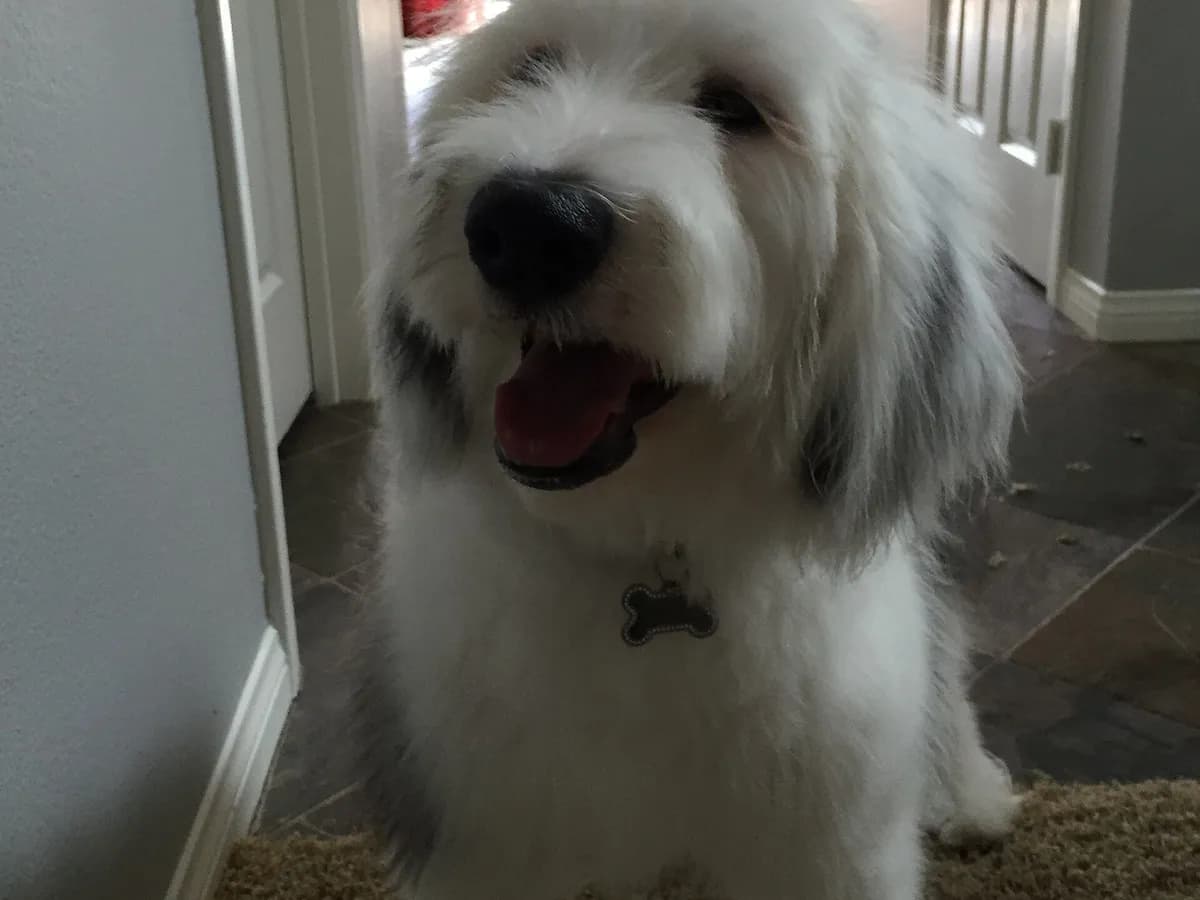
The Sheepadoodle crosses the Old English Sheepdog with the Poodle, reportedly first tried by the US Army in the 1960s in search of a military dog. The cross found its real calling decades later as a family companion in the doodle boom of the 2000s. Most UK Sheepadoodles use a Standard Poodle parent. It has no Kennel Club recognition, so size and coat vary between litters.
Sheepadoodles are typically affectionate, sociable and eager to please, pairing the Old English Sheepdog's gentle nature with the Poodle's sharp intelligence. They bond closely with their household and become quite people-focused, making early socialisation and alone-time training worthwhile investments.
Sheepadoodles thrive on company and mental engagement. Puzzle feeders and short training sessions around mealtimes combine feeding with the stimulation these dogs need. Without enough company or activity, some individuals develop separation anxiety or become boisterous, particularly as adolescents.
Common health conditions
Things Sheepadoodle owners commonly watch for. Guidance, not veterinary advice.
Hip dysplasia
Inherited from the Old English Sheepdog side. Ask to see hip scores in the parents and keep body condition lean to spare developing joints.
Progressive retinal atrophy (PRA)
An inherited eye condition seen in both parent breeds that gradually affects vision. Choose breeders who health-test for it.
Addison's disease
More commonly seen via the Poodle line, affecting the adrenal glands with vague signs like lethargy and appetite changes. Have any sudden loss of interest in food checked by a vet.
Ear infections
Long, floppy, often hairy ears trap moisture and wax. Check regularly and dry after wet walks, with a skin-supporting diet if allergies are also a factor.
Gastric dilatation-volvulus (bloat)
A risk in deep-chested, larger dogs like the Old English Sheepdog parent. Split measured portions across two meals. Vigorous exercise straight after eating is best avoided.
Feeding a Sheepadoodle
Most UK Sheepadoodles are first-generation crosses using a Standard Poodle, putting the adult at a medium-to-large size with a moderate energy requirement. A complete food with moderate protein and controlled fat suits most, with portions adjusted regularly against body condition, since the size range within the cross is wide.
Because hip dysplasia runs in the Old English Sheepdog line, a diet that supports joint health, with an appropriate calcium and phosphorus balance during the puppy growth phase, is worth prioritising. Given the ear infection tendency and skin sensitivity some individuals show, foods that support coat and skin condition pair sensibly with routine ear care.
Every dog is different — weight, age and activity all shift what a Sheepadoodle needs. The turns these breed tendencies into a shortlist matched to your dog’s age, size, budget and needs.
Typical adult weight
29–39 kg
Est. daily calories
1,050–1,750 kcal
A broad guide for an average-activity adult in good body condition — not veterinary advice. Real needs vary with age, neutering, activity, health and body condition, so no two Sheepadoodles eat exactly the same. Get a personalised estimate or estimate feeding costs.


- Per day
- ~£1.67
- Per month
- ~£51
- Per year
- ~£609
A broad typical monthly budget guide, not a live price quote. Food format, calorie density, pack size and retailer pricing all change the real cost.
Find the right food for your Sheepadoodle
Foods ranked to your dog
Answer a few quick questions and the Food Finder ranks foods to your Sheepadoodle by score, price, life stage and fit.
Breed at a glance
- Exercise needs6/10
- Appetite6/10
- Trainability8/10
- Good with children8/10
- Shedding3/10
- Tolerates being alone3/10
The good & the worth-knowing
The good
- Combines an affectionate, family-friendly temperament with above-average trainability
- Coat typically sheds less than a purebred Old English Sheepdog
- Generally sociable and good with children and other pets when well socialised

Worth knowing
- Grooming demands are high and unrelenting, with daily brushing to prevent matting
- Can be prone to separation anxiety, being a people-oriented cross
- Size and exercise needs mean it isn't a low-maintenance choice for a small home
Best matched accessories
All accessoriesThe collections that suit the breed, judged by the same independent standard.
Common owner questions
How much should I feed my Sheepadoodle?
It depends heavily on which size of Sheepadoodle you have, as the cross ranges from around 29 kg up to 39 kg or so. Feed to a lean body condition with a visible waist and easily felt ribs, adjusting every few weeks. Our Food Finder can suggest a starting point for your dog's actual weight.
Is the Sheepadoodle hypoallergenic?
No coat is truly hypoallergenic, but the Poodle-influenced coat typically sheds less than the Old English Sheepdog parent, which can help some allergy sufferers. It varies by dog, so spend time with the specific puppy first.
Do Sheepadoodles have sensitive stomachs?
Some individuals do show sensitivity, particularly around abrupt food changes, so make any transition gradual over a week or so. If loose stools or wind persist beyond a change of food, discuss a sensitive-stomach formula with your vet.
How much exercise does a Sheepadoodle need?
An adult typically needs an hour a day between walks and play, with mental stimulation just as important given the Poodle side's intelligence. Matching food to actual activity prevents weight gain that stresses vulnerable hips.