
Most important facts
- Group
- Terrier
- Size
- Small
- Weight
- 7.5–10 kg
- Lifespan
- 12–14 years
- Coat
- Short and harsh
- Energy
- High
- Height
- 33–40 cm
- Colours
- Black and tan
- Shedding
- Light
- Est. feeding cost
- ~£0.63 a day
- Gear to consider
- Slow-feeder bowl, secure harness with a sturdy long-line, tough earth-work-safe chew toys
Typical dry food, adult
About the Jagdterrier
The Jagdterrier was created in 1920s Germany by a group of hunters who wanted a terrier selected purely for working ability. They built from fell-type stock, with strict performance testing and no concessions to the show ring. The result is one of the most single-minded hunting terriers ever produced, still bred to working standards in Germany, and only rarely kept as a companion in Britain.
The Jagdterrier is tenacious and single-minded about work, developed specifically for hunting and going to ground. That drive doesn't switch off in a pet home. This is a dog that wants a job, and without one it will typically find its own, often involving digging, chasing or escaping. In the right hands it is an impressive, tireless little athlete.
Loyal and courageous with its own family, the Jagdterrier tends to be reserved with strangers and other animals, and its strong prey drive makes it a poor match for households with cats or small pets. Early socialisation and positive training from an experienced handler channel its intelligence into manageable behaviour.
Common health conditions
Things Jagdterrier owners commonly watch for. Guidance, not veterinary advice.
Patellar luxation
A dislocating kneecap can cause an intermittent skipping gait. Keep this energetic terrier lean and measure meals rather than free-feeding.
Primary lens luxation
The lens dislocates within the eye, and the fault is inherited. Treat any sudden eye pain, redness or cloudiness as a same-day veterinary emergency.
Periodontal (dental) disease
Small, densely toothed jaws are prone to tartar. Offer dental chews and appropriate chewing outlets, and brush regularly.
Ear infections
The semi-dropped ear can trap moisture and debris after wet or muddy outings. Check and dry the ears routinely, especially after water work.
Feeding a Jagdterrier
The Jagdterrier is compact but genuinely hard-working, and a dog doing real exercise, tracking or earth work burns noticeably more energy than its small size suggests. Working individuals often need a higher-calorie, higher-protein diet than a similar-sized companion breed. Pet-home Jagdterriers need portions watched carefully, as the breed packs on weight quickly when fed for work but living quietly.
The breed is compact and food-motivated, so weigh meals and let the waistline and rib cover set the amount. A joint-supportive formula is worth considering given the tendency towards patellar issues, and a slow-feeder bowl helps temper the fast, enthusiastic eating typical of terriers. Two meals a day suit the routine well.
Every dog is different — weight, age and activity all shift what a Jagdterrier needs. The turns these breed tendencies into a shortlist matched to your dog’s age, size, budget and needs.
Typical adult weight
7.5–10 kg
Est. daily calories
380–710 kcal
A broad guide for an average-activity adult in good body condition — not veterinary advice. Real needs vary with age, neutering, activity, health and body condition, so no two Jagdterriers eat exactly the same. Get a personalised estimate or estimate feeding costs.

- Per day
- ~£0.63
- Per month
- ~£19
- Per year
- ~£231
A broad typical monthly budget guide, not a live price quote. Food format, calorie density, pack size and retailer pricing all change the real cost.
Find the right food for your Jagdterrier
Foods ranked to your dog
Answer a few quick questions and the Food Finder ranks foods to your Jagdterrier by score, price, life stage and fit.
Breed at a glance
- Exercise needs9/10
- Appetite7/10
- Trainability5/10
- Good with children4/10
- Shedding3/10
- Tolerates being alone2/10
The good & the worth-knowing
The good
- Exceptionally courageous, tenacious working companion for an active, experienced owner
- Low-maintenance coat that needs minimal grooming
- Generally hardy and long-lived when kept fit and lean
Worth knowing
- Very strong prey drive, so not suited to households with cats, rabbits or small pets
- Independent, stubborn streak typical of working terriers, needing experienced handling
- High exercise and mental stimulation needs, becoming destructive if under-occupied
Best matched accessories
All accessoriesThe collections that suit the breed, judged by the same independent standard.
Common owner questions
How much exercise does a Jagdterrier need?
A great deal. This is a working terrier bred for stamina underground and in the field, and it typically needs well over an hour of varied, engaging exercise a day, plus scentwork or problem-solving. Under-exercised Jagdterriers dig, escape and destroy.
Is the Jagdterrier suitable for a first-time dog owner?
Generally no. Its intense prey drive and working-line stubbornness mean it does best with an experienced, terrier-savvy handler who can provide consistent training and enough outlet for that drive.
How do I stop my Jagdterrier gaining weight?
Weigh the food and never guess portions, and reassess quantities if the dog is less actively worked than a full working terrier. Feeding to visible body condition rather than a fixed daily amount is the most reliable approach, and our Food Finder can help match a diet to activity.
What sort of diet suits a Jagdterrier best?
A nutrient-dense diet with good protein suits genuinely active Jagdterriers, while a moderated, weight-control formula suits a quieter pet home. Because the breed can be prone to joint and dental issues, formulas supporting both are worth considering.
Similar breeds
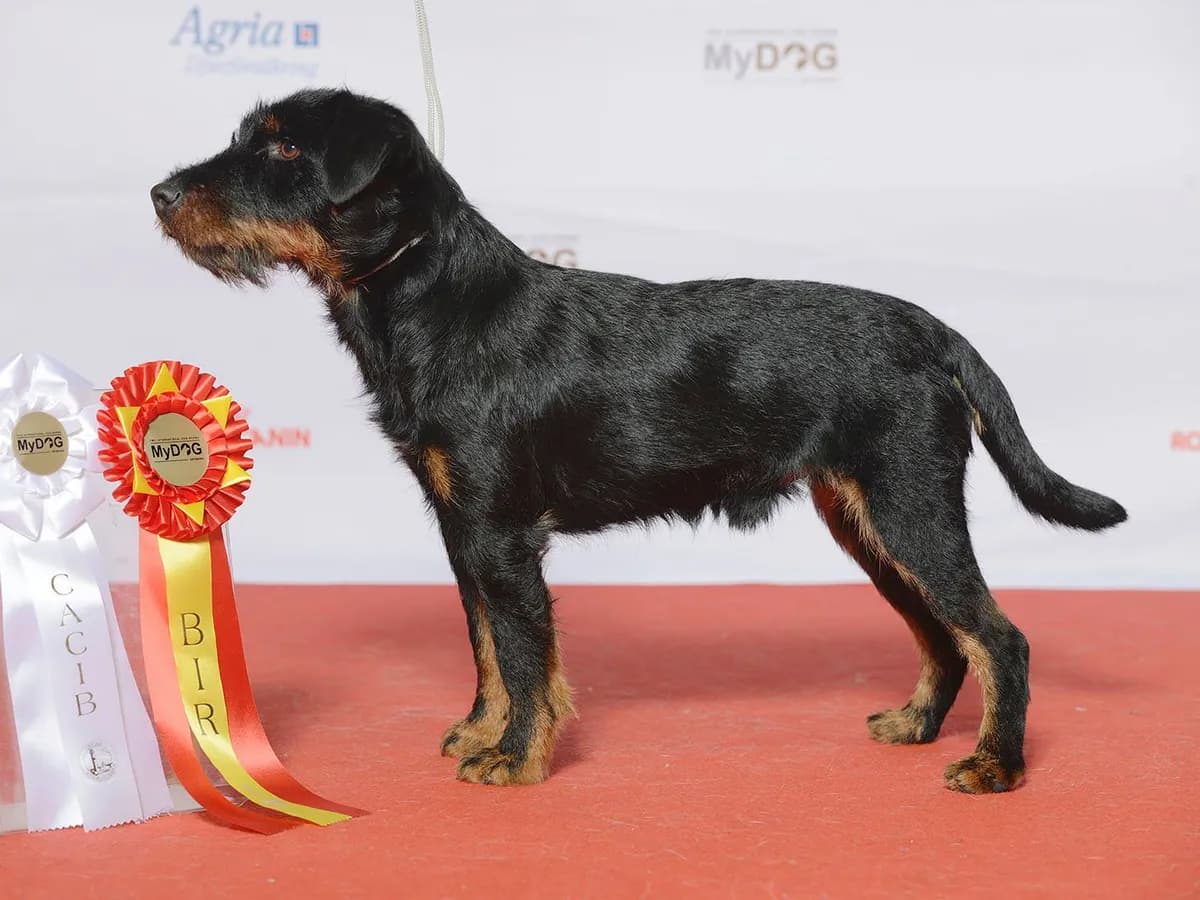
Photo: Svenska Mässan from Sweden, CC BY 2.0, via Wikimedia Commons