


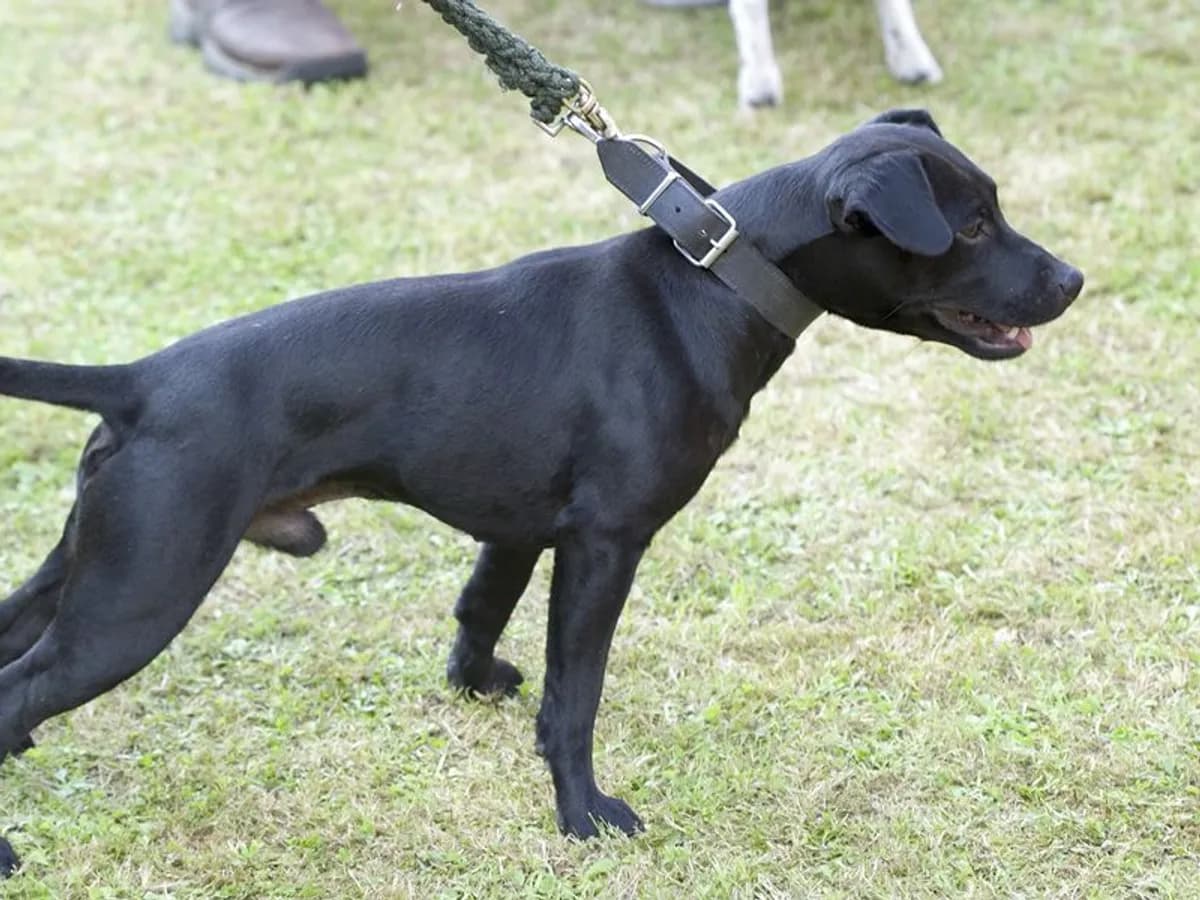

Most important facts
- Group
- Terrier
- Size
- Small
- Weight
- 5–8 kg
- Lifespan
- 12–15 years
- Coat
- Smooth
- Energy
- High
- Height
- 25–38 cm
- Colours
- Black, red, chocolate or black and tan
- Shedding
- Light
- Est. feeding cost
- ~£0.53 a day
- Gear to consider
- Slow-feeder bowl, tough chew-resistant toys, secure harness with a sturdy lead
Typical dry food, adult
About the Patterdale Terrier
The Patterdale Terrier takes its name from the village of Patterdale in the Lake District, where fell farmers needed a hard, compact terrier that could follow a fox into rock crevices no hound could reach. The modern type owes much to twentieth-century northern breeders such as Cyril Breay and Frank Buck. It is registered with working terrier clubs rather than the Kennel Club, and is still bred for work first.
The Patterdale is full of confidence and mischief. It was built to work fearlessly underground and carries that bold attitude into family life. They are affectionate and devoted, but they don't switch off easily, and a Patterdale without a job will readily invent one, usually involving digging or chasing.
That determination can make them a handful for a first-time owner. In their own household they are typically good with children, but a strong prey drive means real caution around other animals, from cats and small pets to livestock. A bored Patterdale is far more likely to scavenge, so consistent mealtimes and enough exercise keep behaviour and weight steady.
Common health conditions
Things Patterdale Terrier owners commonly watch for. Guidance, not veterinary advice.
Primary Lens Luxation (PLL)
The lens slips out of place in this inherited eye condition. Left untreated, it causes pain and vision loss. Choose DNA-tested parents, and treat sudden eye pain as urgent.
Obesity
Patterdales are food-motivated and often scavenge, so weight creeps on once working hours drop. Weigh food on scales and check body condition monthly by feel.
Atopic dermatitis and skin allergies
Chronic itching and ear infections can flare in some individuals. Feed a consistent protein source with added omega-3s alongside any vet-led treatment.
Hypothyroidism
An underactive thyroid can develop in middle age, showing as weight gain, lethargy or coat dulling despite normal feeding. Flag these changes to your vet for a blood test.
Feeding a Patterdale Terrier
Patterdales are compact but dense-muscled dogs bred to work all day across fell country, so calorie needs can look surprisingly high for their size, provided they're getting that exercise. Many pets live quieter lives than their working ancestors, so base portions on actual activity and adjust downward for a dog that walks rather than works.
This is a breed that will happily eat more than it needs, so keeping total daily intake under control matters more than the brand chosen. A complete diet with a clearly identified protein source, moderate fat and added omega-3s supports lean muscle and the skin. Weigh meals on scales and reassess body condition every few weeks.
Every dog is different — weight, age and activity all shift what a Patterdale Terrier needs. The turns these breed tendencies into a shortlist matched to your dog’s age, size, budget and needs.
Typical adult weight
5–8 kg
Est. daily calories
280–600 kcal
A broad guide for an average-activity adult in good body condition — not veterinary advice. Real needs vary with age, neutering, activity, health and body condition, so no two Patterdale Terriers eat exactly the same. Get a personalised estimate or estimate feeding costs.


- Per day
- ~£0.53
- Per month
- ~£16
- Per year
- ~£195
A broad typical monthly budget guide, not a live price quote. Food format, calorie density, pack size and retailer pricing all change the real cost.
Find the right food for your Patterdale Terrier
Foods ranked to your dog
Answer a few quick questions and the Food Finder ranks foods to your Patterdale Terrier by score, price, life stage and fit.
Breed at a glance
- Exercise needs9/10
- Appetite8/10
- Trainability5/10
- Good with children6/10
- Shedding3/10
- Tolerates being alone3/10
The good & the worth-knowing
The good
- Fiercely loyal and deeply bonded to their family
- Low-maintenance coat that needs minimal grooming, especially smooth-coated dogs
- Hardy, robust breed with comparatively few inherited health problems for its size

Worth knowing
- Strong prey drive makes off-lead recall unreliable around livestock, cats or small pets
- Needs a genuinely active, experienced owner willing to provide daily physical and mental work
- Can be vocal, diggy and quick to test boundaries if under-exercised
Best matched accessories
All accessoriesThe collections that suit the breed, judged by the same independent standard.


Common owner questions
How much exercise does a Patterdale Terrier need?
Most need at least an hour a day, and ideally two, split between a proper walk and off-lead time to run and sniff, plus mental work such as scent games. A tired Patterdale is easier to feed sensibly too.
Are Patterdale Terriers easy to train?
They're intelligent and quick to learn but strongly independent, having been bred to make split-second decisions underground without a handler. Positive, reward-based training with food or a favourite toy works far better than corrections, in short, engaging sessions.
How much should I feed a Patterdale Terrier daily?
There's no single figure, as it depends on weight, age and genuine exercise. Start from the feeding guide, weigh food on scales, and adjust every few weeks based on body condition. Our Food Finder can help narrow down a suitable option.
Do Patterdale Terriers get on with cats and other pets?
Their instinct to chase small, fast-moving animals was deliberately bred in, so they are rarely safe with cats or small pets unless raised together from a young age and supervised. That reflects working instinct, not a training failure.