


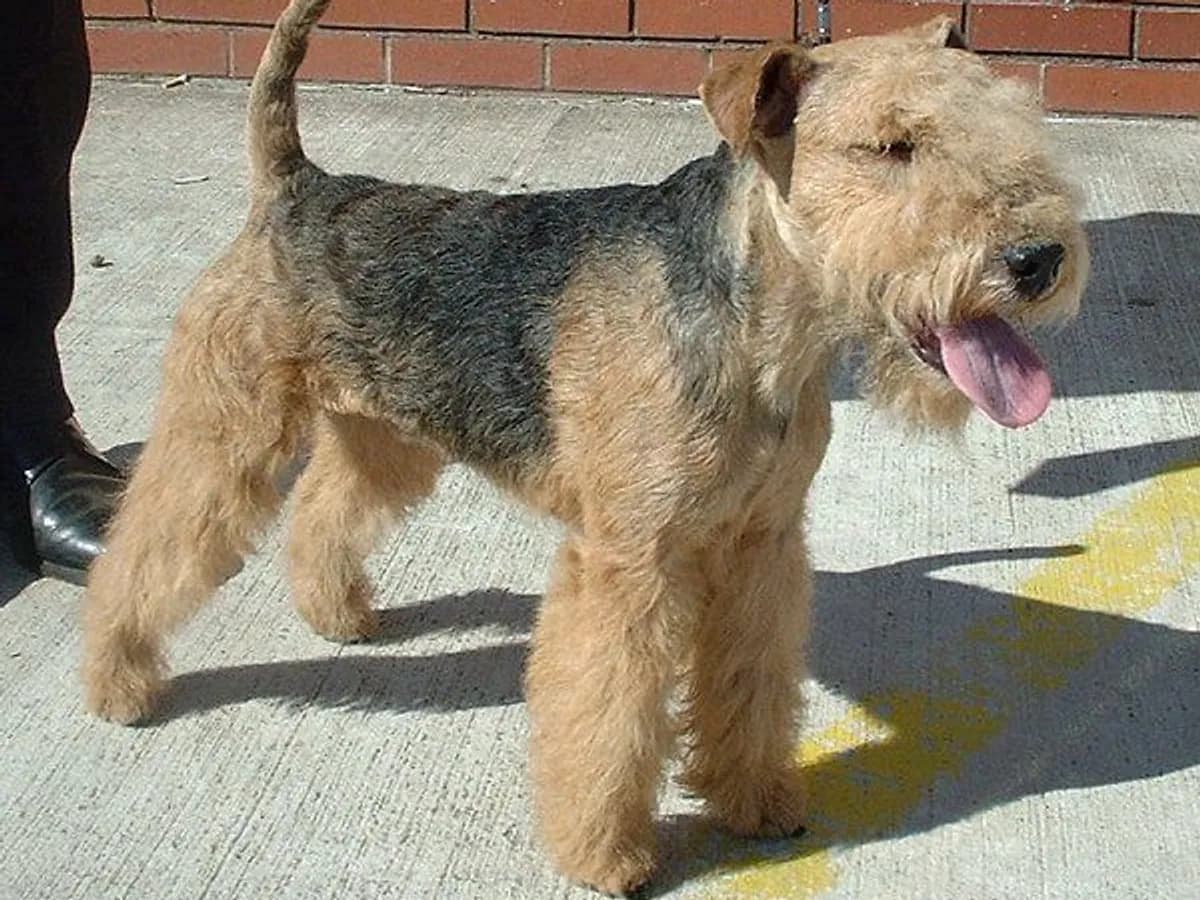

Most important facts
- Group
- Terrier
- Size
- Small
- Weight
- 7–8 kg
- Lifespan
- 12–16 years
- Coat
- Dense
- Energy
- Moderate
- Height
- 33–37 cm
- Colours
- Black and tan, red, wheaten or grizzle
- Shedding
- Light
- Est. feeding cost
- ~£0.60 a day
- Gear to consider
- Stripping comb or slicker brush, secure well-fitted harness, durable enrichment/chew toys
Typical dry food, adult
About the Lakeland Terrier
The Lakeland Terrier comes from the fells of the Lake District, where farmers kept game little terriers to run with the hounds and go to ground after the foxes that threatened lambs among the crags. It is one of the oldest of the working terrier types, hardened by generations of rough country and rougher weather. Today it is far less common than its bigger cousin the Airedale, but no less spirited.
Bred to work independently underground after foxes, the Lakeland Terrier is bold, intelligent and self-assured, with a strong prey drive owners need to plan around from day one. They are typically affectionate and loyal with their own household, but can be feisty with unfamiliar dogs and vocal with visitors without early socialisation. A well-socialised Lakeland is cheerful, plucky company.
Their independence and terrier grit make training more of a project than with naturally biddable breeds, so short, reward-based sessions work best. Use part of the measured daily ration as the training treats, not extras on top. Mental stimulation matters as much as physical exercise for keeping a Lakeland settled.
Common health conditions
Things Lakeland Terrier owners commonly watch for. Guidance, not veterinary advice.
Primary lens luxation
An inherited condition in which the eye's lens dislocates. Choose health-tested parents, and treat any sudden eye pain or redness as urgent.
Legg-Calvé-Perthes disease
Reduced blood supply to the head of the femur, usually seen in young dogs as hindlimb lameness. Keep puppies at a lean, correct weight through accurate portioning.
Patellar luxation
A slipping kneecap that can cause an intermittent hopping gait. Maintain a healthy body condition through life to limit the load.
Dental disease
Like many small breeds, Lakelands can be prone to plaque build-up. Use dental-friendly kibble textures and regular brushing alongside routine vet checks.
Feeding a Lakeland Terrier
Lakeland Terriers are small but sturdy and energetic for their size, so they do well on a nutritionally dense small-breed complete food with smaller kibble suited to compact jaws. Because they gain weight if exercise dips, measure portions and adjust against regular body condition checks, with treats counted within the allowance. Two meals a day suit adults, three smaller ones for puppies.
During growth, Lakeland puppies do best on a small or medium-breed puppy diet that supports steady, controlled development of bone and joints, which matters given the breed's susceptibility to Legg-Calvé-Perthes disease. Adult diets with a dental-friendly kibble shape and moderate fat suit their active-but-compact build, and the Food Finder can help match one.
Every dog is different — weight, age and activity all shift what a Lakeland Terrier needs. The turns these breed tendencies into a shortlist matched to your dog’s age, size, budget and needs.
Typical adult weight
7–8 kg
Est. daily calories
360–530 kcal
A broad guide for an average-activity adult in good body condition — not veterinary advice. Real needs vary with age, neutering, activity, health and body condition, so no two Lakeland Terriers eat exactly the same. Get a personalised estimate or estimate feeding costs.


- Per day
- ~£0.60
- Per month
- ~£18
- Per year
- ~£219
A broad typical monthly budget guide, not a live price quote. Food format, calorie density, pack size and retailer pricing all change the real cost.
Find the right food for your Lakeland Terrier
Foods ranked to your dog
Answer a few quick questions and the Food Finder ranks foods to your Lakeland Terrier by score, price, life stage and fit.
Breed at a glance
- Exercise needs6/10
- Appetite7/10
- Trainability5/10
- Good with children6/10
- Shedding2/10
- Tolerates being alone4/10
The good & the worth-knowing
The good
- Low-shedding wiry coat that suits owners wanting less hair around the home
- Affectionate and loyal with their own family once well socialised
- Compact and hardy, a size that adapts to a range of home settings

Worth knowing
- Strong hunting instinct means a high prey drive and possible feistiness with other dogs
- Independent, stubborn streak that can make training more effort than with biddable breeds
- Wiry coat needs hand-stripping or professional clipping several times a year
Best matched accessories
All accessoriesThe collections that suit the breed, judged by the same independent standard.


Common owner questions
What should I feed a Lakeland Terrier?
A complete small-breed food with smaller kibble is a good fit for their compact jaws and quick metabolism. Portion to keep them lean rather than free-feeding, since they gain weight quickly if exercise drops. The Food Finder can match a food to their size and joint needs.
Are Lakeland Terriers prone to weight gain?
They can be, particularly if meals aren't measured and exercise is reduced. Their harsh coat can disguise a thickening waistline, so use your hands. Regular body condition scoring alongside consistent, weighed portions is the most reliable way to keep a Lakeland at a healthy weight.
How much exercise does a Lakeland Terrier need?
An hour a day of walks and off-lead time in a secure area is about right, with scent games or digging-safe outlets for their hunting instincts. They'll happily take more, but a securely fenced space matters given their prey drive.
Are Lakeland Terriers good with children and other pets?
They can make affectionate, loyal family dogs, but their strong prey drive means small pets and unfamiliar dogs need careful introductions, and time with young children is best supervised given their feisty, vocal nature.