


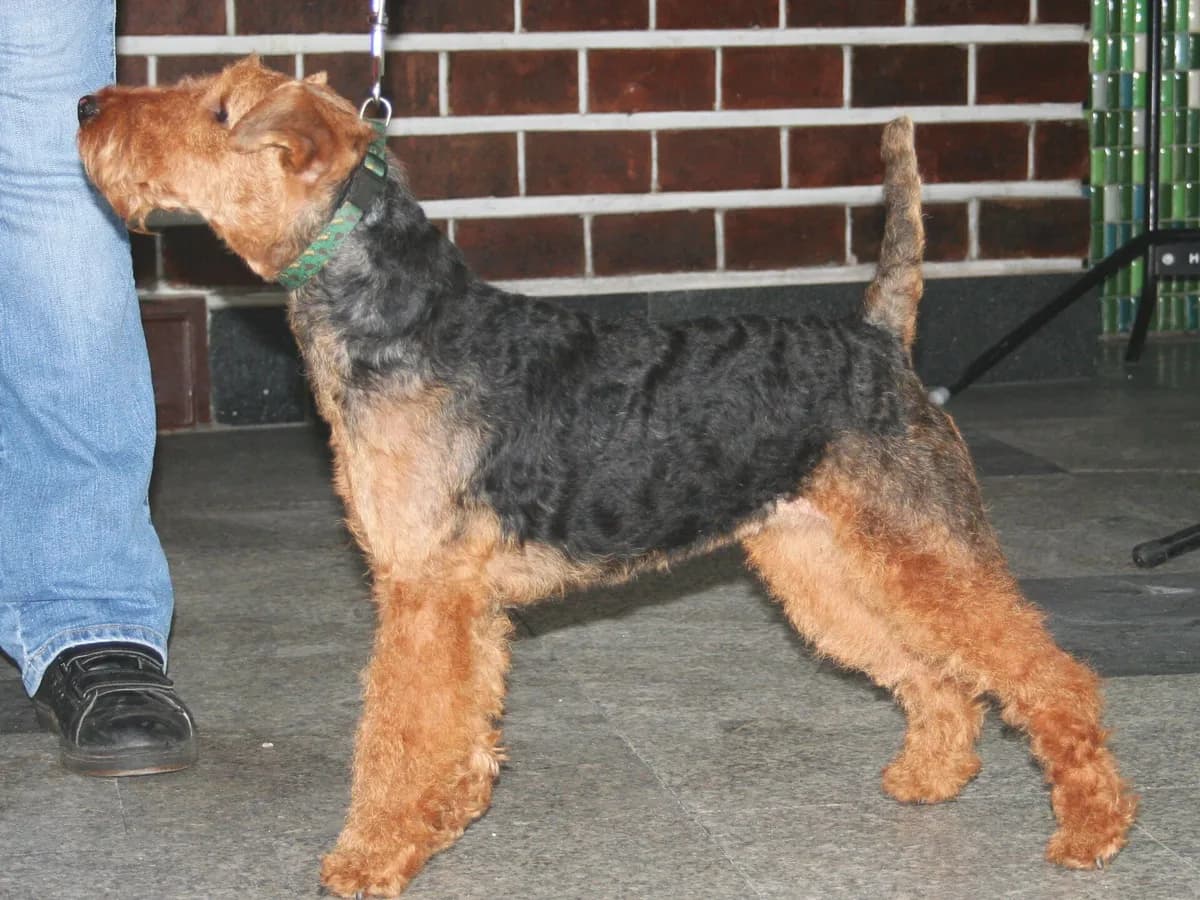

Most important facts
- Group
- Terrier
- Size
- Small
- Weight
- 9–9.5 kg
- Lifespan
- 12–14 years
- Coat
- Wiry, dense double coat
- Energy
- Moderate
- Height
- 36–39 cm
- Colours
- Black and tan
- Shedding
- Light
- Est. feeding cost
- ~£0.66 a day
- Gear to consider
- Slicker brush or stripping knife, secure well-fitted harness with sturdy lead, tough rubber chew toys
Typical dry food, adult
About the Welsh Terrier
The Welsh Terrier is one of Wales's oldest breeds, descended from the rough black-and-tan terriers that worked fox and badger through the valleys for centuries before the show ring took notice. It kept its working build while cousins were refined into taller show dogs. Its most famous member was Charlie, the Kennedy family's dog at the White House.
Welsh Terriers are happy, spirited and rarely shy, combining classic terrier grit with a genuinely affectionate, family-oriented side. They bond closely with their people and are typically good with children, though as with any terrier, time with very young children should be supervised given their boisterous energy and quick reactions.
The breed's independent streak and strong prey drive mean training needs to start early and stay consistent. They are intelligent and quick to learn but will test boundaries if bored. A settled, well-exercised Welsh Terrier with regular mealtimes and a predictable routine tends to be a calmer, more biddable companion than one left to its own devices.
Common health conditions
Things Welsh Terrier owners commonly watch for. Guidance, not veterinary advice.
Hip dysplasia
Looseness in the hips, with early arthritis a risk. Keep a Welsh Terrier lean through adolescence and adulthood, with joint-support nutrients as a helpful extra.
Atopic dermatitis (skin allergies)
Itchy, inflamed skin from environmental or food sensitivities is fairly common. Feed an omega-3-rich diet, and discuss a limited-ingredient recipe with your vet if a food trigger is suspected.
Primary lens luxation and glaucoma
Both are inherited eye conditions that can cause pain and vision loss if untreated. Choose screened breeders and have the eyes checked at annual vet visits.
Keratoconjunctivitis sicca (dry eye)
Reduced tear production can damage the cornea over time. It's managed medically, so flag any persistent eye dryness or discharge to your vet.
Feeding a Welsh Terrier
Welsh Terriers are compact, muscular dogs rather than large ones, so calorie needs are modest for their confident, busy personalities. A complete diet formulated for small-to-medium active breeds works well, with protein that supports lean muscle without excess calories piling weight onto a frame built to be lean and workmanlike.
This is a breed that tends to be keen on its food, which makes accurate weighing of portions and resisting extra treats especially important. Skin allergies and dry eye are relatively common in the breed, and many owners find a diet with good omega-3 levels supports coat and skin comfort. A slow-feeder bowl helps a dog that bolts its meals.
Every dog is different — weight, age and activity all shift what a Welsh Terrier needs. The turns these breed tendencies into a shortlist matched to your dog’s age, size, budget and needs.
Typical adult weight
9–9.5 kg
Est. daily calories
440–610 kcal
A broad guide for an average-activity adult in good body condition — not veterinary advice. Real needs vary with age, neutering, activity, health and body condition, so no two Welsh Terriers eat exactly the same. Get a personalised estimate or estimate feeding costs.


- Per day
- ~£0.66
- Per month
- ~£20
- Per year
- ~£241
A broad typical monthly budget guide, not a live price quote. Food format, calorie density, pack size and retailer pricing all change the real cost.
Find the right food for your Welsh Terrier
Foods ranked to your dog
Answer a few quick questions and the Food Finder ranks foods to your Welsh Terrier by score, price, life stage and fit.
Breed at a glance
- Exercise needs6/10
- Appetite7/10
- Trainability6/10
- Good with children8/10
- Shedding2/10
- Tolerates being alone4/10
The good & the worth-knowing
The good
- Affectionate, people-focused and generally good with children
- Low-shedding wiry coat that suits owners with mild allergies
- Sturdy, hardy breed with a long, generally healthy lifespan

Worth knowing
- Wiry coat needs regular brushing plus periodic hand-stripping to stay in condition
- Strong prey drive and a stubborn streak mean recall takes real consistency
- Can dig, chase and get into scrapes with other small animals if bored
Best matched accessories
All accessoriesThe collections that suit the breed, judged by the same independent standard.


Common owner questions
How much exercise does a Welsh Terrier need?
Typically about an hour a day, made up of walks and off-lead time in a secure area. Add mental stimulation such as scentwork or puzzle feeders, as this is a breed bred to work and think for itself.
Is the Welsh Terrier a good breed for allergy sufferers?
Its wiry, low-shedding coat is often better tolerated by people with mild allergies than a heavy-shedding breed, though no dog is truly hypoallergenic. Regular grooming and hand-stripping keeps shedding to a minimum.
How much should I feed my Welsh Terrier?
Feed to body condition rather than a fixed amount. Your dog's ribs should be easy to feel under a thin covering, with a waist visible from above. Our Food Finder can suggest a suitable daily amount based on your dog's weight and activity.
Are Welsh Terriers prone to weight gain?
They can be, given a healthy appetite and a relatively small frame that doesn't hide extra pounds well. Weighing food portions, limiting treats and keeping to regular exercise are the main ways to avoid the joint strain that comes with excess weight.