


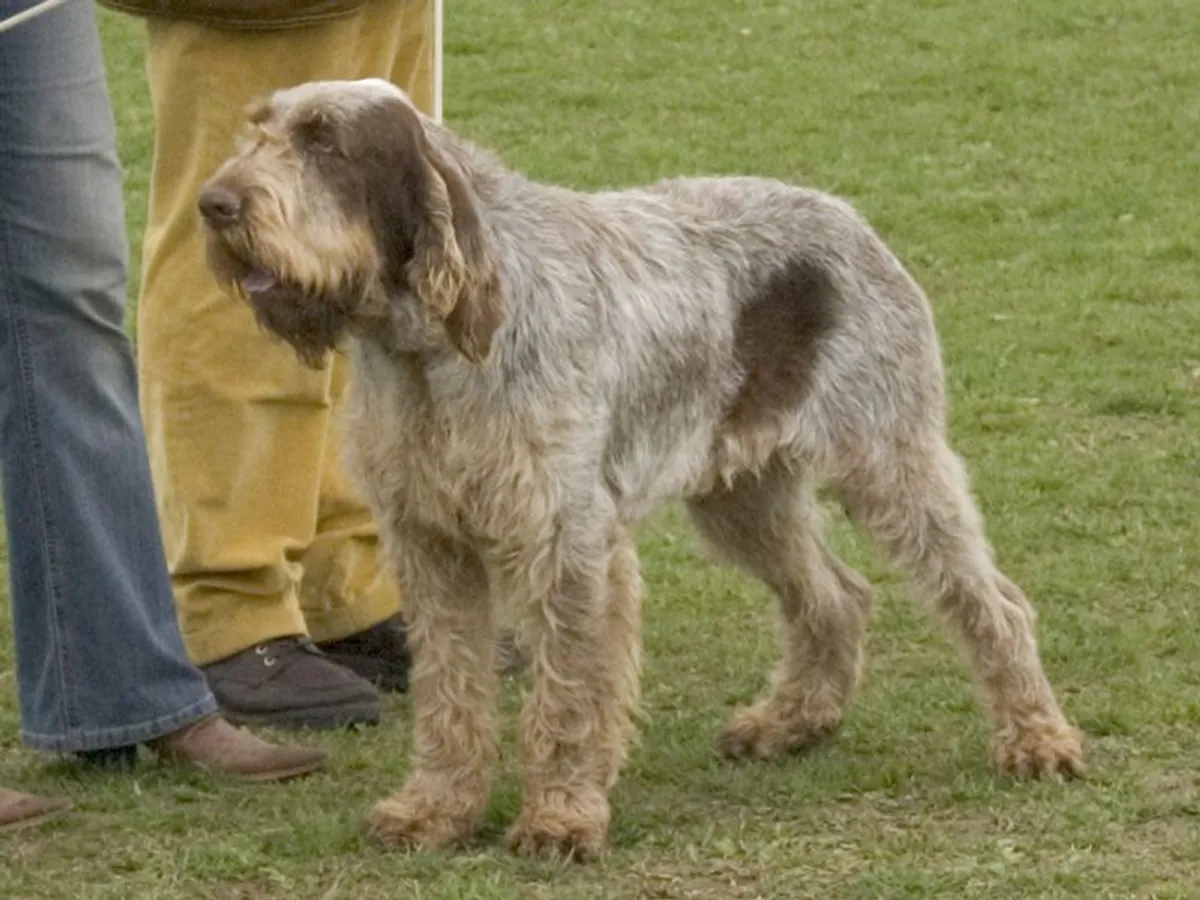

Most important facts
- Group
- Gundog
- Size
- Large
- Weight
- 29–39 kg
- Lifespan
- 10–14 years
- Coat
- Coarse, wiry
- Energy
- High
- Height
- 58–70 cm
- Colours
- White, white and orange, or white and brown
- Shedding
- Moderate
- Est. feeding cost
- ~£1.67 a day
- Gear to consider
- Slow-feeder bowl, weatherproof field coat, ear-cleaning kit
Typical dry food, adult
About the Italian Spinone
The Italian Spinone is one of the oldest pointing breeds, with wiry-coated griffon-type hunting dogs recorded across northern Italy since the Renaissance, prized for working slowly and thoroughly through bramble and marsh. The breed came close to disappearing during the Second World War, when some dogs reportedly tracked for partisans, and post-war enthusiasts rebuilt it. It reached Britain in the 1980s and keeps a devoted following.
Bred as an all-purpose gundog for Italian hunters, the Spinone is patient, gentle and sociable, with a reputation for being thoroughly good-natured around children and other dogs when socialised early. It is affable rather than driven, often described as having a sense of humour, though it still needs a job and plenty of mental engagement.
This is a people-orientated breed that dislikes being left for long periods and can become anxious or destructive without enough company. Training goes well with reward-based, food-motivated methods, worth bearing in mind when planning treats and daily rations so extra rewards don't tip a Spinone into a calorie surplus.
Common health conditions
Things Italian Spinone owners commonly watch for. Guidance, not veterinary advice.
Cerebellar ataxia (CA)
A fatal, breed-specific inherited condition caused by a known gene mutation. Ask to see both parents' DNA results before buying, as testing lets breeders avoid affected puppies.
Hip dysplasia
Common in this large, fast-growing breed. Look for BVA/KC hip scores in the parents, and keep portions controlled through the growth phase.
Gastric dilatation-volvulus (bloat)
As a large, deep-chested dog the Spinone carries a real risk of this life-threatening twist. Meals should be small and frequent, served from a slow-feeder bowl, with rest around eating.
Ear infections
Pendulous, hairy ears trap moisture and debris. Check and dry the ears after water work or wet walks.
Skin allergies (atopy)
Some Spinoni develop itchy skin reactions to environmental or food allergens. A diet built around a limited, quality protein source can help alongside veterinary advice.
Feeding a Italian Spinone
The Spinone is a large, deep-chested breed that covers serious ground on a working day, so it needs an energy-dense diet built around quality protein to support lean muscle without piling on weight. Split the day into two or three smaller meals, use a slow-feeder bowl, and avoid strenuous exercise straight after eating.
During the long growth period typical of large breeds, a controlled-calorie, joint-support puppy diet guards against the rapid growth spurts linked to hip dysplasia. Adults gain weight easily once working hours drop, so adjust portions to body condition rather than the bag guideline alone, and keep treats modest.
Every dog is different — weight, age and activity all shift what a Italian Spinone needs. The turns these breed tendencies into a shortlist matched to your dog’s age, size, budget and needs.
Typical adult weight
29–39 kg
Est. daily calories
1,050–1,970 kcal
A broad guide for an average-activity adult in good body condition — not veterinary advice. Real needs vary with age, neutering, activity, health and body condition, so no two Italian Spinones eat exactly the same. Get a personalised estimate or estimate feeding costs.


- Per day
- ~£1.67
- Per month
- ~£51
- Per year
- ~£609
A broad typical monthly budget guide, not a live price quote. Food format, calorie density, pack size and retailer pricing all change the real cost.
Find the right food for your Italian Spinone
Foods ranked to your dog
Answer a few quick questions and the Food Finder ranks foods to your Italian Spinone by score, price, life stage and fit.
Breed at a glance
- Exercise needs9/10
- Appetite7/10
- Trainability7/10
- Good with children8/10
- Shedding4/10
- Tolerates being alone3/10
The good & the worth-knowing
The good
- Affectionate, patient and gentle with family life once socialised
- A versatile, biddable working gundog that's genuinely eager to please
- Generally sociable with children, other dogs and visitors

Worth knowing
- Needs a serious daily exercise commitment of two hours or more
- Coat and facial hair take real upkeep, with regular brushing and near-daily beard wiping
- Prone to several significant health conditions, including a fatal inherited neurological disease
Best matched accessories
All accessoriesThe collections that suit the breed, judged by the same independent standard.




Common owner questions
How much exercise does an Italian Spinone need?
Plan on at least two hours a day of varied activity, including free running, as this is a genuine working gundog bred for long days in the field. Under-exercised Spinoni are prone to boredom and weight gain, so review activity and portions together.
Why are Spinoni prone to bloat, and what can I do about it?
Their large, deep chest makes gastric dilatation-volvulus a genuine risk. Use a slow-feeder bowl, keep meals small and frequent, avoid vigorous exercise straight after eating, and learn the emergency signs.
Is the Italian Spinone easy to feed without piling on weight?
They can gain weight readily once they are out of full-time work, so feed to body condition and check the ribs and waist regularly. Our Food Finder can match a recipe and portion to their current activity.
What should I ask a breeder about health testing?
Ask specifically about cerebellar ataxia testing, since this fatal inherited condition is unique to the breed, alongside BVA/KC hip scores for both parents. Reputable breeders will readily share this paperwork.