


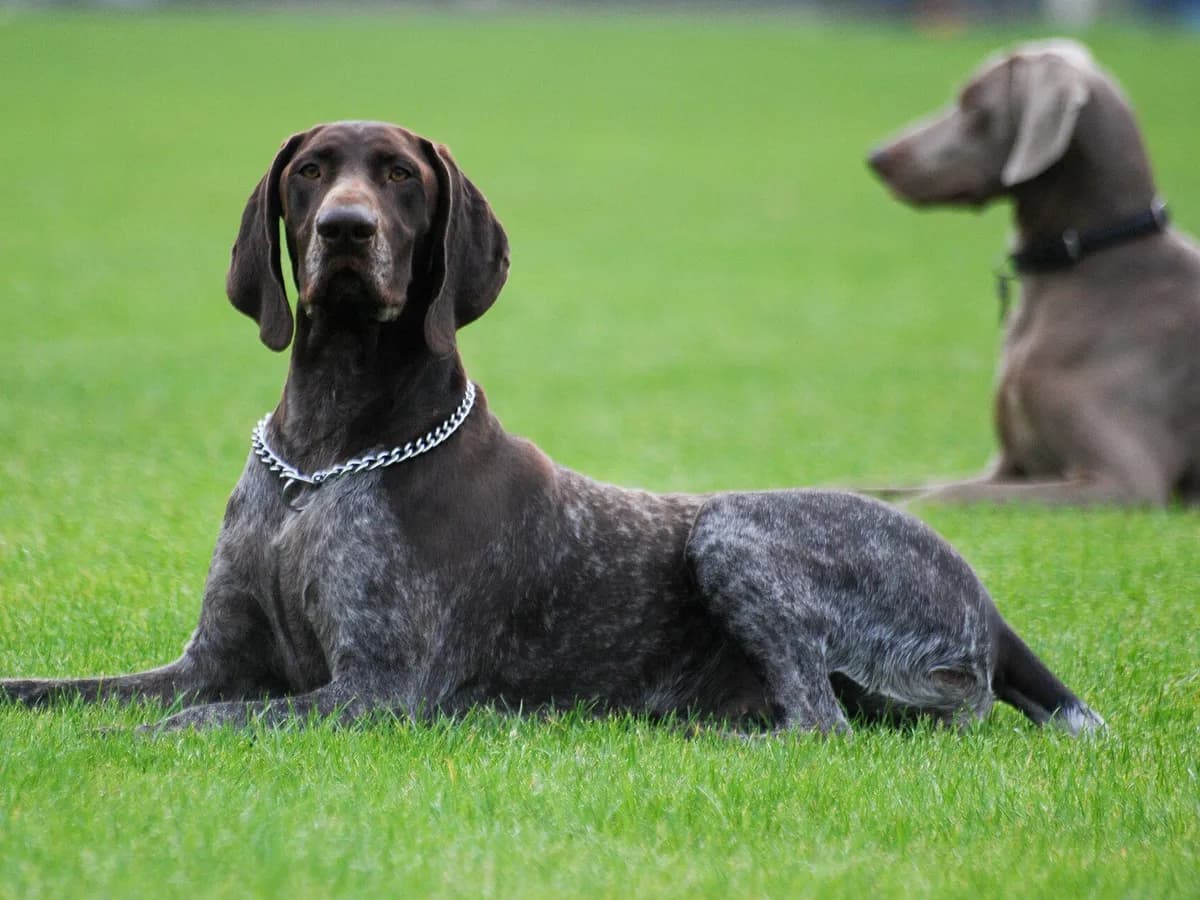

Most important facts
- Group
- Gundog
- Size
- Large
- Weight
- 20–32 kg
- Lifespan
- 12–14 years
- Coat
- Short
- Energy
- High
- Height
- 53–64 cm
- Colours
- Liver or black, solid or with white
- Shedding
- Moderate
- Est. feeding cost
- ~£1.31 a day
- Gear to consider
- Slow-feeder bowl, long training lead, durable retrieving toys
Typical dry food, adult
About the German Shorthaired Pointer
The German Shorthaired Pointer was developed in nineteenth-century Germany by hunters who wanted one dog for everything, pointing and retrieving on land and water as readily as it tracked game. Spanish pointing dogs, local scent hounds and the English Pointer all contributed to the mix. The result became one of the world's most successful all-round hunting breeds, and its versatility keeps it popular with both shooting homes and active families.
German Shorthaired Pointers are intelligent and highly driven dogs, bred to work closely with a handler in the field and just as keen to be involved in everyday family life. They form strong bonds with their people and generally get on well with children, though their exuberance and size mean play with toddlers is best supervised.
This is not a breed suited to long hours alone. GSPs are prone to separation distress and do best with owners who build up alone time gradually and provide genuine mental and physical outlets. Their sharp mind and food motivation make them very responsive to training, and feeding routines woven into training sessions work particularly well.
Common health conditions
Things German Shorthaired Pointer owners commonly watch for. Guidance, not veterinary advice.
Hip dysplasia
A malformed hip joint that can cause pain and lameness. Keep a GSP lean during growth and adulthood to take real pressure off developing joints.
Gastric dilatation-volvulus (bloat)
This deep-chested breed is at heightened risk of a life-threatening stomach twist. Spread the day's food over two or three meals, and keep exercise gentle for an hour after eating.
Cone degeneration (day blindness)
An inherited retinal condition specific to the breed causing sensitivity to bright light. Choose a breeder who DNA-tests for it before mating.
Von Willebrand's disease
An inherited clotting disorder that can mean minor injuries bleed for longer. Ask about screening, and tell your vet before any surgery.
Feeding a German Shorthaired Pointer
A working-bred GSP that gets its full exercise quota burns through calories fast, and food needs to be energy-dense enough to support that without unrealistic bowl sizes. Many owners find a moderate-to-high protein working formula suits the breed's build and drive better than a standard maintenance diet, particularly in regular training or shooting-season work.
GSPs carry a genuine bloat risk from their deep chest, so give two or three meals a day from a slower feeding bowl, and rest for an hour either side of strenuous exercise. Less active pet GSPs still need portions weighed carefully, as this breed will happily overeat, and excess weight strains hips that are already a known weak point.
Every dog is different — weight, age and activity all shift what a German Shorthaired Pointer needs. The turns these breed tendencies into a shortlist matched to your dog’s age, size, budget and needs.
Typical adult weight
20–32 kg
Est. daily calories
790–1,700 kcal
A broad guide for an average-activity adult in good body condition — not veterinary advice. Real needs vary with age, neutering, activity, health and body condition, so no two German Shorthaired Pointers eat exactly the same. Get a personalised estimate or estimate feeding costs.


- Per day
- ~£1.31
- Per month
- ~£40
- Per year
- ~£477
A broad typical monthly budget guide, not a live price quote. Food format, calorie density, pack size and retailer pricing all change the real cost.
Find the right food for your German Shorthaired Pointer
Foods ranked to your dog
Answer a few quick questions and the Food Finder ranks foods to your German Shorthaired Pointer by score, price, life stage and fit.
Breed at a glance
- Exercise needs10/10
- Appetite8/10
- Trainability8/10
- Good with children7/10
- Shedding5/10
- Tolerates being alone2/10
The good & the worth-knowing
The good
- Highly trainable, intelligent and eager to work alongside its owner
- Athletic and versatile, equally suited to field sports, running and family activity
- Affectionate and loyal, forming close bonds with its household

Worth knowing
- Needs well over two hours of vigorous exercise and mental work daily
- Struggles with being left alone and can develop separation distress without gradual training
- Deep chest and food-driven nature call for careful portioning and slower feeding
Best matched accessories
All accessoriesThe collections that suit the breed, judged by the same independent standard.




Common owner questions
How much exercise does a German Shorthaired Pointer actually need?
Realistically well over two hours a day of proper running or scent work, ideally off lead somewhere safe. A GSP that is under-exercised tends to become destructive or restless indoors, so take this breed on only if that time is genuinely available.
Are German Shorthaired Pointers prone to bloat?
Yes, a deep chest brings increased risk of gastric dilatation-volvulus in this breed. Feeding smaller, more frequent meals, avoiding exercise straight after eating and using a slower feeding bowl are all practical ways to reduce that risk day to day.
Do GSPs need a special diet to support their energy levels?
Many benefit from a working or active-adult food with a higher energy density than a standard maintenance diet, especially in regular training or field work. A vet or our Food Finder can match portion size and formula to your dog's activity and body condition.
Are German Shorthaired Pointers good with children?
Generally yes, they are affectionate and playful family dogs, though their size and enthusiasm mean time with very young children is best supervised.